
Most content creators in the United States overpay
their taxes every single year — and the biggest reason is one they never see coming. They film, edit, and broadcast from a dedicated space inside their home, yet they never claim a dollar of the home studio deduction as a content creator. According to IRS data, the home office deduction remains one of the most underutilized write-offs available to self-employed individuals, costing creators thousands in unnecessary tax payments annually.
If you run an OnlyFans account, a YouTube channel,
a podcast, or any other content-based business from home, you almost certainly qualify for this deduction. However, the rules are specific, the documentation requirements are real, and the mistakes are costly. Get it wrong and you risk an audit. Get it right and you reduce your taxable income — and your tax bill — significantly.
In this complete 2026 guide, you will learn exactly what the home studio deduction is, how the IRS defines a qualifying space, what expenses you can deduct, how to calculate the deduction, and the most common mistakes to avoid. Let us start with the fundamentals.
What Is the Home Studio Deduction for Content Creators?
The home studio deduction for content creators is a tax write-off available to self-employed individuals who use a dedicated portion of their home exclusively and regularly for business purposes. It is governed by IRS Publication 587 and IRC Section 280A, which define the rules for home office and home business space deductions in the United States.
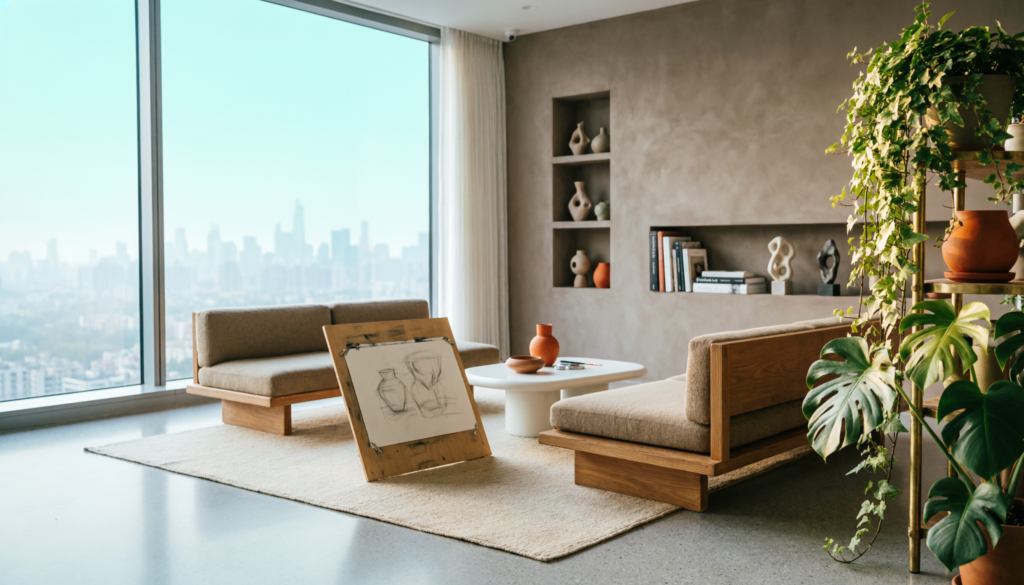
For content creators specifically, the “home office” is often a full studio setup
— a room or defined area used for filming, recording, editing, lighting tests, and content planning. The IRS does not require the space to look like a traditional office. What matters is function: the space must be used regularly and exclusively for your content creation business.
Why This Deduction Matters for Creators
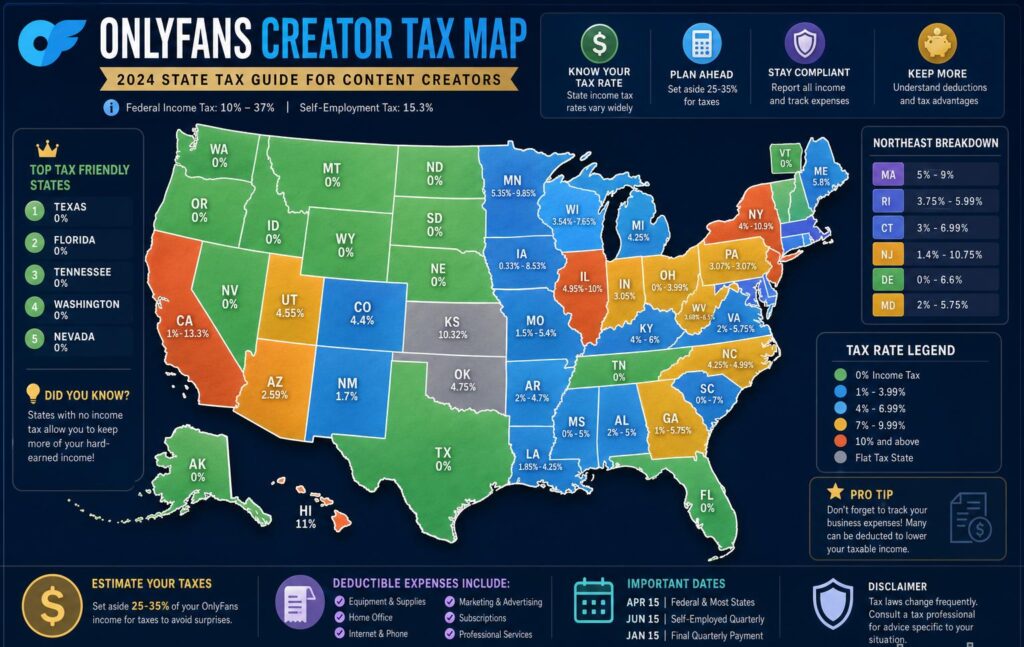
Content creation is a legitimate self-employed business under IRS rules. That means creators pay self-employment tax at 15.3% on top of income tax. Every dollar of deduction reduces your net self-employment income, which in turn reduces both your income tax and your self-employment tax. For a creator earning $60,000 per year, a properly documented home studio deduction could reduce taxable income by $3,000 to $8,000 or more — saving $1,000 to $3,000 in real taxes.
Furthermore, the home studio deduction is not a red flag to the IRS when it is properly documented. The IRS explicitly allows it. The risk comes only when creators claim it incorrectly — using a shared space, applying the wrong calculation method, or failing to maintain records. Work with a specialist who knows creator tax rules, and this deduction is entirely safe to claim.
Who Qualifies as a Content Creator for This Deduction?
You qualify as a content creator for this deduction if you earn income from a content-based business — including OnlyFans, YouTube, Twitch, TikTok, podcasting, photography, or any other platform where you produce and monetize content. You must be self-employed, meaning your income is reported on Schedule C of your US federal tax return. You do not need to earn full-time income from content creation to qualify. Part-time creators with a legitimate business purpose and a dedicated space can claim this deduction as well.
IRS Rules: How Does the Home Studio Deduction Actually Work?
The home studio deduction works by allowing you to deduct a proportional share of your home-related expenses based on the percentage of your home that your studio occupies. The IRS provides two calculation methods: the Simplified Method and the Regular Method. Both are legal; the right choice depends on your specific situation.
The Two IRS Calculation Methods
The Simplified Method allows you to deduct $5 per square foot of dedicated studio space, up to a maximum of 300 square feet. That produces a maximum deduction of $1,500 per year. This method is straightforward and requires minimal record-keeping, but it caps your deduction at a relatively low amount.
The Regular Method calculates your deduction
as a percentage of actual home expenses. You divide your studio square footage by your home’s total square footage to get a business-use percentage. You then apply that percentage to qualifying home expenses including rent or mortgage interest, utilities, renter’s or homeowner’s insurance, repairs, and depreciation. For creators with larger studios or higher housing costs, the Regular Method typically produces a significantly larger deduction.
For example, if your studio occupies 200 square feet
of a 1,000 square foot apartment, your business-use percentage is 20%. If your total annual housing costs are $24,000, your home studio deduction would be $4,800 — more than three times the Simplified Method cap.
The Two Non-Negotiable IRS Requirements
Regardless of which method you use, the IRS enforces two strict requirements that every content creator must meet. First, the space must be used regularly — meaning on a consistent, ongoing basis, not just occasionally. Second, the space must be used exclusively for business. This is the requirement that trips up most creators.
Exclusive use means the studio area cannot also serve
as your living room, bedroom, dining space, or any other personal purpose. A camera setup in the corner of your bedroom does not qualify. A dedicated room that you use only for filming and editing does qualify. If guests occasionally sleep in your studio, it no longer qualifies. The exclusivity requirement is absolute under IRC Section 280A.
What Expenses Can You Deduct?
Under the Regular Method, allowable expenses in the business-use percentage include:
Rent (for renters) or mortgage interest (for homeowners)
Utilities including electricity, gas, and internet service
Renter’s or homeowner’s insurance premiums
Home repairs and maintenance that benefit the entire home
Depreciation of the home (for homeowners)
Security system costs
Additionally, and separately from the home studio deduction, creators can deduct 100% of expenses that apply exclusively to the studio space itself — such as the cost of custom paint, soundproofing, shelving, or lighting fixtures installed specifically in the studio.
For full IRS guidance on home office and studio deductions, review IRS Publication 587 — Business Use of Your Home.
Common Mistakes That Kill Your Home Studio Deduction as a Content Creator
Claiming the home studio deduction incorrectly is one of the fastest ways to invite IRS scrutiny and lose money you should have kept. These are the most frequent mistakes content creators make — and how to avoid every one of them.
Mistake 1: Using a Shared Space Instead of a Dedicated Studio
The single most common mistake is filming or recording in a space that also serves personal purposes. A bedroom with a ring light and camera backdrop is still a bedroom. A living room with a microphone and good lighting is still a living room. The IRS is unambiguous: the space must be used exclusively for business. If you share the space with personal activities, you do not qualify — period. The solution is to designate and maintain a clearly separate studio area, even if it is a converted spare bedroom or a partitioned section of your home.
Mistake 2: Failing to Measure and Document the Space
Even creators who have a genuine dedicated studio often fail to document it properly. You need the exact square footage of your studio and the exact total square footage of your home. You also need to keep those numbers consistent year over year unless you physically move or reconfigure the space. Without measurements, you cannot support your deduction if the IRS asks. Take photos of the studio, measure it accurately, and keep a record in your tax file every year.
Mistake 3: Choosing the Wrong Calculation Method
Many creators default to the Simplified Method because it is easier. However, if your housing costs are high — as they are in cities like New York, Los Angeles, Chicago, or Miami — the Regular Method may produce a deduction two to five times larger. Additionally, homeowners may benefit significantly from including depreciation under the Regular Method. Always run both calculations before choosing, or have a specialist do it for you.
Mistake 4: Forgetting to Report Home Sale Implications
Homeowners who claim depreciation through the Regular Method need to be aware of depreciation recapture rules when they sell the home. The IRS may tax the depreciation you claimed at up to 25%. This does not mean you should avoid the deduction — the current-year savings usually outweigh the future recapture liability — but you need to plan for it. A creator tax specialist can help you model this trade-off accurately.
Mistake 5: Claiming the Deduction Without Schedule C Income
The home studio deduction is only available to self-employed individuals reporting business income on Schedule C. If you have not properly established your content creation as a business — with consistent income, business intent, and appropriate record-keeping — the IRS may reclassify it as a hobby. Hobby losses cannot offset other income, and the home office deduction disappears entirely. Establishing clear business intent and generating consistent income are both essential to protecting this deduction.
Step-by-Step Guide: How to Claim Your Home Studio Deduction as a Content Creator
Follow these steps to claim the home studio deduction correctly, completely, and with documentation that will hold up to IRS review.
Step 1: Designate Your Studio Space Clearly
Choose the specific area of your home that you use exclusively and regularly for content creation. This could be a spare bedroom, a converted closet setup, a dedicated corner room, or any other defined space. Ensure from this point forward that the area is used only for business. Remove personal items. Make it your studio.
Step 2: Measure Your Studio and Total Home Square Footage
Measure your dedicated studio space in square feet using a tape measure. Then calculate your home’s total livable square footage. Divide the studio square footage by the total to get your business-use percentage. Write these measurements down, take photographs of the space, and keep this documentation in your tax records.
Step 3: Collect Your Annual Home Expense Records
Gather twelve months of records for all qualifying home expenses: rent or mortgage statements, utility bills, insurance documents, and any repair or maintenance receipts. If you own your home, you will also need your home’s purchase price and date to calculate depreciation. Organize these by category and total each one for the year.
Step 4: Run Both Calculation Methods
Calculate your deduction under the Simplified Method: multiply your studio square footage (up to 300) by $5. Then calculate under the Regular Method: multiply your business-use percentage by your total qualifying home expenses. Compare the two results and choose the method that produces the larger — and still defensible — deduction. Remember that the Regular Method requires more record-keeping but typically produces better results for creators with significant housing costs.
Step 5: Complete IRS Form 8829
If you use the Regular Method, you must complete IRS Form 8829 (Expenses for Business Use of Your Home) and attach it to your Schedule C. This form walks through the expense categories, the business-use percentage, and the final deduction calculation. If you use the Simplified Method, you simply enter the deduction amount directly on Schedule C without the form.
Step 6: Deduct Studio-Specific Expenses Separately
Remember that expenses specific to the studio itself — soundproofing materials, custom lighting installed in the room, studio-specific shelving, dedicated HVAC for the space — are deductible at 100%, not the business-use percentage. Claim these separately from the home studio deduction on Schedule C as direct business expenses.
Step 7: Work With a Content Creator Tax Specialist
Even if you follow every step above, working with a specialist who understands content creator taxes ensures that you do not miss deductions, make calculation errors, or inadvertently trigger audit risk. A good creator tax professional pays for itself many times over in optimized deductions and avoided mistakes.
How Tranzesta Helps Content Creators Maximize the Home Studio Deduction
Tranzesta is a US-based tax consultation firm that specializes in content creator tax services — including OnlyFans performers, YouTubers, podcasters, streamers, and other digital creators. Unlike a general accounting firm, Tranzesta understands the specific income streams, expense categories, and IRS rules that apply to the creator economy.
When it comes to the home studio deduction for content creators,
Tranzesta handles every detail. Our team reviews your home setup, calculates your business-use percentage, runs both methods to find the optimal deduction, prepares Form 8829, and ensures that your studio-specific expenses are properly classified. We also help creators establish the right business entity — whether a sole proprietorship, LLC, or S-Corp — to maximize overall tax savings beyond just the studio deduction.
Tranzesta also helps creators build the documentation
practices that protect their deductions year after year. We know what the IRS looks for, and we make sure your records meet that standard before anything is filed. For creators who have not previously claimed the home studio deduction, we can also review prior years and determine whether an amended return makes sense.
Most importantly, Tranzesta approaches every creator
client proactively — not just at tax time. We identify planning opportunities throughout the year so that your deductions are maximized before the filing deadline, not scrambled together after the fact.
Learn more about Tranzesta’s content creator and OnlyFans tax services at Tranzesta.com — Creator Tax Services.
Contact our team at hello@tranzesta.com for a free consultation and find out exactly how much your home studio could be saving you.
Home Studio Deduction Content Creator Expert Tips for 2026
Beyond the basics, these advanced strategies help content creators in the United States get the maximum legitimate value from their home studio deduction while staying fully compliant with IRS rules.
Photograph Your Studio Every Year: Date-stamped photos create a visual record that your studio is genuinely dedicated to business use. Store these photos in a folder with your tax records. They are compelling evidence if the IRS ever questions your deduction.
Track Your Equipment Separately: The home studio deduction covers the space itself. Equipment — cameras, microphones, computers, lighting — is deducted separately, usually under Section 179 or regular depreciation on Schedule C. Many creators conflate the two and miss the full value of both.
Internet Service Is a Direct Deduction Too: Your internet bill is deductible as a business expense proportional to your business use — typically 50–80% for most full-time creators. This is separate from the home studio deduction and does not require exclusive use.
Consider the Regular Method If You Pay High Rent: Creators in high-cost cities like San Francisco, New York, or Los Angeles often pay $2,000 to $5,000+ per month in rent. At those levels, the Regular Method can produce a home studio deduction of $5,000 to $15,000 or more annually — far exceeding the $1,500 Simplified cap.
Document Business Intent Clearly: Keep a simple business log or content calendar showing that your studio is used regularly for production. Tranzesta.com This demonstrates the “regular use” requirement and strengthens your overall business intent documentation.
Renegotiate or Reconfigure as Your Business Grows: If your content creation income grows significantly, it may make sense to dedicate a larger studio space — increasing your square footage and your deduction percentage in the same move.
For IRS guidance on self-employed business deductions beyond the home studio, review IRS Publication 535 — Business Expenses
Conclusion: Your Home Studio Is a Tax Asset — Start Treating It That Way
The three most important takeaways from this guide are straightforward. First, the home studio deduction for content creators is a completely legal, IRS-approved write-off that thousands of US creators leave unclaimed every year. Second, the exclusive use requirement is real and absolute — your studio must be genuinely dedicated to your business, not a dual-purpose space. Third, the Regular Method almost always outperforms the Simplified Method for creators with significant housing costs.
Your home studio is not just where you create content
— it is a legitimate business expense that reduces your taxable income, lowers your self-employment tax, and keeps more money in your pocket. The only thing standing between you and those savings is proper documentation and the right tax strategy.
Ready to get expert help? Email us at hello@tranzesta.com or visit Tranzesta.com to schedule your free tax strategy session today.
FAQs
Yes, OnlyFans creators can claim a home studio deduction as long as they meet the IRS requirements under IRC Section 280A. Because OnlyFans creators are classified as self-employed and report income on Schedule C, they qualify for the same home office and home studio deductions as any other self-employed individual in the United States. Proper documentation of the space and expenses is essential to support the deduction.
The IRS under IRC Section 280A does not allow partial or dual-use spaces to qualify. For example, a bedroom where you also film content does not qualify because it serves a personal purpose. A separate room or defined space used solely for filming, editing, and content business activities does qualify.
To calculate the home studio deduction, you choose between two IRS-approved methods. The Simplified Method allows a flat deduction of $5 per square foot of studio space up to 300 square feet, for a maximum of $1,500 per year. The Regular Method calculates your business-use percentage — your studio square footage divided by your total home square footage — and applies that percentage to actual qualifying home expenses like rent, utilities, and insurance.
Yes, background decor and setup materials used exclusively in your studio for content creation are deductible business expenses. This includes custom backdrops, decorative items that appear in your videos, shelving, paint specifically applied in your studio, and props used in content production.
Claiming a properly documented home studio deduction does not significantly increase audit risk. The IRS allows this deduction explicitly, and millions of self-employed individuals across the United States claim it each year. The risk comes from claiming it incorrectly — using a shared space, applying the wrong calculation, or lacking documentation. A well-documented claim supported by photos, measurements, and expense records is a legitimate and defensible deduction. Working with a content creator tax specialist like Tranzesta ensures that your claim meets IRS standards from the start.