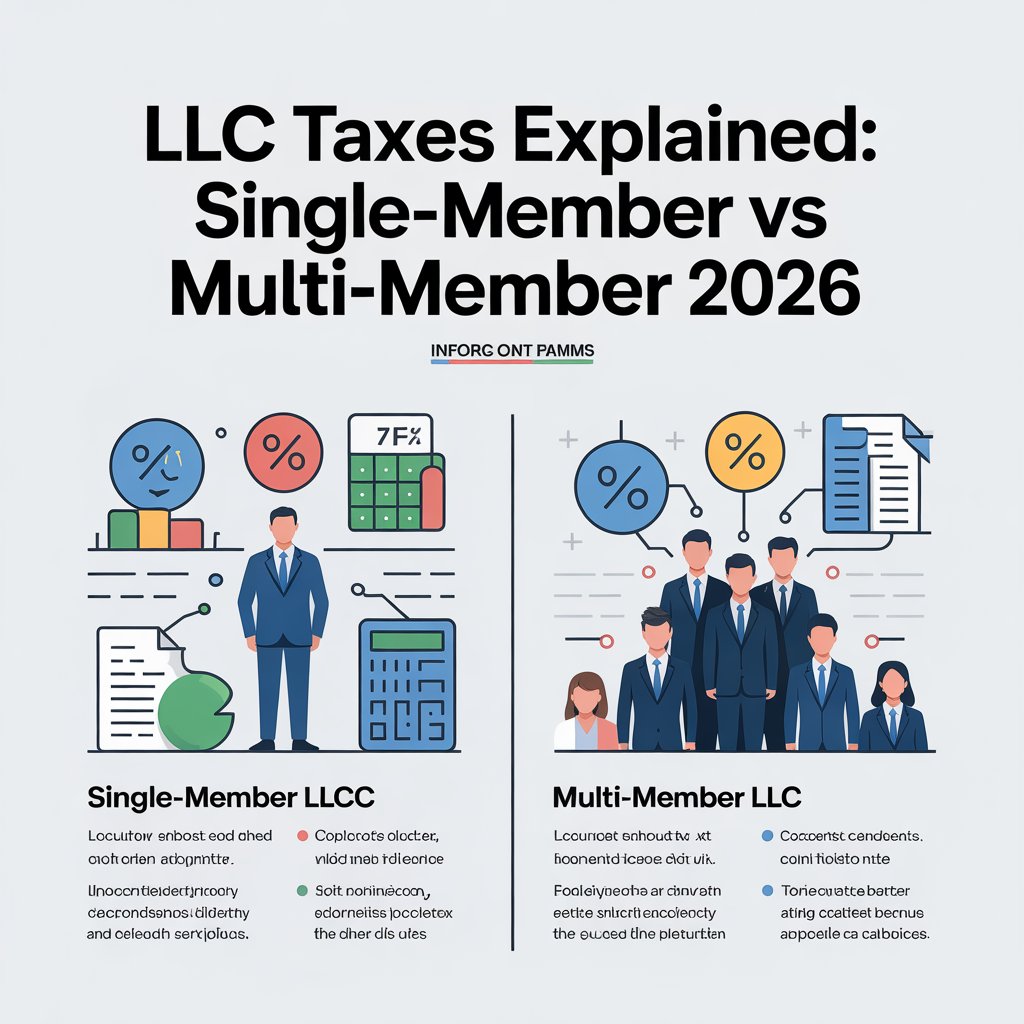
Starting an LLC is simple, but taxes are where most US business
owners get confused. The difference between LLC taxes single-member vs. multi-member can impact how much you pay, how you file, and your risk of IRS penalties.
In fact, many self-employed individuals,
OnlyFans creators, and cannabis business owners in the United States overpay taxes simply because they don’t understand how their LLC is taxed.
This guide breaks down everything in plain English. You’ll learn how each structure works, what forms to file, common mistakes to avoid, and how to optimize your tax strategy for 2026.
Let’s start with the fundamentals.
What are LLC Taxes Single Member vs Multi-Member?
LLC taxes single-member vs. multi-member refer to how the IRS classifies and taxes an LLC based on the number of owners. This classification determines your tax forms, reporting rules, and liability exposure.
An LLC (Limited Liability Company) is a legal business structure
in the United States. However, the IRS does not recognize it as a tax entity by default. Instead, it assigns a tax classification.
Single-Member LLC (SMLLC)
A single-member LLC has one owner. By default, the IRS treats it as a disregarded entity, which means:
The business is not taxed separately
Income is reported on Schedule C (Form 1040)
The owner pays self-employment tax (15.3%)
This setup is common among freelancers, creators, and solopreneurs.
Multi-Member LLC (MMLLC)
A multi-member LLC has two or more owners. The IRS treats it as a partnership by default:
The LLC files Form 1065 (Partnership Return)
Each member receives a Schedule K-1
Members report income on personal tax returns
Understanding this difference is critical because it directly affects how much tax you owe and how you stay compliant in the USA.
How Does LLC Taxes Single Member vs Multi-Member Work?
The key difference in LLC taxes single-member vs. multi-member is how income flows and gets taxed by the IRS.
In both cases, LLCs are pass-through entities, meaning profits pass directly to owners instead of being taxed at the business level.
However, the reporting structure changes significantly.
Default Tax Treatment Rules
Here’s how the IRS treats LLCs by default:
Single-member LLC → Disregarded entity
Multi-member LLC → Partnership
Both can elect S-Corp or C-Corp taxation using Form 2553 or Form 8832
According to the IRS (source: https://www.irs.gov/businesses/small-businesses-self-employed/llc-filing-as-a-corporation, opens in new tab), LLCs can choose how they are taxed, which gives flexibility.
Key Differences in Practice
Single-Member LLC:
Files no separate business return
Reports income on personal return
Pays full self-employment tax
Multi-Member LLC:
Must file an informational return (Form 1065)
Issues K-1s to each member
Splits profits based on ownership or agreement
IRS Compliance Requirements
For US taxpayers, compliance is non-negotiable.
The IRS imposes penalties such as:
$220 per partner per month for late Form 1065 (2026 estimate)
Accuracy penalties up to 20% of underpaid taxes
Therefore, choosing the correct structure and filing correctly matters more than most people realize.
What Mistakes Should You Avoid?
Many business owners misunderstand LLC taxes single-member vs. multi-member, which leads to costly errors.
Here are the most common mistakes seen across the USA.
Misclassifying Your LLC
Many assume an LLC automatically reduces taxes. However, without an election, it defaults to standard IRS rules.
This mistake often leads to higher self-employment taxes.
Ignoring K-1 Forms
Multi-member LLC owners sometimes forget to report income from Schedule K-1.
This triggers IRS notices and possible audits.
Not Filing Form 1065
Some partnerships skip filing because “no profit was made.” However, the IRS still requires Form 1065 even with zero income.
Mixing Personal and Business Finances
This weakens liability protection and complicates tax reporting.
Missing S-Corp Election Opportunities
Many US business owners fail to elect S-Corp status when eligible. As a result, they overpay thousands in self-employment taxes annually.
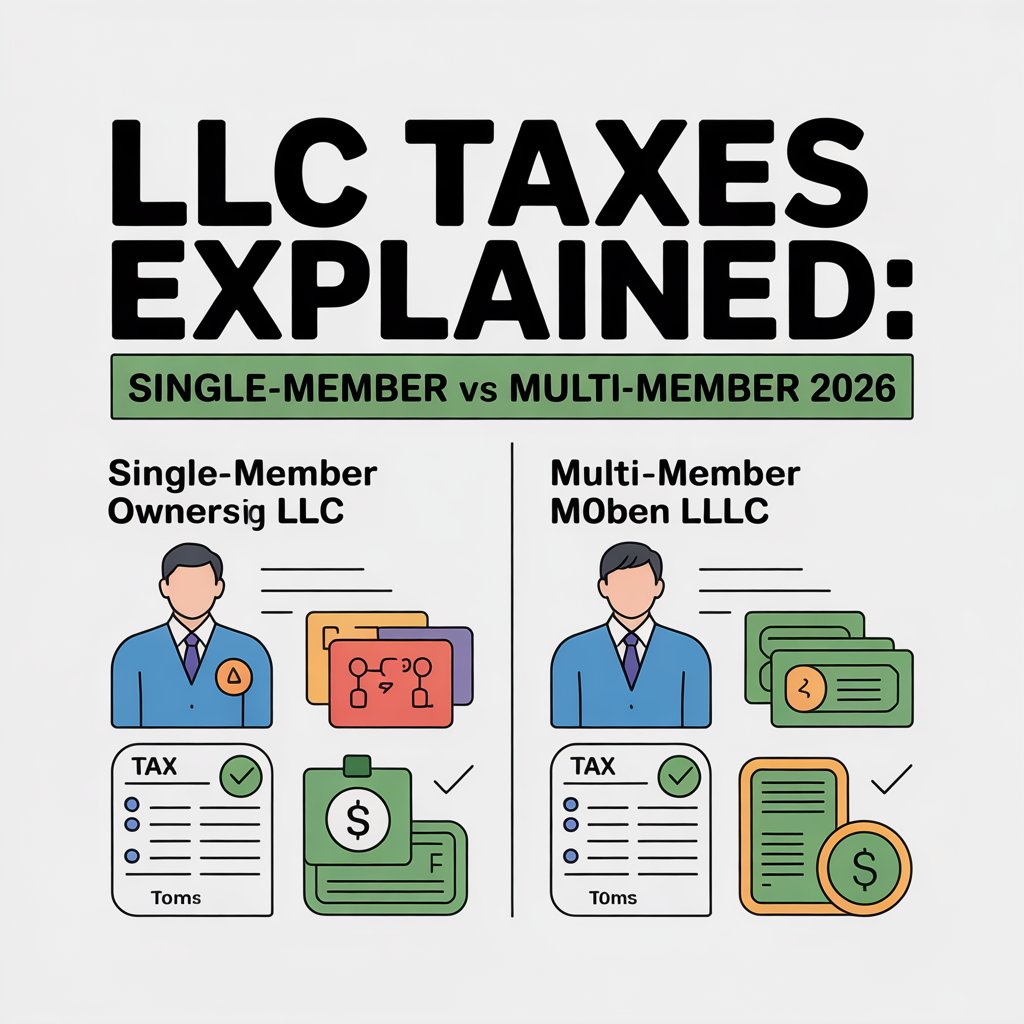
Step-by-Step Guide: How to Handle LLC Taxes Correctly
Follow these steps to manage LLC taxes single member vs multi-member efficiently and stay compliant in the United States.
Step 1: Identify Your LLC Type
Determine whether your LLC has one member or multiple members.
This defines your default tax treatment.
Step 2: Choose Your Tax Election
Evaluate whether to remain default or elect S-Corp taxation.
S-Corp election can reduce self-employment tax if profits exceed ~$50,000.
Step 3: Set Up Proper Accounting
Use bookkeeping systems to track income and expenses accurately.
This is especially important for creators and cannabis businesses.
Step 4: File the Correct Forms
Single-member: Schedule C with Form 1040
Multi-member: Form 1065 + K-1s
Step 5: Pay Estimated Taxes
The IRS requires quarterly estimated payments if you expect to owe $1,000+.
Step 6: Track Deductions
Common deductions include:
Home office
Equipment
Marketing expenses
Professional services
Step 7: Review Annually
Tax strategies should evolve yearly based on income changes and IRS updates.
How Tranzesta Can Help With LLC Taxes
Tranzesta helps US taxpayers simplify LLC taxes single member vs multi-member while maximizing savings and staying compliant.
Tranzesta is a US-based tax consultation firm that specializes in:
Streamlined Filing Services
OnlyFans and content creator taxes
Cannabis industry accounting
Business tax and bookkeeping in the USA
Whether you run a single-member LLC or a multi-member partnership, Tranzesta ensures:
Accurate filings
Optimized tax elections
Audit-ready documentation
Additionally, Tranzesta works closely with self-employed individuals and high-risk industries where compliance is critical.
Contact our team at hello@tranzesta.com for a free consultation.
Visit Tranzesta.com to learn more about our business tax and bookkeeping services.
Learn more about LLC compliance strategies at Tranzesta.com
Learn more about S-Corp tax savings at Tranzesta.com
Learn more about creator tax planning at Tranzesta.com
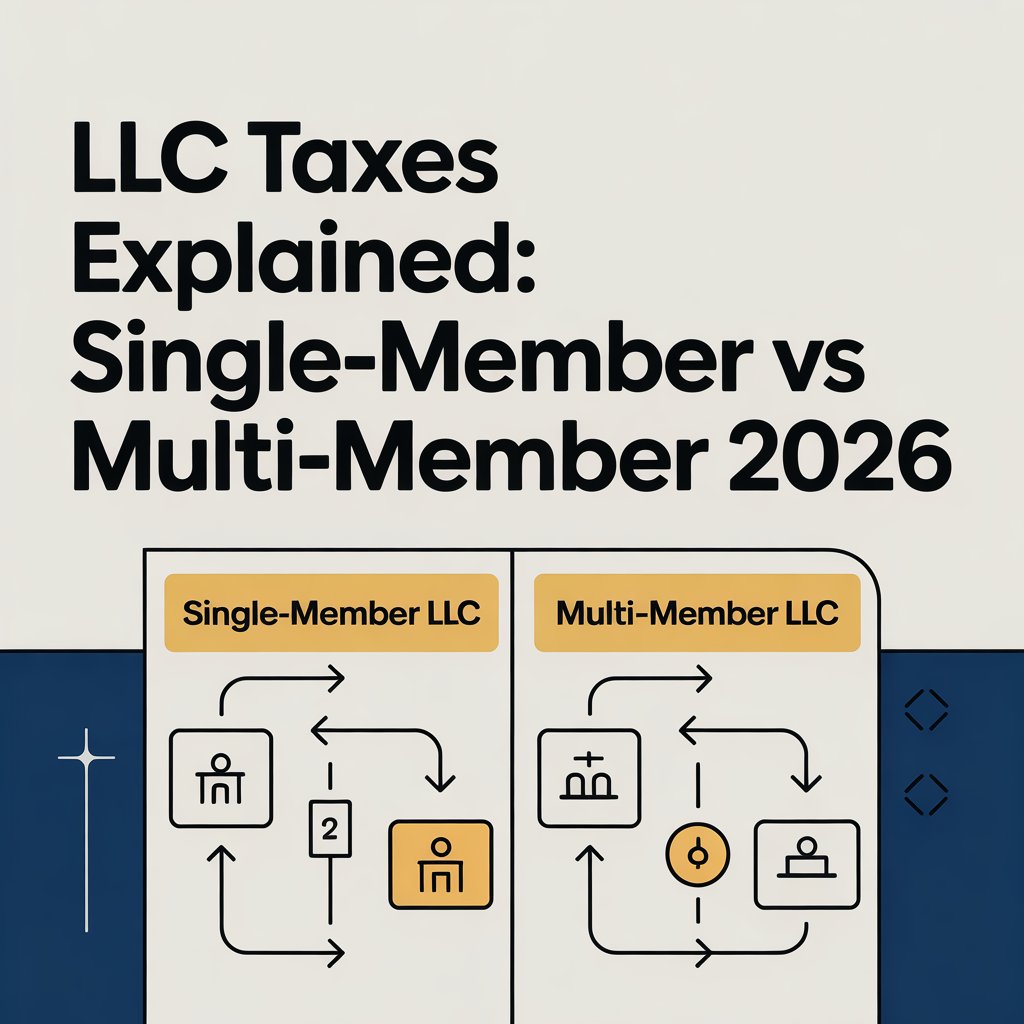
LLC Taxes Single Member vs Multi-Member: Expert Tips for 2026
To optimize LLC taxes single member vs multi-member, you need proactive strategies—not just compliance.
Here are expert-level tips used by top tax professionals in the United States.
Elect S-Corp status when net income exceeds $50K–$80K
Separate owner salary vs distributions to reduce taxes
Use accountable plans for reimbursements
Track deductions monthly, not annually
Plan for state taxes (e.g., California LLC fees up to $800+)
Additionally, cannabis businesses must follow IRS Section 280E, which disallows many deductions. Therefore, structuring properly is critical.
For OnlyFans creators and digital entrepreneurs, income classification also impacts tax liability significantly.
Most importantly, don’t wait until tax season. Strategic planning throughout the year creates the biggest savings.
Conclusion
Understanding LLC taxes single-member vs. multi-member is essential for every US business owner.
First, single-member LLCs are simple but often lead to higher self-employment taxes.
Second, multi-member LLCs require more compliance but allow income splitting.
Third, both structures offer flexibility through S-Corp elections, which can significantly reduce taxes.
If you want to avoid costly mistakes and maximize savings, professional guidance makes all the difference.
Ready to get expert help? Email us at hello@tranzesta.com or visit Tranzesta.com to schedule your free tax strategy session today.
FAQs
LLC taxes single-member vs. multi-member depend on income structure, not just entity type. Single-member LLCs often pay more self-employment tax because all income is subject to 15.3%. Multi-member LLCs may split income, but both structures can reduce taxes through S-Corp elections.
LLC taxes single member vs multi-member allow both structures to elect S-Corp taxation using Form 2553. This election can reduce self-employment tax by dividing income into salary and distributions, provided IRS requirements are met.
LLC taxes single-member vs. multi-member require multi-member LLCs to file Form 1065. Each member receives a Schedule K-1, which reports their share of income, deductions, and credits for personal tax returns.
LLC taxes single-member vs multi-member classify single-member LLC owners as self-employed by default. This means they must pay both income tax and self-employment tax unless they elect S-Corp status.
LLC taxes single-member vs. multi-member allow ownership changes at any time. Adding a partner converts the LLC into a multi-member entity, requiring partnership tax filing rules starting from that tax year.