Navigating Social Security taxes as a US expat
can feel overwhelming. Many Americans working abroad unknowingly pay into two systems simultaneously, incurring thousands of dollars in annual costs. Fortunately, totalization agreements that social security expats rely on can eliminate this double taxation and simplify compliance.
If you’re a US taxpayer living or working overseas,
understanding these agreements is essential. In this guide, you’ll learn what totalization agreements are, how they work, and how to apply them correctly. Most importantly, you’ll discover how to avoid costly mistakes and protect your income.
Let’s break it down step by step.
What are Totalization Agreements Social Security Expats Use?
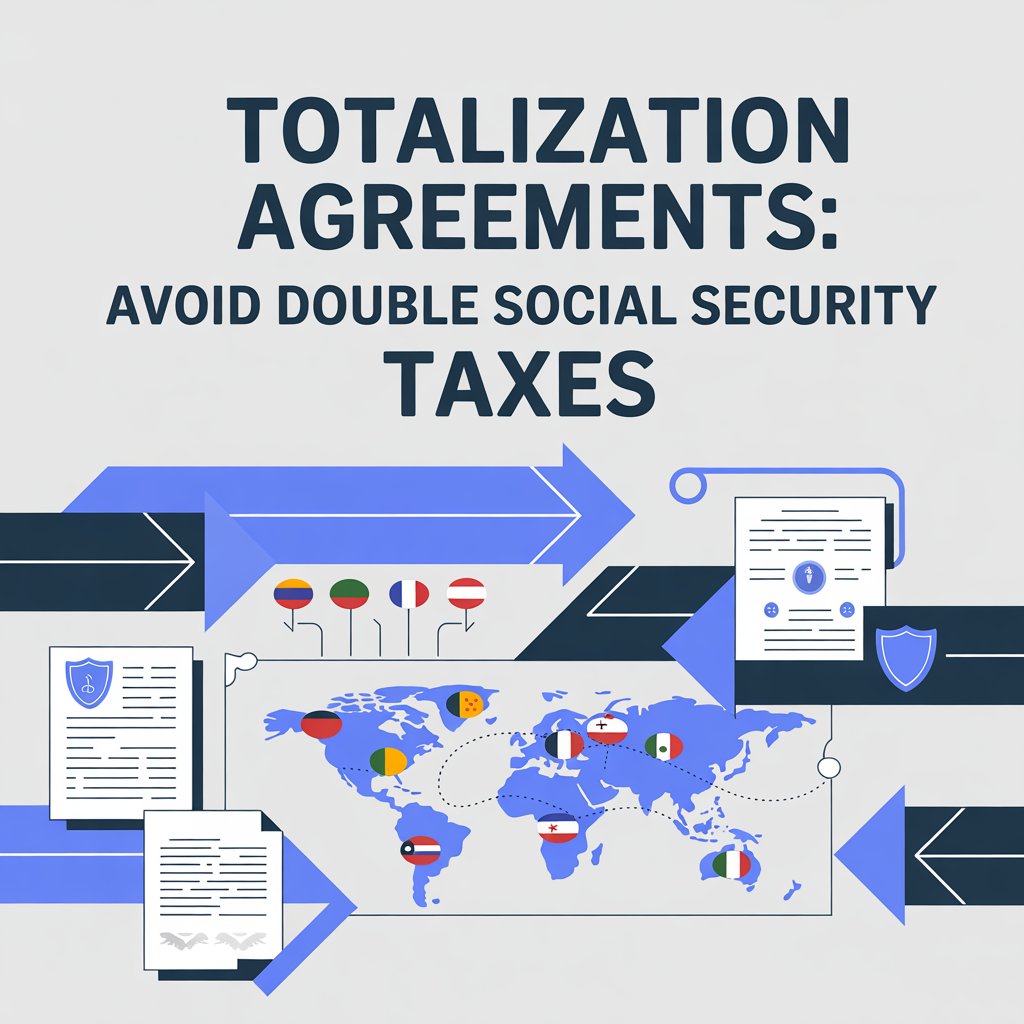
Totalization agreements are treaties between the United States and other countries that prevent double taxation of Social Security benefits. These agreements ensure you only pay into one country’s system at a time.
For US expats, this is critical. Without these agreements, you could pay both US Social Security (FICA or SECA taxes) and foreign social taxes simultaneously.
Why Do These Agreements Exist?
The US government created totalization agreements to solve two major problems:
Double taxation on wages
Gaps in Social Security coverage
For example, before these agreements, US citizens working in countries like Germany or the UK often paid into both systems. As a result, their net income dropped significantly.
Which Countries Have Agreements?
The United States currently has agreements with over 30 countries, including:
United Kingdom
Canada
Australia
Germany
Japan
You can view the official list on the Social Security Administration website:
👉 https://www.ssa.gov/international/agreements_overview.html (opens in a new tab)
These agreements apply to employees, self-employed individuals, and business owners.
How Do Totalization Agreements Work?
Totalization agreements determine which country has the right to tax your Social Security income. In most cases, the rule depends on where you work and for how long.
Key Rules You Must Know
Here’s how the system generally works:
Short-term assignments (under 5 years):
You typically stay in your home country’s Social Security system.
Long-term assignments (over 5 years):
You usually switch to the host country’s system.
Self-employed individuals:
You usually pay into the country where you reside.
Certificates of Coverage:
This document proves which country you pay taxes to.
No double contributions:
You cannot be required to pay into both systems simultaneously.
IRS and Legal References
Social Security taxes for US taxpayers fall under:
Internal Revenue Code (IRC) Sections 3101 and 1401
Federal Insurance Contributions Act (FICA)
Self-Employment Contributions Act (SECA)
The IRS confirms that totalization agreements override standard Social Security tax rules.
👉 https://www.irs.gov/individuals/international-taxpayers/totalization-agreements (opens in a new tab)
Why This Matters for US Expats
Without these agreements, self-employed US expats may pay:
15.3% US self-employment tax
PLUS foreign social taxes (which can exceed 20%)
That’s over 35% in combined taxes—before income tax.
Common Mistakes Expats Make (And How to Avoid Them)
Many US expats misuse totalization agreements or fail to apply them entirely. This leads to unnecessary taxes and compliance risks.
Mistake 1: Not Getting a Certificate of Coverage
A Certificate of Coverage is essential. Without it, both countries may assume you owe taxes.
As a result, you could be taxed twice—even if you qualify for an exemption.
Mistake 2: Assuming FEIE Covers Social Security
The Foreign Earned Income Exclusion (FEIE) only applies to income tax. It does NOT eliminate Social Security taxes.
This is one of the most common misconceptions among content creators and freelancers.
Mistake 3: Misclassifying Employment Status
Many OnlyFans creators and freelancers are self-employed. However, they often assume they are treated like employees under these agreements.
This mistake can trigger incorrect tax filings and penalties.
Mistake 4: Ignoring Local Country Rules
Each country has its own implementation of totalization agreements. Therefore, relying only on US rules can lead to errors.
Mistake 5: Filing Incorrect Forms
Incorrect reporting to the IRS or Social Security Administration can delay benefits or trigger audits.
Step-by-Step: How to Use Totalization Agreements Correctly
To benefit from totalization agreements, you must follow a structured process. Here’s how to do it:
Step 1: Confirm Agreement Eligibility
Check if the country you work in has a totalization agreement with the United States.
Step 2: Determine Your Work Status
Identify whether you are:
An employee
Self-employed
A business owner
This step affects which country you pay into.
Step 3: Apply for a Certificate of Coverage
Request this document from:
The US Social Security Administration (if staying in the US system)
The foreign authority (if switching systems)
Step 4: Maintain Proper Documentation
Keep copies of:
Contracts
Residency proof
Tax filings
These support your exemption claim.
Step 5: File Taxes Correctly
Ensure your US tax return reflects:
Exemption from Social Security taxes (if applicable)
Proper reporting of foreign income
Step 6: Review Annually
Your status may change. Therefore, review your situation every year to stay compliant.
How Tranzesta Can Help With Totalization Agreements
Tranzesta helps US expats apply totalization agreements correctly and avoid costly tax mistakes. Our team specializes in international tax compliance for modern earners.
We work with:
OnlyFans creators and influencers
Cannabis business operators
Freelancers and digital nomads
US expats worldwide
Our services include:
Social Security tax planning
Certificate of Coverage assistance
Self-employment tax optimization
Streamlined Filing compliance
Most importantly, we ensure you don’t overpay.
Contact our team at hello@tranzesta.com for a free consultation.
Additionally, visit Tranzesta.com to learn more about our Streamlined Filing compliance services.
You can also learn more about US expat tax obligations at Tranzesta.com and explore our self-employment tax strategies at Tranzesta.com.
How Tranzesta Can Help With Totalization Agreements
Tranzesta helps US expats apply totalization agreements correctly and avoid costly tax mistakes. Our team specializes in international tax compliance for modern earners.
We work with:
OnlyFans creators and influencers
Cannabis business operators
Freelancers and digital nomads
US expats worldwide
Our services include:
Social Security tax planning
Certificate of Coverage assistance
Self-employment tax optimization
Streamlined Filing compliance
Most importantly, we ensure you don’t overpay.
Contact our team at hello@tranzesta.com for a free consultation.
Additionally, visit Tranzesta.com to learn more about our Streamlined Filing compliance services.
You can also learn more about US expat tax obligations at Tranzesta.com and explore our self-employment tax strategies at Tranzesta.com.
UseWork with a specialist
International tax law is complex. Mistakes are expensive.
Tranzesta’s experts regularly help clients save thousands annually using these strategies.
Conclusion
Totalization agreements are one of the most powerful tools available to US expats. They prevent double Social Security taxation, protect your income, and simplify compliance.
Here are the key takeaways:
You only pay Social Security taxes to one country at a time
A Certificate of Coverage is essential
Proper planning can save thousands each year
If you’re working abroad, don’t leave money on the table.
Ready to get expert help? Email us at hello@tranzesta.com or visit Tranzesta.com to schedule your free tax strategy session today.
FAQs
Totalization agreements social security expats rely on are treaties between the United States and other countries that prevent double Social Security taxation. They ensure that US taxpayers working abroad only pay into one system at a time. Additionally, these agreements help workers qualify for benefits by combining credits from both countries. This makes them essential for expats, freelancers, and business owners operating internationally.
Totalization agreements social security expats use do not eliminate self-employment tax, but they determine which country you pay it to. If you qualify, you may avoid US self-employment tax under SECA and instead pay into the foreign system. However, eligibility depends on residency and work status. Therefore, proper documentation is critical to claim the exemption correctly.
Totalization agreements social security expats benefit from require a Certificate of Coverage to prove which country’s system applies. This official document prevents double taxation by confirming your exemption from the other country’s Social Security taxes. Without it, both countries may require contributions. As a result, obtaining this certificate is one of the most important steps in compliance.
Totalization agreements social security expats depend on currently exist between the United States and over 30 countries, including Canada, the UK, Germany, and Australia. These agreements vary slightly in rules and benefits. Therefore, it is important to review the specific treaty for your country of residence to understand how it applies to your situation.
Totalization agreements social security expats rely on allow you to combine work credits from both countries to qualify for benefits. This is especially helpful if you do not meet the minimum requirement in one country alone. However, each country pays benefits separately based on your contributions. Therefore, this feature ensures you don’t lose eligibility due to international work history.
Related expertise
Talk to a real, signing professional
AI precision, human accountability — across the US, UK & UAE.
Book a free consultation