Owing money to the IRS can feel overwhelming,
especially when you can’t pay your tax bill in full. In fact, millions of US taxpayers face this situation every year. The good news is that an IRS installment agreement payment plan can help you regain control without facing immediate enforcement action.
This guide explains exactly how IRS payment plans work,
who qualifies, and how to apply step-by-step. Whether you’re a self-employed individual, OnlyFans creator, cannabis business owner, or US expat, understanding your options is critical.
Most importantly, you’ll learn how to avoid costly
mistakes and reduce penalties. Let’s start by breaking down what an IRS installment agreement actually is.
What is an IRS Installment Agreement Payment Plan?
An IRS installment agreement payment plan is a formal arrangement that allows US taxpayers to pay their tax debt over time instead of in one lump sum.
In simple terms, the IRS agrees to accept monthly payments as long as you stay compliant.
What Does It Cover?
An installment agreement applies to unpaid federal taxes, including:
Individual income taxes (Form 1040)
Business taxes
Self-employment taxes
For example, if you owe $15,000 but can only pay $500 per month, the IRS may approve a structured plan.
Why It Matters for US Taxpayers
This option matters because it helps you avoid aggressive IRS actions. Without a plan, the IRS can:
File a federal tax lien
Levy your bank account
Garnish wages
However, once your installment agreement is approved, enforcement actions usually pause.
Additionally, the IRS reported that over 2.5 million installment agreements are active annually in the United States. That means this is a widely used and accepted solution.
How Does an IRS Installment Agreement Payment Plan Work?
An IRS installment agreement payment plan works by spreading your tax debt into manageable monthly payments based on your financial situation.
You must apply, get approval, and stay compliant with all future tax filings.
Key Requirements
To qualify, you must:
Owe less than $50,000 (for streamlined agreements)
Agree to monthly payments
Stay current on future taxes
For official details, refer to the IRS page:
👉 https://www.irs.gov/payments/payment-plans-installment-agreements (opens in new tab)
Types of IRS Payment Plans
There are several options depending on your situation:
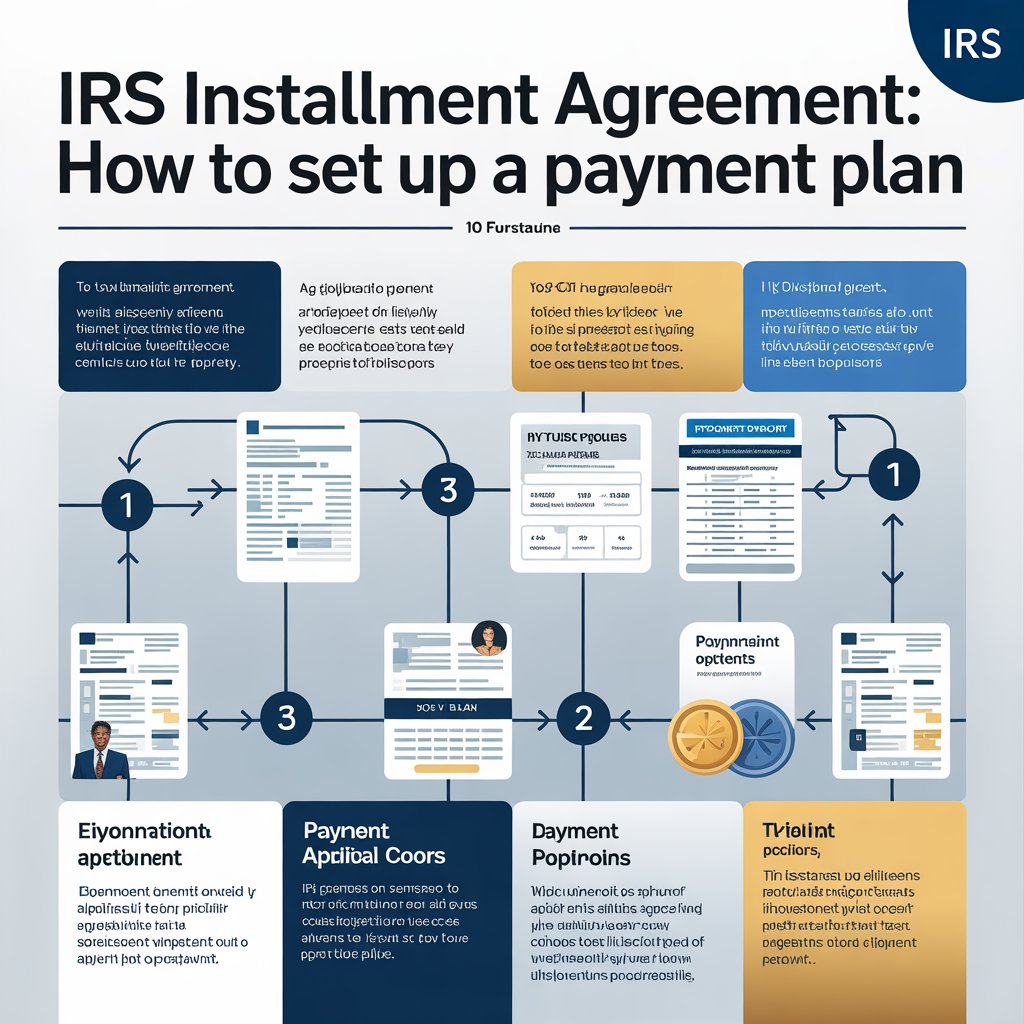
1. Short-Term Payment Plan (180 days or less)
No setup fee
Ideal for smaller balances
2. Long-Term Installment Agreement (monthly plan)
Setup fee: $31–$225 (as of 2026)
Payments spread over several years
3. Partial Payment Installment Agreement (PPIA)
Pay less than the full amount
Based on financial hardship
Interest and Penalties
Even with a payment plan, interest continues to accrue.
Failure-to-pay penalty: 0.5% per month
Interest rate: Typically 7%–8% annually (variable)
Therefore, paying off the balance faster reduces total cost.
Common Mistakes to Avoid
Many taxpayers make costly errors when setting up an IRS payment plan. Avoiding these mistakes can save you thousands.
Ignoring IRS Notices
Some people delay action, hoping the problem goes away. However, ignoring notices leads to penalties and enforcement actions.
Always respond quickly.
Setting Unrealistic Payments
Choosing a payment you cannot afford leads to default. Once your agreement defaults, the IRS may take collection action again.
Instead, base payments on your real monthly budget.
Missing Future Tax Filings
Even if you’re on a plan, you must file all future returns on time.
Failure to stay compliant can cancel your agreement.
Not Exploring Better Options
Sometimes, an installment plan isn’t the best solution. Alternatives include:
Offer in Compromise (settling for less)
Currently Not Collectible status
Learn more about tax relief strategies at Tranzesta.com.
Step-by-Step: How to Set Up an IRS Installment Agreement Payment Plan
Setting up an IRS installment agreement payment plan is straightforward if you follow the correct steps.
Step 1: Determine What You Owe
Start by checking your IRS account balance online.
This includes taxes, penalties, and interest.
Step 2: File All Missing Returns
You cannot qualify for a payment plan unless all returns are filed.
This is a strict IRS requirement.
Step 3: Choose the Right Plan
Select based on your debt:
Under $10,000 → Guaranteed approval
Under $50,000 → Streamlined agreement
Over $50,000 → Financial disclosure required
Step 4: Apply Online or via Form 9465
You can apply through:
IRS Online Payment Agreement tool
Form 9465 (Installment Agreement Request)
Applying online is faster and cheaper.
Step 5: Set Your Monthly Payment
Choose an amount you can realistically pay every month.
The IRS may adjust it based on your financials.
Step 6: Set Up Direct Debit
Direct debit reduces fees and lowers default risk.
It also improves approval chances.
Step 7: Stay Compliant
After approval:
Make all payments on time
File future taxes
Pay new taxes in full
Failure to follow these rules can terminate your agreement.
How Tranzesta Can Help With an IRS Installment Agreement Payment Plan
Setting up an IRS payment plan sounds simple, but mistakes can be expensive. That’s where Tranzesta comes in.
Tranzesta is a US-based tax consultation firm that helps individuals and businesses navigate IRS issues with confidence.
We specialize in:
IRS installment agreements
Streamlined Filing compliance for US expats
OnlyFans and creator tax planning
Cannabis industry accounting
Business tax and bookkeeping in the USA
Our experts analyze your financial situation and recommend the best solution—not just the easiest one.
Additionally, we help you:
Reduce penalties
Avoid IRS enforcement actions
Stay compliant long-term
Contact our team at hello@tranzesta.com for a free consultation.
Visit Tranzesta.com to learn more about our IRS tax resolution services.
You can also learn more about tax compliance strategies at Tranzesta.com.
IRS Installment Agreement Payment Plan: Expert Tips for 2026
If you want to maximize the benefits of an IRS installment agreement payment plan, these expert tips can help.
Pro Tips
Pay more than the minimum
This reduces interest and shortens your timeline.
Use direct debit
It lowers setup fees and improves approval rates.
Avoid new tax debt
New balances can cancel your agreement immediately.
Consider penalty abatement
First-time penalty relief may apply to your case.
Review annually
If your income drops, you may qualify for lower payments.
Explore alternatives
In some cases, an Offer in Compromise can save more money.
According to IRS data, taxpayers who actively manage their plans pay off debt 30% faster than those who don’t adjust payments.
Conclusion
An IRS installment agreement payment plan is one of the most effective ways to handle tax debt without immediate financial strain.
Here are the key takeaways:
It allows you to pay your IRS debt over time
You must stay compliant to keep the agreement active
Choosing the right plan can save you thousands in penalties
If you’re unsure where to start, professional guidance can make a huge difference.
Ready to get expert help? Email us at hello@tranzesta.com or visit Tranzesta.com to schedule your free tax strategy session today.
FAQs
An IRS installment agreement payment plan is a structured arrangement that allows US taxpayers to pay tax debt over time instead of in one lump sum. The IRS approves monthly payments based on your financial situation. As long as you comply with the terms and file future taxes on time, the IRS generally pauses collection actions such as levies and wage garnishments.
IRS installment agreements typically last up to 72 months for streamlined plans. However, the exact duration depends on your total debt and payment amount. Short-term plans last up to 180 days. If your balance is large or your financial situation changes, the IRS may adjust the term accordingly.
Yes, the IRS continues to charge interest and penalties even if you are on a payment plan. Interest rates usually range between 7% and 8% annually, and the failure-to-pay penalty is 0.5% per month. Paying more than the minimum monthly amount can significantly reduce total costs.
Yes, the IRS can reject your application if you haven’t filed all required tax returns or if your proposed payment is too low. Additionally, taxpayers with higher balances may need to provide detailed financial information. Ensuring accuracy and completeness improves your chances of approval.
Missing a payment can default your IRS installment agreement. Once defaulted, the IRS may resume collection actions, including levies and liens. However, you may be able to reinstate the agreement by contacting the IRS quickly and paying any missed amounts.
Lorem ipsum dolor sit amet, consectetur adipiscing elit. Ut elit tellus, luctus nec ullamcorper mattis, pulvinar dapibus leo.
Talk to a real, signing professional
AI precision, human accountability — across the US, UK & UAE.
Book a free consultation