Most American business owners write a large check
to the IRS every April and wonder how to avoid it next year. The answer lies in understanding the critical difference between tax planning vs tax preparation — and acting on that difference all year long, not just at filing time. These two services sound similar, but they operate in completely different ways and produce dramatically different financial outcomes.
In this guide, you will learn exactly what tax planning
and tax preparation each involve, why confusing the two is costing you thousands of dollars, and how to build a year-round tax strategy that legally minimizes what you owe. This guide is written specifically for US small business owners, self-employed individuals, OnlyFans and content creators, and cannabis business operators.
Let’s start by defining each term clearly before examining how they work together.
What Is the Difference Between Tax Planning vs Tax Preparation?
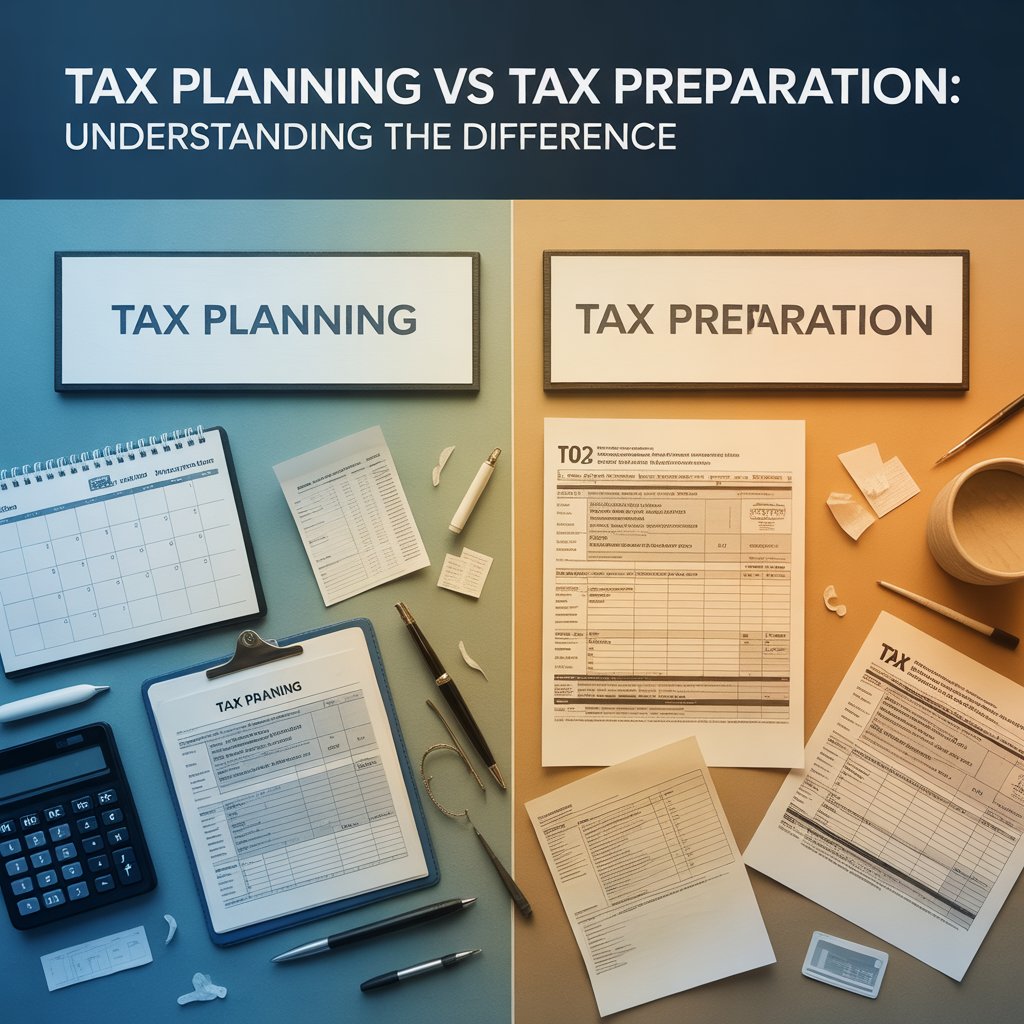
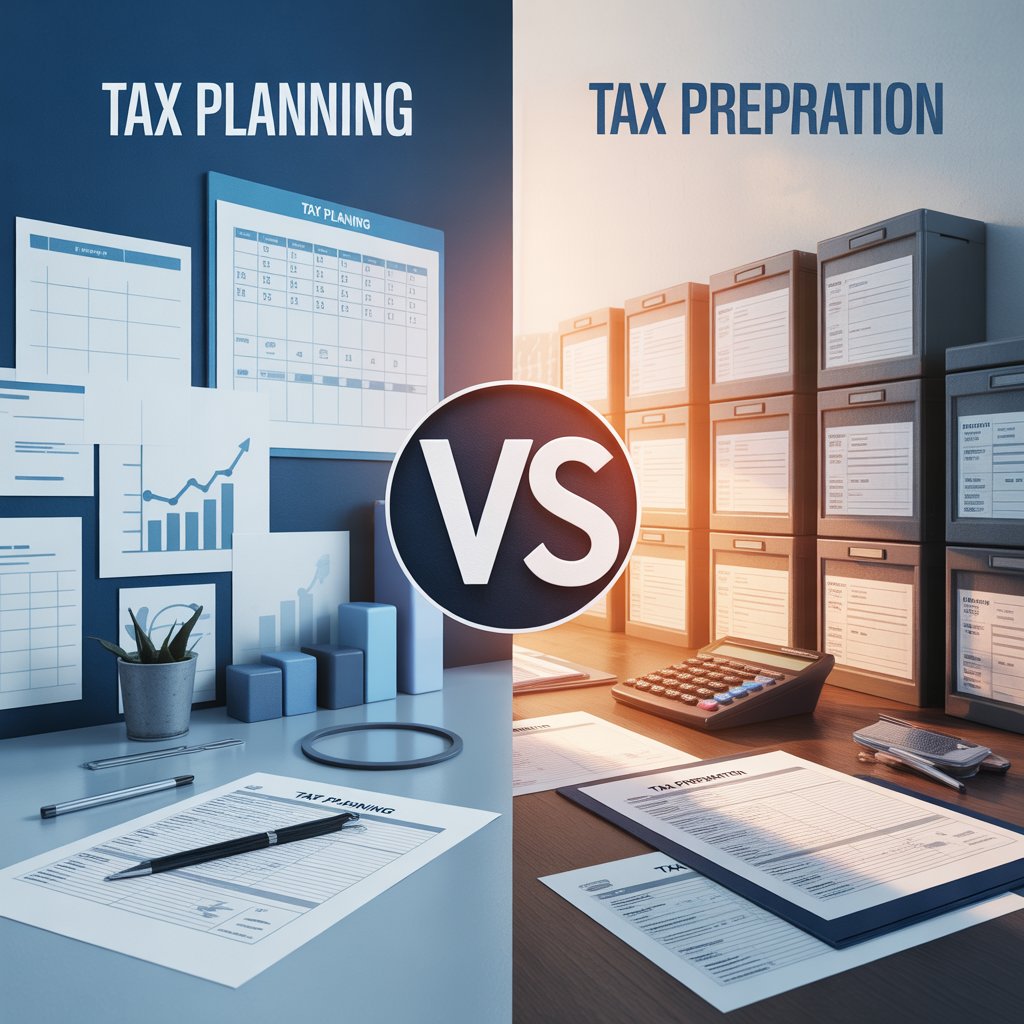
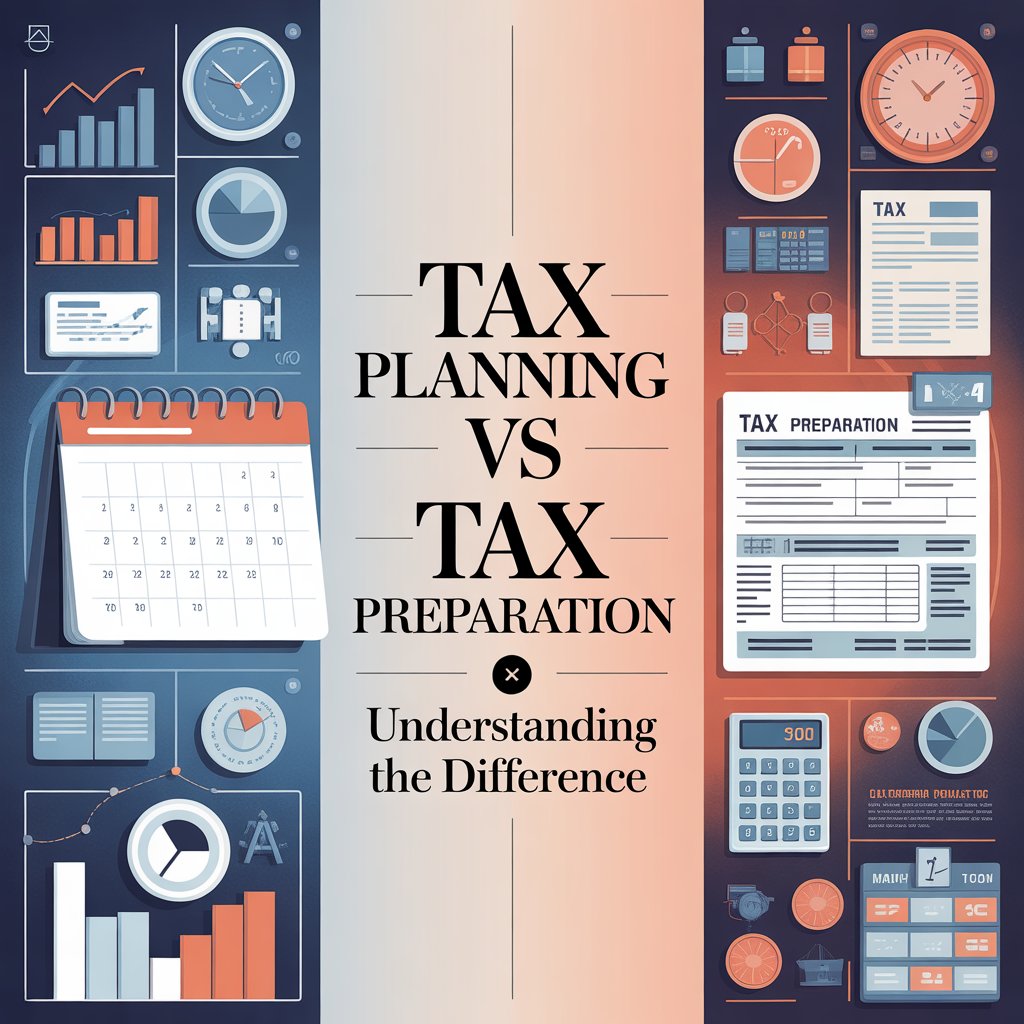
Tax planning and tax preparation are two distinct services that work together but serve very different purposes. Tax preparation is the process of compiling your financial records and filing your tax return accurately after the tax year ends. Tax planning, in contrast, is the proactive strategy of legally reducing your tax liability throughout the year before your return is ever filed.
Think of it this way. Tax preparation is like taking
a photo of your finances as they are. Tax planning is like designing the future you want your finances to look like before the photo is taken. One looks backward; the other looks forward. The most financially successful business owners in the United States use both, but they prioritize planning.
What Is Tax Preparation?
Tax preparation — also called tax filing — is the annual process of gathering income records, expense receipts, and financial statements to complete and submit your federal and state tax returns. For individuals, the deadline is typically April 15 of each year, as established by the IRS. For businesses, deadlines vary by entity type. For example, S-corporations and partnerships must file by March 15.
Tax preparation is reactive by nature.
It captures what already happened financially and reports it accurately to the IRS. A skilled tax preparer ensures your return is error-free and compliant. However, preparation alone does not reduce your tax burden — it simply reports it.
What Is Tax Planning?
Tax planning — also called tax strategy — is the year-round process of analyzing your financial situation to identify legal opportunities to reduce your tax liability. It involves decisions like choosing the right business entity structure, timing income and deductions strategically, maximizing retirement contributions, and using available tax credits under the Internal Revenue Code.
Effective tax planning is proactive. It requires working with a qualified tax professional throughout the year, not just at tax time. According to the IRS, the average effective federal tax rate for small business owners ranges from 13% to 37% depending on income and entity type. Strategic tax planning can meaningfully reduce where in that range you land.
How Tax Planning and Tax Preparation Work Together
Tax planning and tax preparation are not competitors — they are two phases of a complete tax management system. Planning sets the strategy, and preparation executes the reporting. Without planning, preparation becomes damage control. Without preparation, even the best planning strategy fails to get properly documented and filed.
Here is how the two phases connect in practice for a US small business owner:
January–March: Review prior year financials. Identify what worked and what cost you money in taxes.
April–June: Assess current year income projections and adjust your estimated tax payments accordingly under IRS Form 1040-ES.
July–September: Evaluate mid-year deduction opportunities, retirement contributions, and entity structure decisions.
October–December: Execute year-end tax moves — accelerate deductions, defer income where beneficial, and finalize your retirement plan contributions.
January (new year): Tax preparation begins. All planning decisions are now documented and reflected accurately in your tax return.
Why Preparation Alone Is Expensive
Many US taxpayers hire a preparer in March, hand over their documents, and call it done. However, this approach misses every opportunity that existed during the prior year to legally reduce taxes. Retirement contribution deadlines, depreciation elections under IRC Section 179, and business entity tax elections often have year-end or mid-year deadlines that cannot be retroactively applied.
As a result, business owners who skip planning consistently overpay the IRS. Studies from the National Small Business Association estimate that small businesses spend an average of $5,000 or more per year on federal tax compliance — much of which could be reduced with proactive planning.
Industry-Specific Planning: Cannabis, Creators, and Expats
Tax planning is especially critical in industries with unique tax rules. Cannabis businesses operating in the United States face IRC Section 280E, which disallows most ordinary business expense deductions at the federal level. Strategic planning around cost of goods sold allocation — one of the few deductions 280E does allow — can make the difference between profit and loss.
Content creators and OnlyFans earners often face self-employment tax of 15.3% on net earnings, plus federal income tax — a combined rate that surprises many first-time earners. Additionally, US expats must navigate FBAR (Report of Foreign Bank and Financial Accounts) and FATCA reporting obligations under the Bank Secrecy Act. Planning well in advance of filing deadlines prevents costly penalties in each of these situations.
Common Mistakes When Confusing Tax Planning and Tax Preparation
Confusing tax planning with tax preparation — or treating them as the same service — leads to predictable, costly mistakes. Here are the five most common errors that US small business owners make.
Mistake 1: Waiting Until April to Think About Taxes
This is the most expensive mistake of all. By the time April arrives, your tax liability for the prior year is locked in. Therefore, no amount of clever preparation can reduce a tax bill that was set in December. Year-round planning is the only way to proactively shape your tax outcome.
Mistake 2: Missing Quarterly Estimated Tax Deadlines
Self-employed individuals and business owners must pay estimated taxes four times per year to the IRS — typically on April 15, June 15, September 15, and January 15. Missing these deadlines triggers underpayment penalties under IRC Section 6654. Tax planning ensures your quarterly payments are accurate and submitted on time.
Mistake 3: Choosing the Wrong Business Entity
Many self-employed individuals operate as sole proprietors when an S-corporation election could dramatically reduce their self-employment tax burden. For example, an LLC owner earning $150,000 in net profit might save $10,000 or more annually by electing S-corp status and paying themselves a reasonable salary. This is a planning decision — not a preparation decision — and it must be made before the tax year ends.
Mistake 4: Ignoring Available Tax Deductions and Credits
Tax preparation only captures deductions that are documented and submitted with your return. However, effective planning identifies those deductions in advance — home office deductions, vehicle mileage, Section 179 equipment expensing, and health insurance premiums for self-employed individuals. Missing these during the year means missing money you are legally entitled to keep.
Mistake 5: Not Tracking Business Expenses in Real Time
Tax preparation requires records. Tax planning requires even more detailed records — captured throughout the year, not reconstructed in March. Business owners who use clean bookkeeping systems throughout the year arrive at tax time with every deduction documented, every credit identified, and no money left on the table.
How to Build a Year-Round Tax Planning and Preparation System
Building a year-round tax system is simpler than most business owners expect. Follow these six steps to shift from reactive tax preparation to proactive tax planning.
Step 1 — Schedule a Tax Strategy Session.
Start the year with a dedicated meeting with a qualified tax professional. Use this session to review last year’s return, identify missed opportunities, and set a proactive strategy for the current year. This one meeting often uncovers thousands of dollars in overlooked deductions and available credits.
Step 2 — Choose the Right Business Entity.
Confirm that your current business structure — sole proprietor, LLC, S-corp, or C-corp — is the most tax-efficient option for your income level. An S-corporation election, for example, can significantly reduce self-employment taxes for high-earning freelancers and content creators in the USA.
Step 3 — Set Up Clean Bookkeeping From Day One.
Use accounting software to record every transaction in real time. Separate business and personal accounts completely. Clean books are the foundation of both accurate tax preparation and effective tax planning. Without them, neither service can work properly.
Step 4 — Calculate and Pay Quarterly Estimated Taxes.
Work with your tax advisor to calculate accurate quarterly estimated tax payments due April 15, June 15, September 15, and January 15. Paying the correct amount each quarter prevents IRS underpayment penalties and avoids a large surprise bill in April.
Step 5 — Conduct a Mid-Year Tax Review.
In June or July, review your actual income and expenses against your projections. Adjust your estimated payments if needed. Identify whether you should accelerate deductions — such as equipment purchases under IRC Section 179 — before year-end.
Step 6 — Execute Year-End Tax Moves.
In November and December, finalize all tax-reducing actions: maximize retirement contributions to a SEP-IRA or Solo 401(k), prepay deductible business expenses, and review whether to defer any Q4 income into January. These moves directly reduce your taxable income for the current year.
Step 7 — Prepare and File Accurately.
Once the year closes, your tax preparer takes over. Because your planning is already done, preparation becomes an organized, efficient process rather than a stressful scramble. Your return should accurately reflect every decision made during the planning phase.
Contact our team at hello@tranzesta.com for a free consultation.
Tax Planning vs Tax Preparation: Expert Tips for 2026
Advanced tax strategy goes beyond basic deductions and filing on time. Here are the most powerful insider tips that Tranzesta’s team applies for clients across the United States.
Maximize Retirement Accounts as a Tax Reduction Tool. Self-employed individuals can contribute up to $69,000 per year to a Solo 401(k) in 2024 — reducing taxable income dollar for dollar. For high earners, this single planning move can eliminate an entire tax bracket of income.
Use Section 179 to Accelerate Depreciation.
Under IRC Section 179, US businesses can immediately deduct the full cost of qualifying equipment in the year of purchase rather than depreciating it over several years. This is a year-end planning tool — and it requires purchasing equipment before December 31.
Elect S-Corporation Status at the Right Income Level.
For LLC owners earning above roughly $40,000 in net profit, an S-corp election typically saves more in self-employment taxes than it costs in additional payroll administration. This decision must be planned well in advance of the IRS deadline.
Hire Your Spouse or Children Strategically.
Paying a spouse or children as legitimate employees generates deductible wages for your business while splitting income with family members who may be in lower tax brackets. This strategy requires proper employment documentation and payroll records.
Bundle Charitable Deductions in Alternating Years.
Instead of donating the same amount each year, bunching two years of charitable contributions into one year often allows you to itemize deductions in that year, taking the full benefit above the standard deduction threshold.
Above all, the most valuable tip is this:
start planning in January, not April. Every month you delay costs you real money in missed opportunities.
Conclusion: Stop Preparing and Start Planning
The three most important takeaways from this guide are straightforward. First, tax preparation is reactive and reports your finances to the IRS; tax planning is proactive and legally reduces what you owe before the return is filed. Second, confusing the two — or skipping planning entirely — costs US business owners thousands of dollars every year in avoidable taxes. Third, the most effective tax strategy combines both services with the help of a qualified professional who understands your industry.
Whether you are a content creator managing inconsistent income, a cannabis business owner navigating Section 280E, or a self-employed professional trying to keep more of what you earn, Tranzesta builds the complete tax system you need. Moreover, the earlier in the year you engage, the more options you have.
Ready to get expert help? Email us at hello@tranzesta.com or visit Tranzesta.com to schedule your free tax strategy session today.
FAQs
Tax planning vs tax preparation differ primarily in timing and purpose. Tax preparation is the reactive process of compiling financial records and filing your tax return after the year ends. Tax planning, in contrast, is the proactive year-round strategy of legally reducing your tax liability before it is incurred. Tax preparation reports your tax bill; tax planning lowers it. Both are necessary, but planning creates the most financial benefit for US small business owners.
Tax planning is beneficial for every taxpayer — not just wealthy individuals or large corporations. In fact, self-employed individuals and small business owners in the United States often benefit the most from proactive tax planning because they face both income tax and self-employment tax of 15.3% on net earnings. Strategies like retirement account contributions, entity structure optimization, and quarterly estimated tax management are accessible to any business owner regardless of income level.
Tax planning should ideally begin in January of each year — or as soon as possible after your prior-year tax return is filed. Starting early gives you the maximum amount of time to implement strategies like entity elections, retirement contributions, and deduction timing decisions. Many tax moves have hard deadlines set by the IRS, such as the S-corp election deadline or the solo 401(k) contribution deadline, making early planning essential to avoid missing key opportunities.
Not every tax preparer offers proactive tax planning services. Many preparers focus exclusively on filing accurate returns after the fact. To get both services, you need a tax professional or firm that explicitly offers year-round tax strategy and planning — not just annual filing. When evaluating a tax professional, ask directly whether they provide mid-year reviews, quarterly estimated tax guidance, and proactive deduction identification throughout the year, not just during tax season.
Tax planning can save a small business owner anywhere from a few hundred to tens of thousands of dollars per year, depending on income level and the strategies employed. For example, an LLC owner earning $150,000 annually who elects S-corporation status could save $8,000–$12,000 in self-employment taxes alone. Maximizing a Solo 401(k) at $69,000 in contributions could reduce taxable income by the same amount. These savings compound over time, making tax planning one of the highest-ROI investments a US business owner can make.
Related expertise
Talk to a real, signing professional
AI precision, human accountability — across the US, UK & UAE.
Book a free consultation