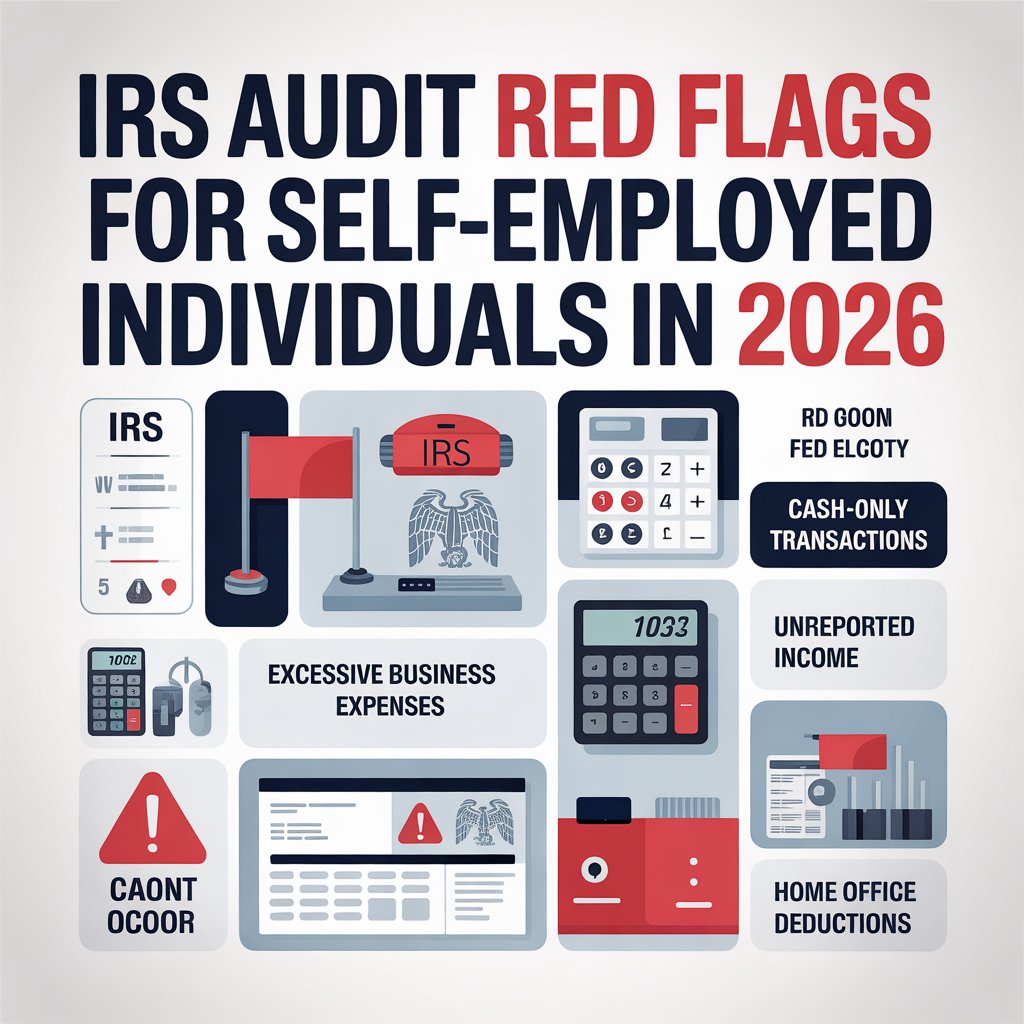
Self-employed individuals in the United States
face higher audit risks than traditional employees. In fact, IRS data shows that sole proprietors are audited more frequently due to income variability and deductions.
If you’re earning income as a freelancer, OnlyFans creator,
or small business owner, understanding IRS audit red flags for self-employed in 2026 is critical. One mistake or inconsistency can trigger an audit that costs time, money, and stress.
In this guide, you’ll learn the most common IRS audit triggers,
how the system works, and exactly what to avoid in 2026. Most importantly, you’ll discover how to protect your income and stay compliant with US tax laws.
are theat Is IRS Audit Red Flags Self-Employed 2026?
IRS audit red flags for the self-employed refer to patterns or inconsistencies in tax returns that increase the likelihood of an IRS audit.
In simple terms, the IRS uses algorithms and data matching systems to flag unusual or suspicious activity. When something doesn’t align with expected norms, your return may be selected for review.
What Is an IRS Audit?
An IRS audit is a formal review of your financial records and tax return to verify accuracy.
According to the IRS, audits can happen by mail or in person. Most importantly, they focus on whether income, deductions, and credits are reported correctly.
Why Self-Employed Individuals Are High Risk
Self-employed taxpayers in the USA often:
As a result, there is more room for errors or inconsistencies. For example, the IRS reported audit rates of over 2% for certain high-income Schedule C filers, compared to less than 1% for typical W-2 employees.
How Does the IRS Identify Audit Red Flags?
The IRS identifies red flags using automated systems and data comparison tools.
Specifically, the IRS relies on the Discriminant Information Function (DIF) score. This system assigns a risk score to each return based on statistical anomalies.
Key Systems Used by the IRS
DIF Score: Flags returns with unusual deductions or income patterns
Information Matching: Compares your return with Forms 1099, W-2, and bank records
UIDIF (Unreported Income DIF): Detects underreported income
You can review official IRS audit processes here:
👉 https://www.irs.gov/businesses/small-businesses-self-employed/irs-audits (opens in a new tab)
Key Triggers That Increase Audit Risk
Here are the most common triggers:
Large deductions compared to income
Consistent business losses year after year
Additionally, failing to match third-party reports is one of the fastest ways to trigger an audit.
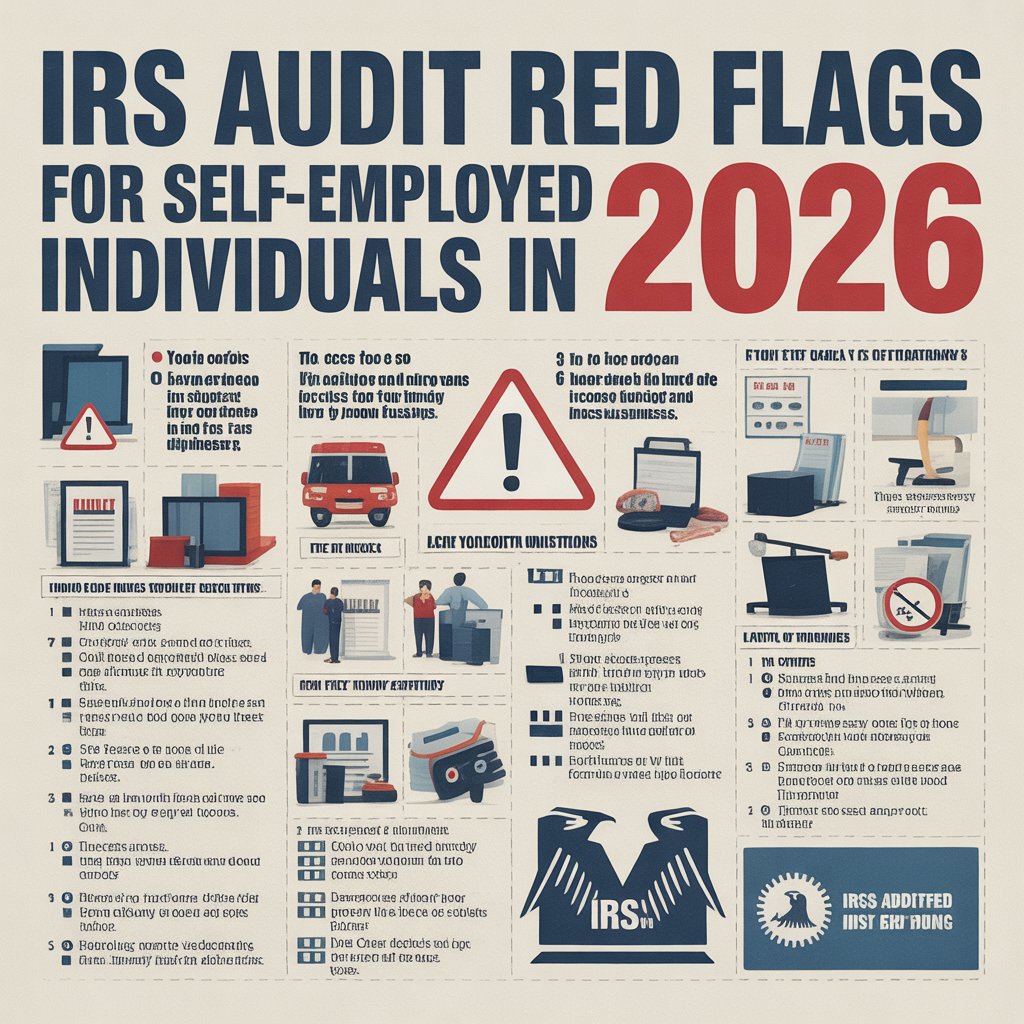
Common IRS Audit Red Flags Self-Employed 2026
The biggest IRS audit red flags for self-employed in 2026 come from patterns that look unusual compared to similar taxpayers.
Reporting Too Many Business Losses
If your business shows losses for multiple years, the IRS may classify it as a hobby.
Under IRS rules, businesses must show a profit in at least 3 out of 5 years to avoid hobby loss limitations.
Claiming Excessive Deductions
Deductions that appear disproportionately high can raise suspicion.
For example, claiming $30,000 in expensea $40,0000,000 income may trigger a review.
Misreporting Income
Failing to report 1099 income is a major red flag.
The IRS receives copies of all 1099 forms. Therefore, mismatches are easily detected.
Overusing the Home Office Deduction
While legitimate, this deduction is often abused.
The IRS looks for unrealistic claims, especially if the space is not exclusively used for business.
Step-by-Step Guide: How to Avoid IRS Audit Red Flags
Avoiding IRS audit triggers requires proactive planning and accurate reporting.
Step 1: Keep Accurate Records
Maintain detailed records of income and expenses. Use accounting software or a professional bookkeeper.
Step 2: Report All Income
Include every 1099, PayPal payment, and cash transaction.
Even small omissions can trigger IRS notices.
Step 3: Claim Legitimate Deductions Only
Ensure every deduction is:
Ordinary (common in your industry)
Necessary (helpful for your business)
Step 4: Separate Business and Personal Finances
Use a dedicated business bank account.
This reduces errors and simplifies tracking.
Step 5: File on Time and Accurately
Late or amended returns increase audit risk.
Therefore, double-check all entries before submission.
Step 6: Work With a Tax Professional
Professionals understand IRS rules and reduce mistakes.
They also help you defend your return if audited.
How Tranzesta Can Help With IRS Audit Red Flags Self-Employed 2026
Avoiding audit triggers requires more than basic tax filing. It requires strategy, compliance, and ongoing monitoring.
That’s where Tranzesta comes in.
Tranzesta is a US-based tax consultation firm specializing
Streamlined Filing
Creator taxes
Cannabis accounting
Business tax and bookkeeping in the USA
We work with self-employed individuals across the United States, including OnlyFans creators and freelancers.
Our services include:
Audit risk analysis
Accurate tax filing
Bookkeeping and financial tracking
IRS compliance support
Additionally, we help clients identify red flags before filing. This proactive approach significantly reduces audit risk.
👉 Learn more about self-employed tax compliance at Tranzesta.com
👉 Visit Tranzesta.com to learn more about our bookkeeping services
Contact our team at hello@tranzesta.com for a free consultation and personalized tax guidance.
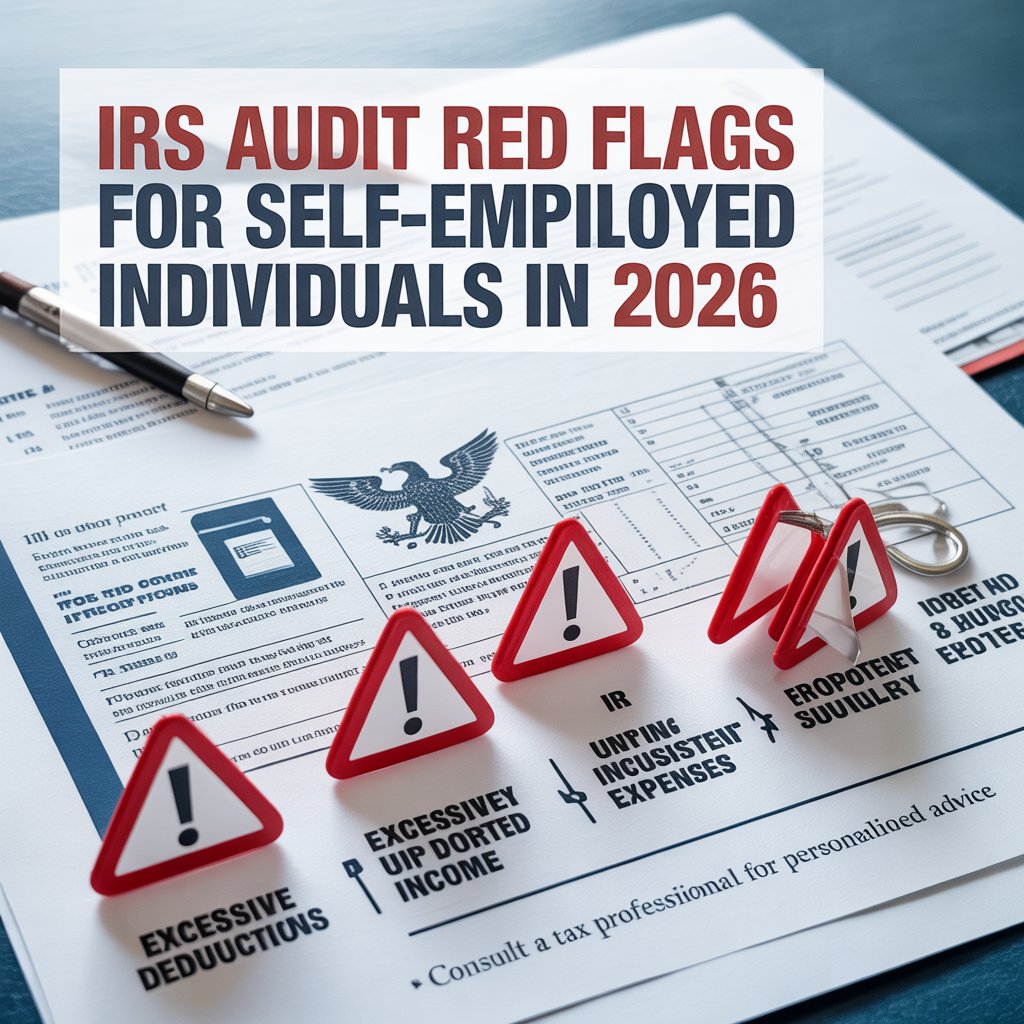
IRS Audit Red Flags Self-Employed 2026: Expert Tips for 2026
Understanding IRS audit red ffor lags self-employed 2026 is just the first step. Applying expert strategies makes the difference.
Here are advanced tips from Tranzesta:
Match all income forms: Ensure your return matches every IRS-reported document
Use industry benchmarks:
Compare your deductions with similar businesses
Document everything:
Keep receipts, invoices, and contracts
Avoid rounding numbers:
Exact figures appear more credible
File consistently:
Avoid drastic year-to-year fluctuations without explanation
Most importantly, consistency and accuracy are your best defense against audits.
Conclusion
IRS audits are not random. They are triggered by identifiable patterns and inconsistencies.
Here are the three key takeaways:
Self-employed individuals face a higher audit risk in the USA
Most audits are triggered by income mismatches and excessive deductions
Proper recordkeeping and compliance can significantly reduce risk
If you want peace of mind and maximum tax efficiency, professional guidance is essential.
Ready to get expert help? Email us at hello@tranzesta.com or visit Tranzesta.com to schedule your free tax strategy session today.
FAQs
IRS audit red flags for self-employed 2026 include unreported income, excessive deductions, and repeated business losses. The IRS uses automated systems to compare your return against industry norms and third-party reports like 1099 forms. Any mismatch or unusual pattern can trigger an audit review.
IRS audit for self-employed individualsincludesften include large deductions relative to income, inconsistent reporting, and high home office expenses. Additionally, failing to report all income sources is one of the most common triggers for IRS audits in the United States.
IRS audit rates for the self-employed in 2026 show that audit rates vary by income level. While the average audit rate is under 1%, it can exceed 2% for higher-income self-employed individuals. The risk increases with complex returns and large deductions.
IRS audit red ffor lags self-employed 2026 cannot be eliminated, but you can significantly reduce your risk. Accurate reporting, proper documentation, and professional tax preparation help ensure compliance and minimize audit triggers.
IRS audit for the self-employed 2026 may lead to an audit where the IRS reviews your financial records. You may need to provide documentation to support your claims. If discrepancies are found, you could owe additional taxes, penalties, and interest.
Talk to a real, signing professional
AI precision, human accountability — across the US, UK & UAE.
Book a free consultation