Living abroad doesn’t always mean you’ve escaped state
taxes. In fact, many US expats are shocked to learn they still owe money to their former state. Understanding state taxes for US expats abroad is critical because state tax rules vary widely—and mistakes can lead to penalties or double taxation.
If you’re a US citizen living overseas,
especially a freelancer, OnlyFans creator, or business owner, you must understand your state residency status. Some states aggressively tax former residents, while others don’t tax income at all.
In this guide, you’ll learn which states still tax you abroad, how residency rules work, and how to legally cut ties. Let’s start with the basics.
What are State Taxes for US Expats Abroad?
State taxes US expats abroad refer to the obligation some US states impose on individuals who live overseas but are still considered state residents. Even if you qualify for federal tax exclusions, your state may still tax your income.
Unlike federal taxes, which apply to all US citizens
globally, state taxes depend on residency. Therefore, your tax obligation depends on whether your state still considers you a resident.
What Does “State Residency” Mean?
State residency determines whether a state can tax your worldwide income. Generally, you are a resident if:
You maintain a permanent home in the state
You intend to return
You have significant ties (bank accounts, driver’s license, voting registration)
For example, California uses strict rules. Even if you live abroad, you may still owe taxes if you haven’t clearly severed ties.
Why This Matters for US Expats
State tax liability can cost thousands of dollars annually. For instance:
California’s top tax rate exceeds 13.3%
New York’s top rate is over 10%
Additionally, states do not recognize federal benefits like the Foreign Earned Income Exclusion (FEIE) in many cases. As a result, you could pay tax on income that the federal government excludes.
How Do State Taxes Work for US Expats Abroad?
State taxes for expats depend on residency status, domicile, and state-specific rules. Some states tax aggressively, while others are lenient or have no income tax at all.
Here are the key rules:
States tax based on residency or domicile
Some states use “statutory residency” rules (e.g., 183-day rule)
Many states ignore federal exclusions like FEIE
You must file state returns if considered a resident
Breaking residency requires clear documentation
According to the IRS, federal filing is mandatory for US citizens abroad (source: https://www.irs.gov/individuals/international-taxpayers — open in new tab). However, state rules vary independently.
Domicile vs Residency
Domicile means your permanent home—the place you intend to return to. Residency can be temporary but still taxable.
For example:
You move abroad but keep your home in New York → still domiciled
You sell your home and relocate fully → may break domicile
States That Still Tax Expats Aggressively
Some states are known for strict enforcement:
These states require strong proof that you’ve left permanently.
Common Mistakes US Expats Make With State Taxes
Many expats overpay or face penalties because they misunderstand state tax rules. Avoiding these mistakes can save significant money.
Assuming You’re Automatically Non-Resident
Leaving the USA does not automatically end your state tax obligation. States require clear evidence of departure.
Keeping Too Many Ties
Maintaining ties like:
can trigger continued tax liability.
Ignoring State Filing Requirements
Even if you owe nothing, you may still need to file. Failure to file can result in penalties and audits.
Relying Only on Federal Tax Rules
Federal benefits like FEIE (up to $126,500 in 2024) don’t always apply at the state level. Therefore, you may still owe full state tax.
Not Documenting Your Move
Without documentation, states may challenge your residency status. Keep:
Lease agreements abroad
Employment contracts
Travel records
Step-by-Step Guide: How to Stop Paying State Taxes Abroad
To avoid state taxes as an expat, you must properly break residency and establish non-resident status. Here’s how:
Step 1: Determine Your Current Residency Status
Review your state’s rules carefully. Some states define residency differently.
Step 2: Cut Physical Ties
Sell or rent out your home. Cancel local memberships. Move belongings abroad.
Step 3: Update Legal Documents
Change:
Driver’s license
Voter registration
Mailing address
This signals intent to leave permanently.
Step 4: Establish Foreign Residency
Secure long-term housing abroad. Register with local authorities if required.
Step 5: Keep Detailed Records
Document everything. This includes:
Flight records
Utility bills abroad
Employment contracts
Step 6: File Final State Return
File a part-year or final return showing your departure date.
Step 7: Consult a Tax Professional
State tax rules are complex. Professional guidance ensures compliance and avoids costly errors.
How Tranzesta Can Help With State Taxes for US Expats Abroad
Tranzesta helps US expats navigate complex state tax rules and legally reduce tax liability. Whether you’re a freelancer, OnlyFans creator, or cannabis business owner, expert guidance matters.
At Tranzesta, we specialize in:
Streamlined Filing for expats behind on taxes
Creator taxes for OnlyFans and digital entrepreneurs
Cannabis accounting compliance
Business tax and bookkeeping in the USA
We analyze your state residency status and create a strategy to minimize taxes legally. Additionally, we help you document your exit properly, which is critical for high-tax states like California and New York.
Most importantly, we ensure you stay compliant with both federal and state requirements.
Contact our team at hello@tranzesta.com for a free consultation.
Learn more about expat tax compliance at Tranzesta.com and explore our Streamlined Filing services.
State Taxes US Expats Abroad: Expert Tips for 2026
The smartest expats plan their state exit before moving abroad. Timing and documentation are everything.
Here are expert strategies:
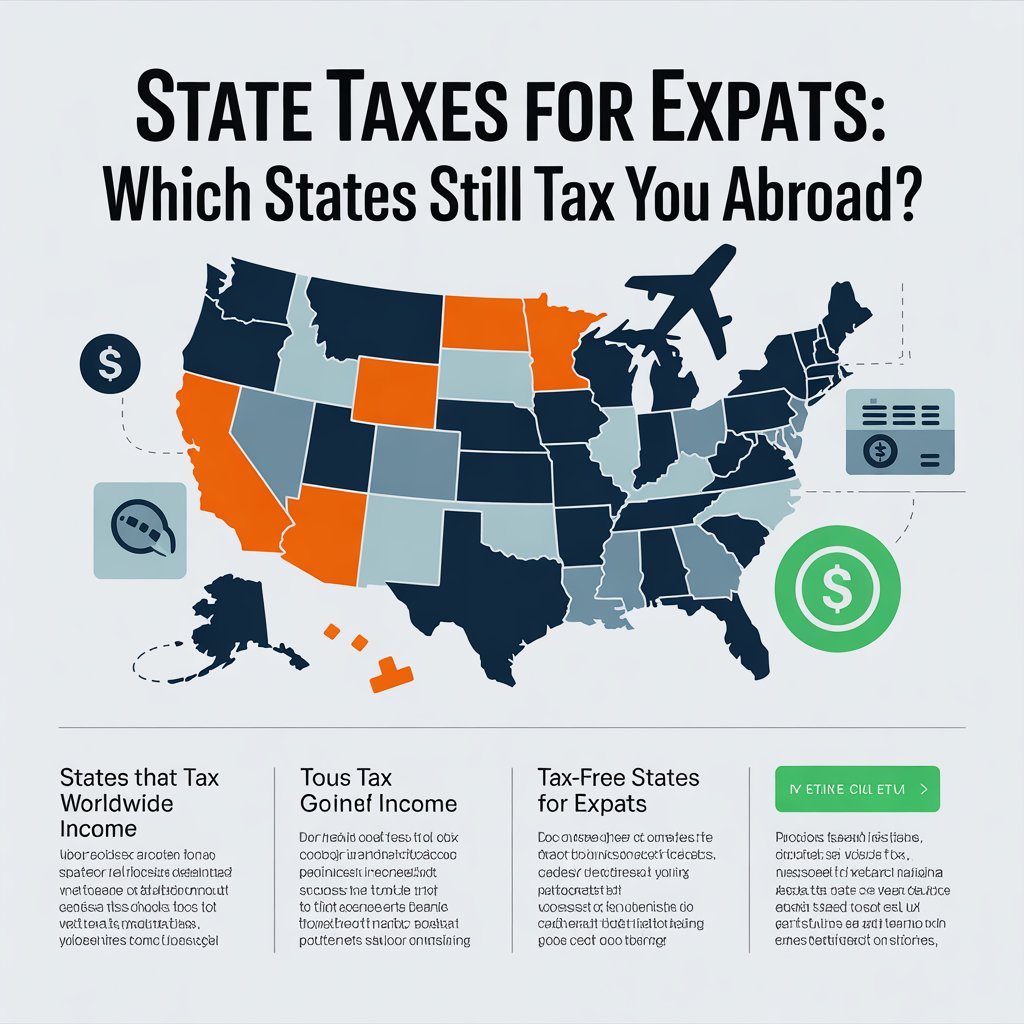
Move from a high-tax state to a no-tax state before going abroad
States like Texas, Florida, and Nevada have no income tax
Avoid returning frequently to your former state
Use foreign addresses consistently on all records
Close local bank accounts tied to your old state
Additionally, according to SBA.gov (https://www.sba.gov — open in new tab), business owners must also consider state nexus rules. If your business has ties to a state, it may still owe taxes.
Tranzesta advises clients to plan at least 6–12 months before relocating. This reduces audit risk and strengthens your non-resident position.
Conclusion
Understanding state taxes for US expats abroad is essential if you want to avoid unnecessary tax bills. First, your state residency determines your tax obligation—not just your physical location. Second, high-tax states aggressively enforce residency rules. Third, proper planning and documentation can help you legally eliminate state taxes.
If you’re unsure about your status, don’t guess. The cost of mistakes can be high.
Ready to get expert help? Email us at hello@tranzesta.com or visit Tranzesta.com to schedule your free tax strategy session today.
FAQs
State taxes US expats abroad depend on residency status. If you are still considered a resident of a state, you must pay state taxes even while living overseas. Some states aggressively enforce residency rules, while others do not. Therefore, properly breaking residency is essential to avoid ongoing tax obligations.
State taxes for US expats abroad vary by state, but some states have no income tax at all. These include Texas, Florida, Nevada, Washington, and Wyoming. If you establish residency in one of these states before moving abroad, you may eliminate state tax obligations.
State taxes that US expats abroad can avoid by breaking residency. This involves cutting ties such as housing, driver’s licenses, and voter registration. You must also establish a new residence abroad and document your move thoroughly to prove non-resident status.
State taxes on U.S. expats abroad are especially strict in California. The state may continue to tax you if you maintain ties or intend to return. California does not automatically recognize expat status, so you must prove that you have permanently left.
State taxes US expats abroad may require filing even if you owe nothing. If your state considers you a resident or part-year resident, you must file a return. Filing ensures compliance and prevents penalties or audits later.
Related expertise
Talk to a real, signing professional
AI precision, human accountability — across the US, UK & UAE.
Book a free consultation