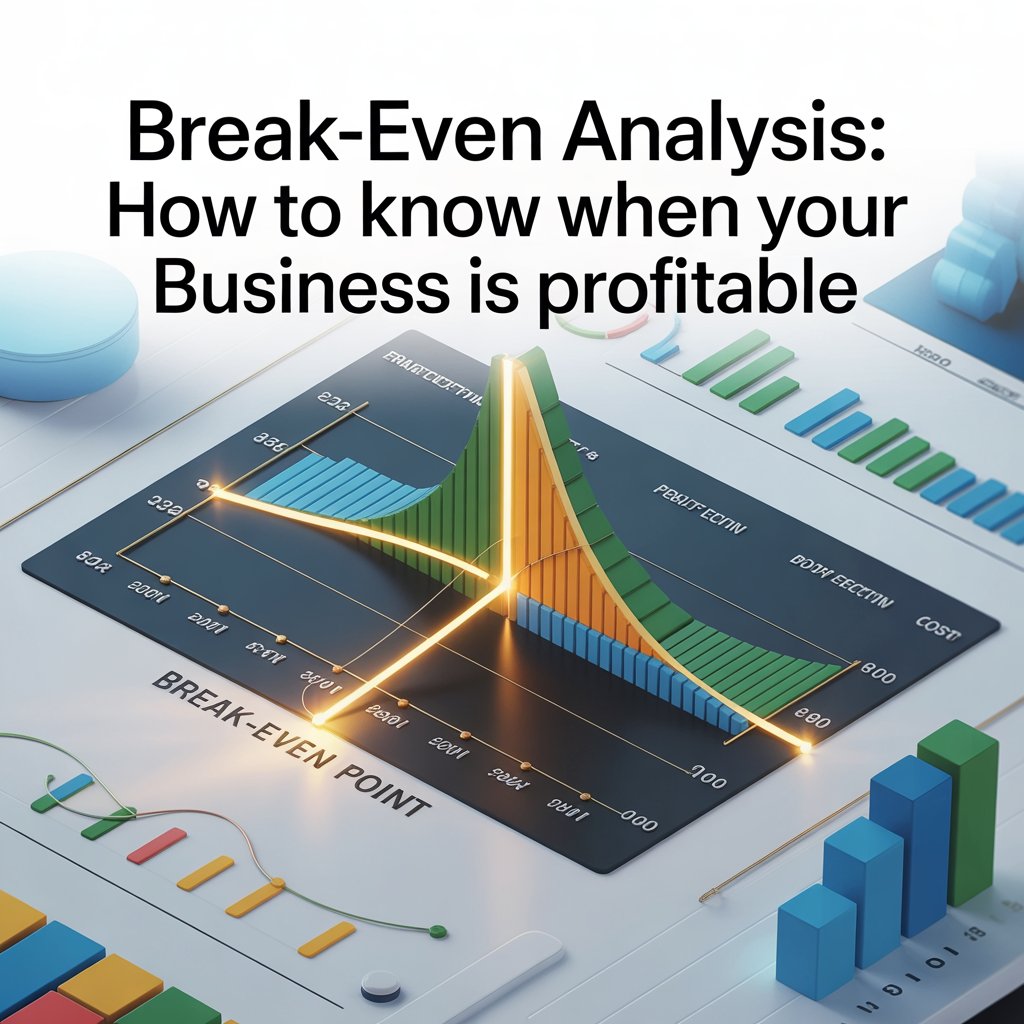
Break Even Analysis for Business: How to Know Exactly When You Start Making Money
Most business owners guess when they will become profitable. That guess costs them thousands of dollars every year.
Running a business without a break even analysis is like driving cross-country without a map. You might eventually arrive — but you will waste time, fuel, and money along the way. The break even analysis for business is the financial calculation that tells you precisely how many units you must sell, or how much revenue you must generate, before your business stops losing money and starts making it.
In this guide, you will learn exactly what a break-even
analysis is, how to calculate it using a simple formula, the most common mistakes business owners make, and a step-by-step process to run your own analysis today.
Whether you are an OnlyFans content creator pricing your subscription tiers, a cannabis dispensary owner setting product margins, or a self-employed consultant in the United States figuring out when your business becomes viable — this guide is built for you. Let’s start with the fundamentals.
What Is Break Even Analysis in Business?
Break even analysis in business is a financial calculation that determines the exact point at which your total revenue equals your total costs — meaning you have neither a profit nor a loss. That point is called the break-even point (BEP).
Every dollar of revenue earned above the break-even
point is profit. Every dollar below it represents a loss. Therefore, knowing your break-even point gives you a concrete, measurable target to aim for — not just a vague hope that sales will be “enough.”
According to the U.S. Small Business Administration
(SBA), inadequate financial planning is one of the leading causes of small business failure in the United States. A break-even analysis is one of the most accessible financial planning tools available to any business owner — and it requires no accounting degree to use.
Why Break Even Analysis Matters for Your Specific Business
The break-even analysis is not just for large corporations. In fact, it is most valuable for small businesses, freelancers, and self-employed individuals who are operating with tight margins and limited capital.
For example, an OnlyFans creator needs to know how many paid subscribers cover their content production costs before any real income begins. A cannabis business owner needs to know exactly how many grams or units must sell each month to cover retail overhead, payroll, and compliance costs. Additionally, a self-employed consultant must understand how many billable hours per month cover their expenses before they actually start building wealth.
Most importantly, the break-even analysis forces you to
look honestly at your cost structure — which is the single most powerful step you can take before making a major business decision.
Key Terms You Need to Know
Before calculating your break-even point, you need to understand three core terms:
Fixed Costs: Expenses that remain the same regardless of how many units you sell. Examples include rent, insurance, software subscriptions, and salaried employee wages.
Variable Costs: Expenses that increase or decrease directly with your sales volume. Examples include raw materials, production costs, payment processing fees, and shipping.
Contribution Margin: The amount left over from each sale after subtracting variable costs. This is the portion of each dollar of revenue that contributes toward covering your fixed costs.
With these three concepts clear, you are ready to run the actual calculation.
How Does Break Even Analysis Work? The Formula Explained
Break even analysis uses a straightforward formula that any business owner can apply. The standard break-even point formula calculates the number of units you must sell to cover all costs.
The Break-Even Point Formula
Break-Even Point (Units) = Fixed Costs ÷ (Selling Price Per Unit − Variable Cost Per Unit)
The denominator of this formula — Selling Price minus Variable Cost Per Unit — is your contribution margin per unit. It represents how much each sale contributes toward covering your fixed overhead.
You can also calculate your break-even point in revenue dollars rather than units, using this version:
Break-Even Point (Revenue) = Fixed Costs ÷ Contribution Margin Ratio
The Contribution Margin Ratio is simply your contribution margin divided by your selling price, expressed as a percentage.
A Real-World Break-Even Example
Let’s walk through a concrete example. Imagine you run a small online business selling handcrafted candles. Here are your numbers:
Selling price per candle: $35
Variable cost per candle (wax, wick, jar, packaging, shipping): $12
Monthly fixed costs (studio rent, website, insurance, marketing): $2,300
First, calculate the contribution margin per unit: $35 − $12 = $23.
Next, apply the formula: $2,300 ÷ $23 = 100 candles.
Therefore, you must sell exactly 100 candles every month just to break even. Candle number 101 onward is pure profit. This simple calculation instantly tells you whether your current pricing and volume targets are realistic — or dangerously optimistic.
How Tax Obligations Affect Your Break-Even Point
Many US business owners make the critical mistake of ignoring tax obligations when calculating their break-even point. Self-employed individuals in the United States are required to pay self-employment tax — currently 15.3% on net self-employment income — in addition to federal and state income taxes.
Additionally, the IRS requires quarterly estimated tax payments if you expect to owe $1,000 or more in taxes for the year (see IRS Form 1040-ES, available at irs.gov). As a result, your true break-even point should include a tax reserve as a fixed monthly cost — otherwise, you will reach your calculated break-even point and still find yourself short at tax time.
Learn more about self-employment tax planning and quarterly estimated payments at Tranzesta.com/business-tax-services — our team helps US business owners factor taxes into their financial planning from day one.
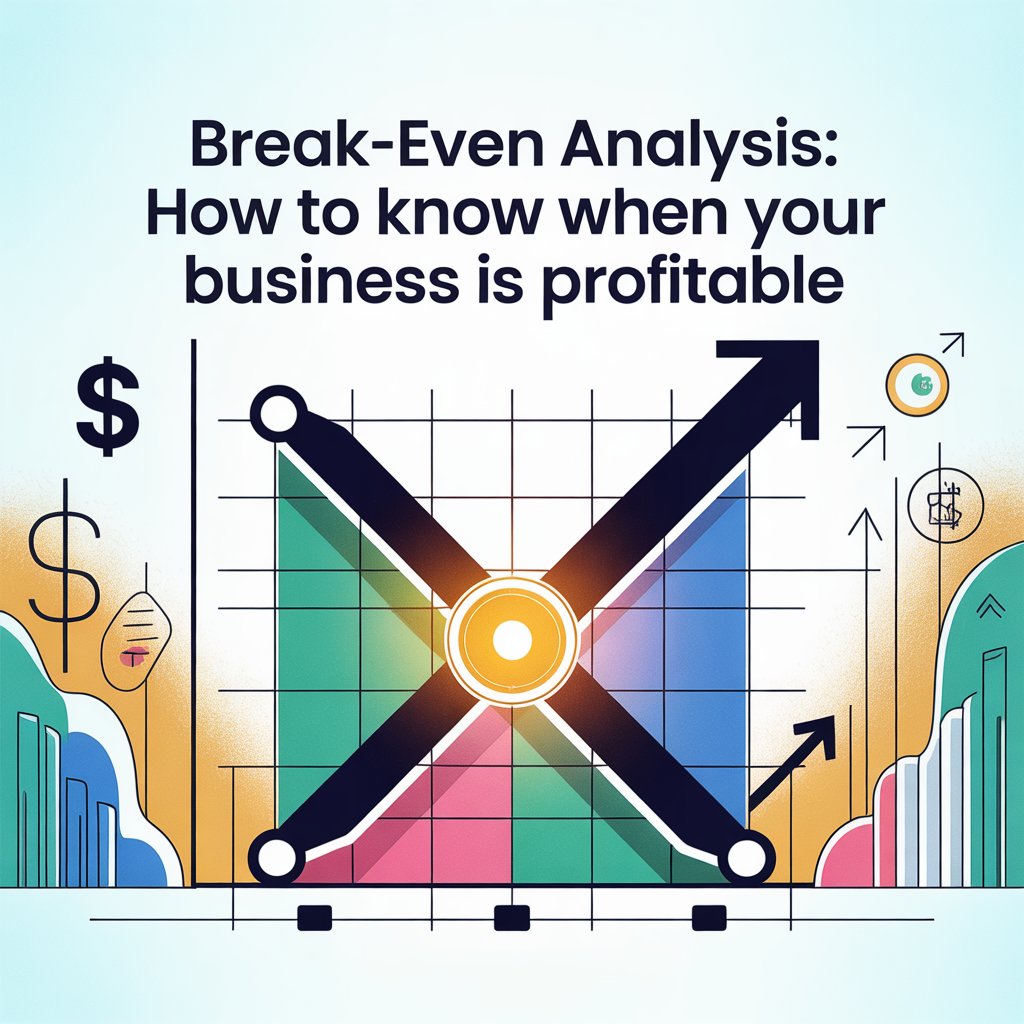
Common Break-Even Analysis Mistakes That Derail US Business Owners
A break-even analysis is only as accurate as the numbers you put into it. Here are the five most damaging mistakes business owners make — and how to avoid each one.
Mistake 1: Miscategorizing Fixed and Variable Costs
This is the most common error. Many business owners classify costs as fixed when they are actually variable — or vice versa. For example, credit card processing fees are variable (they increase with each sale), but owners frequently list them as a fixed monthly estimate. Over time, this small error causes your break-even calculation to significantly understate your actual costs.
Always review each expense line by line and ask: does this cost change if I sell more or less? If yes, it is variable. If no, it is fixed.
Mistake 2: Forgetting Owner Compensation
Many self-employed individuals and sole proprietors do not include their own salary or draw in their fixed costs. As a result, they reach their calculated break-even point but have not actually paid themselves — which is not truly breaking even. Your compensation is a real cost of operating the business.
Always include a target owner salary as a fixed cost in your break-even model. This gives you a realistic picture of the revenue needed to sustain both the business and your personal income.
Mistake 3: Using a Single Break-Even Point for Multiple Products
If your business sells multiple products or services at different price points — which is common for content creators, cannabis dispensaries, and consulting businesses — a single break-even calculation is not sufficient. Each product or service tier has its own contribution margin.
Instead, calculate a weighted average contribution margin based on your expected sales mix. Alternatively, run a separate break-even analysis for each major revenue stream. This gives you far more actionable insight into which products are actually driving profitability.
Mistake 4: Treating Break-Even as a One-Time Calculation
Your break-even point changes whenever your costs or pricing change. If you raise your rent, hire a new employee, change your supplier, or adjust your prices, your break-even point shifts immediately. However, many business owners calculate it once and never revisit it.
Therefore, recalculate your break-even point whenever a significant cost or revenue change occurs — and review it formally at least once per quarter.
Mistake 5: Ignoring Industry-Specific Tax Rules
Cannabis businesses in the United States face a uniquely challenging tax situation under Internal Revenue Code Section 280E, which prohibits cannabis operators from deducting ordinary business expenses. This means your effective tax burden is much higher than a typical small business — and your break-even point must account for this.
Similarly, content creators who earn income across multiple platforms may face multi-state tax obligations that dramatically affect their true cost structure. Getting industry-specific tax guidance is essential for an accurate break-even model.
How to Run a Break Even Analysis for Your Business: Step-by-Step
Running a break even analysis for your business does not require expensive software or an accountant. Follow these seven steps to build your own accurate break-even model today.
Step 1: List All Your Fixed Costs
Start by identifying every expense that remains constant each month regardless of sales. Common fixed costs for US small businesses include rent or mortgage, business insurance, salaried staff, software subscriptions, loan payments, and professional service fees like accounting or legal retainers. Add these up to get your total monthly fixed costs.
Step 2: Calculate Your Variable Cost Per Unit
Next, determine how much it costs you to produce or deliver each unit of your product or service. This includes materials, production labor, packaging, shipping, and any per-transaction fees. Divide your total variable costs by the number of units produced to get your variable cost per unit.
Step 3: Set Your Selling Price
Identify the price at which you sell each unit. If you sell multiple products, start with your primary revenue driver. Make sure this price reflects your actual market positioning — not just what you wish you could charge. Additionally, verify that your price is competitive within your specific US market and industry.
Step 4: Calculate Your Contribution Margin
Subtract your variable cost per unit from your selling price. The result is your contribution margin per unit — the amount each sale contributes toward covering fixed costs. For example, if you charge $100 per service and your variable costs are $30, your contribution margin is $70 per unit.
Step 5: Apply the Break-Even Formula
Divide your total fixed costs by your contribution margin per unit. The result is your break-even point in units. For example: $7,000 in fixed costs ÷ $70 contribution margin = 100 units per month. This is your minimum monthly sales target before you reach profitability.
Step 6: Add a Tax Reserve to Your Fixed Costs
As noted earlier, US self-employed individuals and business owners must account for quarterly estimated tax payments. Estimate your expected annual tax liability, divide by 12, and add that monthly figure to your fixed costs before recalculating your break-even point. This ensures your break-even target is truly sufficient to cover all obligations — not just operating costs.
Step 7: Test Scenarios and Adjust Your Strategy
Once you have your base break-even point, run what-if scenarios. What happens if you raise your price by $10? What if variable costs increase 15%? What if you add a new employee? Each scenario shifts your break-even point and reveals which levers — pricing, volume, or cost reduction — give you the most control over your profitability timeline.
How Tranzesta Helps US Business Owners with Break Even Analysis and Tax Planning
Tranzesta is a US-based tax consultation firm that goes beyond annual tax filing to provide the strategic financial support growing businesses need. We understand that an accurate break even analysis for business is impossible without a clear picture of your true tax obligations — and that is exactly where we step in.
Our team works with four specialized client groups
who each face unique break-even challenges. OnlyFans and digital content creators deal with self-employment income that fluctuates month to month, making break-even modeling especially critical for subscription pricing and content investment decisions.
Cannabis business owners must navigate the unique
burden of IRS Section 280E, which dramatically increases their effective tax rate. As a result, Tranzesta builds 280E-adjusted break-even models that reflect the true cost of operating a cannabis business in compliance with US federal and state law.
Self-employed individuals and sole proprietors benefit
from our bookkeeping services, which give them clean, current financial data — the foundation of any reliable break-even analysis. Furthermore, US expats using our Streamlined Filing services can use break-even modeling to plan for international income and tax treaty implications.
Contact our team at hello@tranzesta.com for a free consultation. Learn more about our business tax and bookkeeping service at Tranzesta.com/business-tax-services
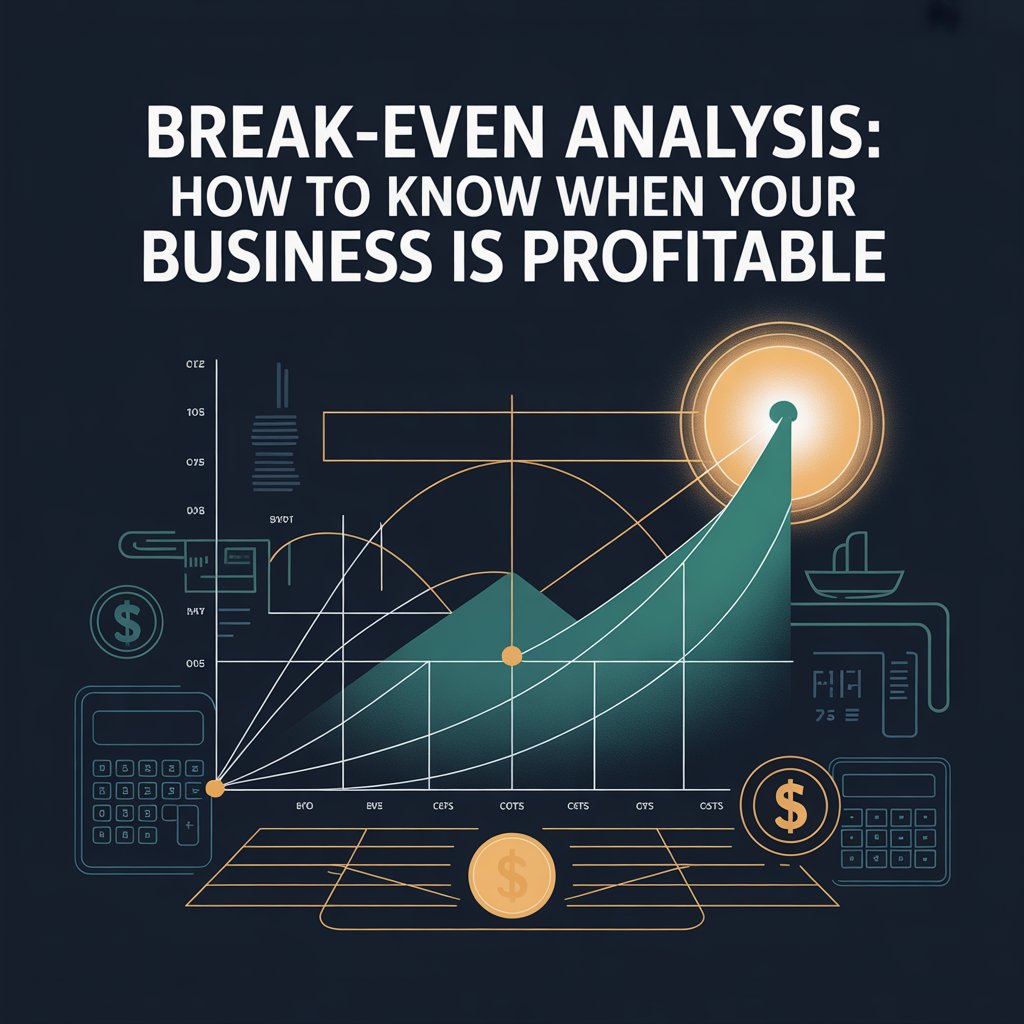
Break Even Analysis Business Tips: Advanced Strategies for 2026
Beyond the basic formula, experienced financial professionals use these advanced strategies to make break-even analysis a living part of their business decision-making. Tranzesta’s team applies these methods with clients across the United States every day.
Build a monthly break-even dashboard:
Track your actual units sold or revenue against your break-even target every month. Seeing whether you are above or below your break-even point in real time turns a static calculation into an active management tool.
Use break-even to evaluate new opportunities:
Before launching a new product, service tier, or location, run a break-even analysis specific to that opportunity. This tells you how long it will take to become profitable and whether the investment makes sense given your current resources.
Model your margin of safety:
The margin of safety is the gap between your actual sales and your break-even point. A larger margin of safety means your business can absorb a sales decline without immediately falling into losses. This is especially important for seasonal businesses and cannabis operators in the USA with volatile regulatory environments.
Combine break-even with cash flow forecasting:
Break-even analysis tells you when you are profitable on paper. Cash flow forecasting tells you whether you have the actual cash to stay in business while you get there. Use both tools together for a complete financial picture.
Revisit annually and after major changes:
Set a recurring calendar reminder to review your break-even model at the start of each fiscal year — and immediately after any major cost change, price adjustment, or business expansion. Outdated break-even models give false confidence.
For a broader view of your business financial health, learn more about cash flow statement analysis and business bookkeeping at Tranzesta.com — two tools that work hand-in-hand with your break-even analysis.
Conclusion: Know Your Numbers Before You Need Them
To summarize the three most important takeaways from this guide: First, break even analysis for business is not a luxury — it is a foundational financial tool that every US business owner, self-employed individual, and content creator should use before spending another dollar on growth. Second, the formula is simple, but accuracy depends on correctly categorizing your costs and including often-forgotten items like owner compensation and tax reserves.
Third, break-even analysis is not a one-time exercise. It is a living calculation that should be updated quarterly and whenever your cost structure or pricing changes. Additionally, the most successful businesses in the United States use break-even modeling alongside cash flow forecasting and professional tax planning to build genuinely resilient financial operations.
Ready to get expert help? Email us at hello@tranzesta.com or visit Tranzesta.com to schedule your free tax strategy session today.
• Learn more about business tax and bookkeeping services at Tranzesta.com/business-tax-services
• Explore cannabis industry accounting and 280E tax strategy at Tranzesta.com/cannabis-accounting
• Discover OnlyFans and content creator tax services at Tranzesta.com/creator-taxes
FAQs
Break even analysis in business is a financial calculation that identifies the exact point at which your total revenue equals your total costs, resulting in neither a profit nor a loss. This point is known as the break-even point (BEP). Business owners use it to determine how many units they must sell or how much revenue they must generate before their business becomes profitable. It is one of the most essential planning tools for US entrepreneurs, freelancers, and small business owners.
To calculate the break-even point, use this formula: Break-Even Point (Units) = Fixed Costs divided by (Selling Price Per Unit minus Variable Cost Per Unit). First, add up all monthly fixed costs. Next, subtract your variable cost per unit from your selling price to get your contribution margin. Then divide total fixed costs by the contribution margin. The result tells you exactly how many units you must sell each month to cover all expenses in your business.
A good break-even point for a small business is one that is achievable within a realistic sales timeframe — typically within three to six months of launch. There is no universal dollar amount that defines a ‘good’ break-even point because it depends entirely on your industry, pricing, and cost structure. However, if your break-even point requires sales volume that far exceeds your current market capacity, that is a signal to reduce costs, raise prices, or revisit your business model before investing further.
In break even analysis, fixed costs are expenses that do not change regardless of sales volume — such as rent, insurance, and salaried wages. Variable costs are expenses that rise or fall directly with your production or sales volume — such as materials, packaging, shipping, and payment processing fees. Correctly identifying which costs are fixed and which are variable is the most critical step in producing an accurate break-even analysis for any US business.
Break even analysis helps with business decisions by giving owners a concrete financial target before committing money or time to a new initiative. For example, before launching a new product, a break-even analysis reveals how many units must sell to recover costs. Before hiring a new employee, it shows how much additional revenue the hire must generate to justify the investment. Additionally, for pricing decisions, running multiple break-even scenarios at different price points reveals which option leads to profitability fastest.
One Response