Nearly 60% of small business owners in the United States
say they do not feel confident reading their own financial statements. If you are among them, you are leaving serious money on the table. Understanding balance sheet basics for small business is one of the most powerful things you can do to protect your company, satisfy lenders, and file your taxes correctly.
In this guide, you will learn exactly what a balance sheet
is, what each section means, the most common mistakes small business owners make, and a step-by-step process for building your own. Whether you run an OnlyFans creator business, a cannabis dispensary, a freelance operation, or any other self-employed venture in the USA, this article was written specifically for you.
By the end, you will walk away with the knowledge
and confidence to use your balance sheet as a real financial tool — not just a document you hand to your accountant once a year.
What Are Balance Sheet Basics for Small Business?
A balance sheet — also called a statement of financial position — is a financial document that shows what your business owns, what it owes, and what is left over for the owners at a specific point in time. Unlike a profit and loss statement, which covers a period of time, the balance sheet is a snapshot taken on a single date.
The balance sheet is built on one of the most fundamental equations in all of accounting:
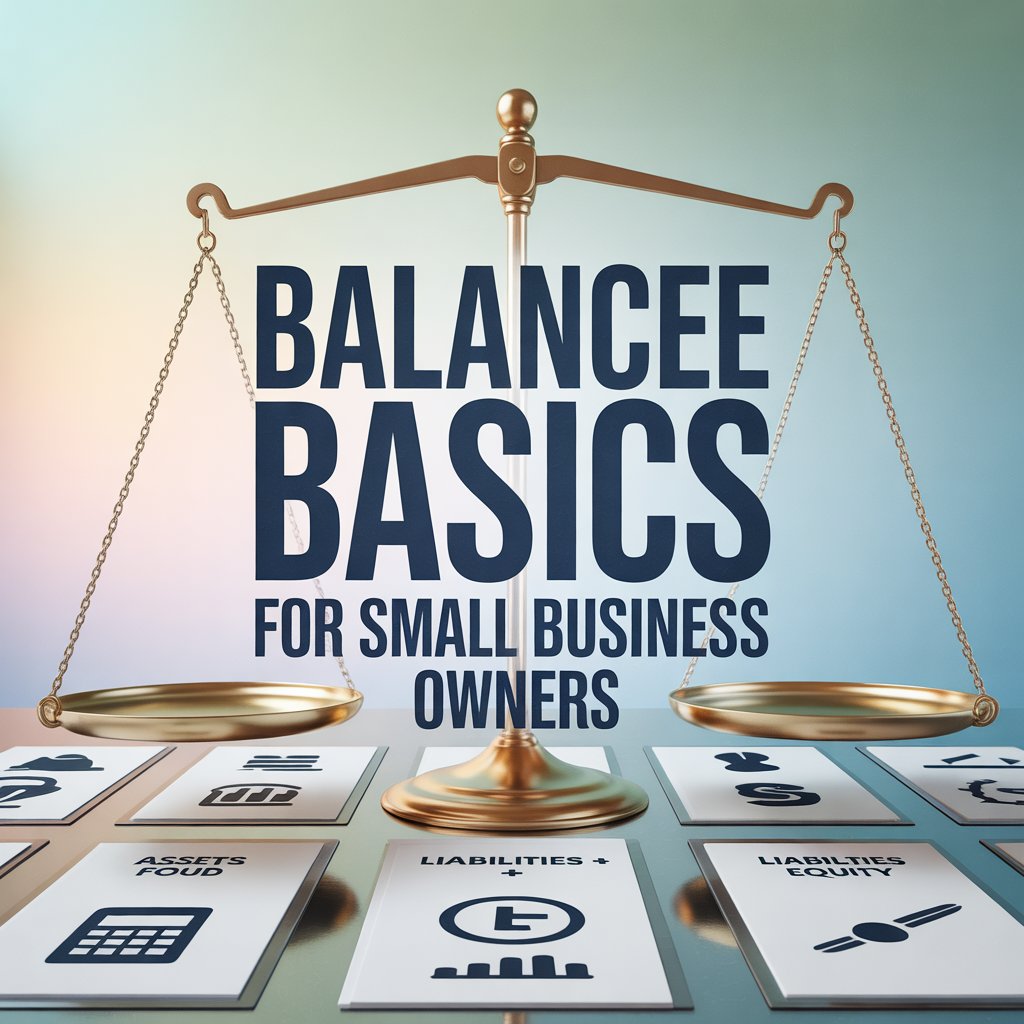
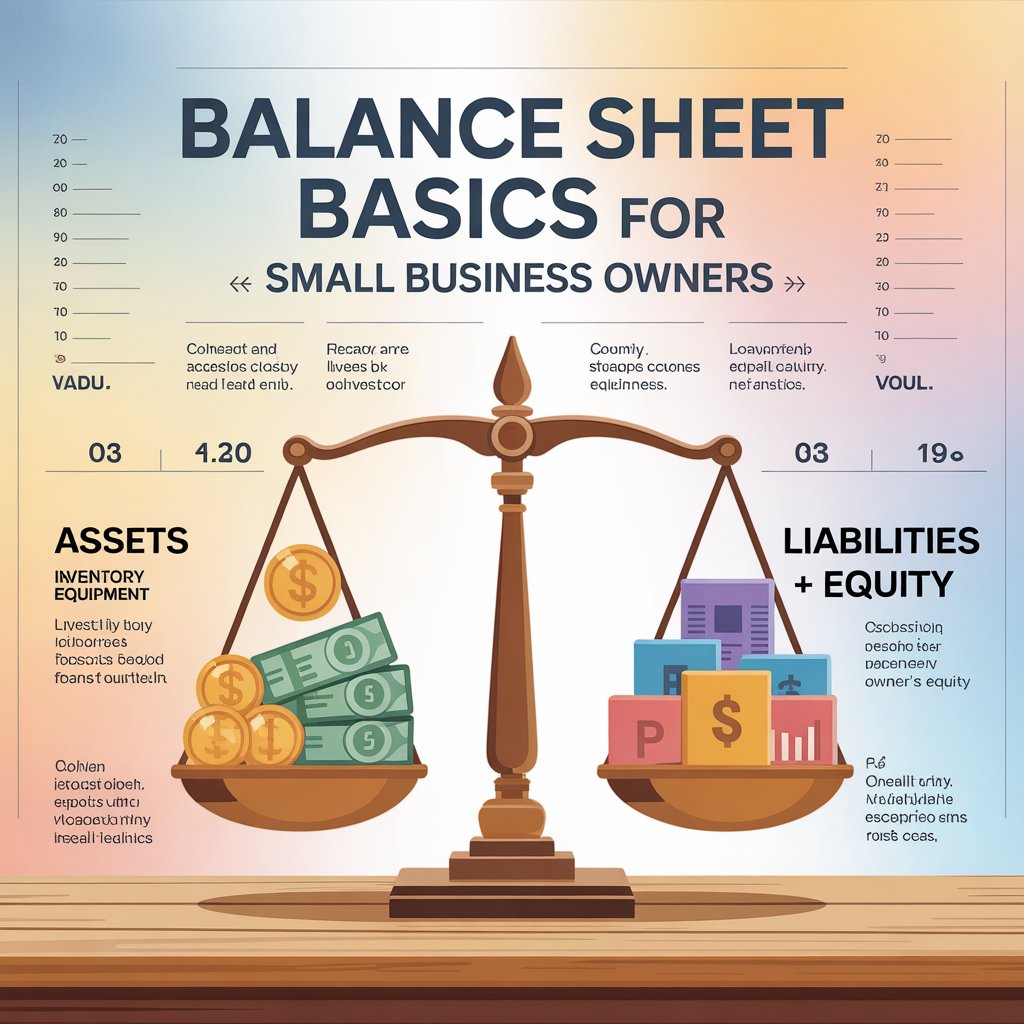
Assets = Liabilities + Owner’s Equity
This equation must always balance — hence the name. If your assets do not equal your liabilities plus equity, something in your bookkeeping is wrong. For US small business owners, maintaining a balanced and accurate balance sheet is essential for tax compliance, loan applications, and strategic decision-making.
Why Does the Balance Sheet Matter for US Small Business Owners?
Lenders, investors, and the IRS all rely on balance sheet data. For example, the Small Business Administration (SBA) requires a balance sheet when you apply for most SBA loans. Banks use it to assess your creditworthiness. Additionally, if you are ever audited by the IRS, your balance sheet helps verify that your reported income and deductions are consistent with your actual financial position.
For cannabis business owners in the United States,
the balance sheet is especially important. Because of IRS Section 280E — which disallows most deductions for businesses selling Schedule I or II controlled substances — understanding exactly what your business owns and owes becomes critical for minimizing your tax exposure legally.
How Is a Balance Sheet Different from a P&L Statement?
A profit and loss statement (P&L) shows your revenues and expenses over a period — it answers ‘Did we make money?’ A balance sheet shows your financial position at one moment in time — it answers ‘What do we own and owe right now?’ Both documents are required for comprehensive financial management and accurate US tax filing. Tranzesta.com Most accountants recommend reviewing both monthly.
Learn more about profit and loss statements and small business bookkeeping at Tranzesta.com.
The Three Core Components of a Small Business Balance Sheet
Every balance sheet — regardless of business size or industry — contains three main sections: assets, liabilities, and owner’s equity. Understanding each one is the foundation of balance sheet basics for small business.
1. Assets: Everything Your Business Owns
Assets are resources your business controls that have economic value. They are typically listed in order of liquidity — meaning how quickly they can be converted into cash. Assets are split into two categories:
Current Assets: Resources expected to be converted to cash within one year. Examples include cash in your bank account, accounts receivable (money owed to you by customers), inventory, and prepaid expenses.
Non-Current Assets (Long-Term Assets): Resources with a useful life longer than one year. Examples include real estate, vehicles, equipment, and intangible assets like trademarks or patents. These are typically recorded at cost and depreciated over time under IRS depreciation rules.
The IRS regulates how assets are depreciated
through Section 179 and bonus depreciation rules. For the 2025 tax year, the Section 179 deduction limit is $1,220,000 — allowing many US small businesses to deduct the full cost of qualifying equipment in the year of purchase rather than depreciating it over several years.
2. Liabilities: Everything Your Business Owes
Liabilities are your business’s financial obligations — debts and amounts owed to others. Like assets, they are divided into current liabilities (due within one year, such as accounts payable, short-term loans, and accrued payroll) and long-term liabilities (due in more than one year, such as a commercial mortgage or long-term business loan).
Tracking liabilities accurately is critical for US small
businesses. Underreporting liabilities can create a misleadingly positive picture of your financial health, while overreporting them can make it harder to secure financing.
3. Owner’s Equity: What You Actually Own
Owner’s equity — sometimes called shareholders’ equity or net worth — is what remains after you subtract total liabilities from total assets. It represents the owner’s stake in the business. For sole proprietors and single-member LLCs in the USA, this section typically shows owner contributions, retained earnings (profits kept in the business), and owner draws.
A positive owner’s equity means your Negative equity means your liabilities exceed your assets, which often signals financial distress and can affect your ability to obtain loans or attract investors.
Common Balance Sheet Mistakes Small Business Owners Make
Even experienced entrepreneurs make mistakes on their balance sheets. Therefore, recognizing these errors early can save you from IRS penalties, loan rejections, and inaccurate financial planning.
Mistake 1: Confusing Business and Personal Assets
One of the most common balance sheet errors is including personal assets — such as a personal vehicle or home — on your business balance sheet. The IRS requires a clear separation between business and personal finances, especially for sole proprietors and single-member LLCs. Always use a dedicated business bank account and only list assets that are exclusively or primarily used for business purposes.
Mistake 2: Failing to Record Depreciation Correctly
Non-current assets like equipment, vehicles, and computers lose value over time. This reduction in value is called depreciation, and it must be recorded correctly on your balance sheet each year. Failing to depreciate assets leads to overstated asset values and incorrect financial ratios. The IRS provides specific depreciation schedules — known as MACRS (Modified Accelerated Cost Recovery System) — that dictate how quickly different types of assets can be depreciated.
Mistake 3: Ignoring Accounts Receivable and Payable
Many small business owners track only cash transactions and ignore unpaid invoices (accounts receivable) and unpaid bills (accounts payable). However, these amounts belong on your balance sheet whether or not cash has changed hands. Omitting them distorts your financial picture and can lead to serious errors on your tax return, especially if you use accrual-basis accounting.
Mistake 4: Not Reconciling the Balance Sheet Monthly
A balance sheet prepared only at tax time is nearly useless as a management tool. Monthly reconciliation catches errors early, helps you spot unusual trends, and gives you accurate data for quarterly estimated tax payments. Additionally, if you are ever audited, having clean monthly balance sheets demonstrates good recordkeeping habits to the IRS.
Mistake 5: Misclassifying Loan Proceeds as Revenue
When your business receives a loan, that money is a liability — not income. Many new business owners accidentally record loan proceeds as revenue, which inflates their reported income and can cause significant tax overpayments. Similarly, owner contributions to the business are equity, not revenue. Correct classification from day one is essential.
How to Build a Balance Sheet for Your Small Business: Step-by-Step
Creating your first balance sheet does not require an accounting degree. Following these seven steps will help any US small business owner produce an accurate, IRS-ready balance sheet today.
Step 1: Choose Your Balance Sheet Date. Pick the date as of which your balance sheet will be prepared. Most businesses use the last day of the month, quarter, or fiscal year. December 31 is the most common date for US businesses on a calendar-year tax cycle.
Step 2: List All Business Assets. Gather your bank statements, loan documents, and asset records. List every current asset (cash, receivables, inventory) and every non-current asset (equipment, vehicles, real estate). Record each asset at its current book value — meaning original cost minus accumulated depreciation.
Step 3: Calculate Total Assets. Add up the value of all current and non-current assets. This is your total assets figure, which will appear at the top of the right side of the accounting equation.
Step 4: List All Business Liabilities. Record every amount your business owes, separating current liabilities (due within 12 months) from long-term liabilities (due beyond 12 months). Include all business credit cards, loans, taxes payable, and accrued wages.
Step 5: Calculate Total Liabilities. Add up all current and long-term liabilities to arrive at your total liabilities figure.
Step 6: Calculate Owner’s Equity. Subtract your total liabilities from your total assets. The result is your owner’s equity. If you have retained earnings from prior periods, add them here. Owner draws (money you took out of the business) reduce equity.
Step 7: Verify the Balance Sheet Balances. Confirm that Total Assets = Total Liabilities + Owner’s Equity. If these numbers do not match, review your entries for errors. Common culprits include missing transactions, double-counted entries, or uncategorized bank feeds.
Balance Sheet Basics Small Business: Expert Tips for 2026
Understanding the mechanics of a balance sheet is the first step. However, using it strategically throughout the year is what separates thriving businesses from struggling ones. Here are the top expert tips from the Tranzesta team for 2026.
Run a monthly balance sheet. Monthly balance sheets catch errors early and give you an accurate picture of your net worth throughout the year. They also provide the data you need to make accurate quarterly estimated tax payments to the IRS.
Track accounts receivable closely. Unpaid invoices sitting on your balance sheet age quickly. Invoice aging — the process of categorizing receivables by how long they have been outstanding — helps you collect faster and reduces cash flow problems.
When you take money out of your business for personal use, record it as an owner’s draw — not as a business expense. Misclassifying draws as expenses reduces your reported profit incorrectly and can trigger IRS scrutiny.
Review your debt-to-equity ratio annually.
Your debt-to-equity ratio — total liabilities divided by total equity — tells you how leveraged your business is. Most lenders in the United States prefer a ratio below 2.0 for small businesses. A high ratio may make it harder to qualify for additional financing.
Work with a bookkeeper year-round.
A professional bookkeeper costs far less than the penalties, missed deductions, and financial surprises that come from DIY bookkeeping. Additionally, the cost of bookkeeping services is itself a deductible business expense under IRS Section 162.
Conclusion
A balance sheet is one of the most powerful financial tools available to any US small business owner. First, it gives you a real-time snapshot of what your business owns and owes. Second, it is required by lenders, investors, and the IRS in many situations. Third, it helps you catch bookkeeping errors before they become tax problems.
The three most important takeaways from this guide are:
understand the Assets = Liabilities + Equity equation, reconcile your balance sheet monthly, and keep your business and personal finances strictly separate. These three habits alone will put you ahead of the majority of small business owners in the United States.
Ready to get expert help? Email us at hello@tranzesta.com or visit Tranzesta.com to schedule your free tax strategy session today.
FAQs
A balance sheet for a small business is a financial statement that shows the company’s assets, liabilities, and owner’s equity at a specific point in time. It follows the fundamental accounting equation: Assets = Liabilities + Owner’s Equity. The balance sheet gives business owners, lenders, and the IRS a clear snapshot of the company’s financial health — what it owns, what it owes, and what the owner’s net stake is worth on any given date.
The three main components of a balance sheet are assets, liabilities, and owner’s equity. Assets are everything the business owns, including cash, inventory, and equipment. Liabilities are everything the business owes, including loans and unpaid bills. Owner’s equity is the difference between assets and liabilities — it represents the owner’s financial stake in the company. These three sections must always balance according to the accounting equation.
A small business in the United States should prepare a balance sheet at least once per month. Monthly balance sheets allow business owners to monitor financial health in real time, catch bookkeeping errors quickly, and ensure that data is ready for quarterly estimated tax payments required by the IRS. At a minimum, all US businesses should produce an annual balance sheet for tax filing and lender reporting purposes, but monthly preparation is strongly recommended for better financial control.
A balance sheet and a profit and loss statement are two different financial documents that serve different purposes. A profit and loss statement — also called an income statement — shows your revenues and expenses over a period of time, answering ‘Did my business make money?’ A balance sheet shows your financial position at a single point in time, answering ‘What does my business own and owe right now?’ Both documents are important for complete financial management and accurate US tax filing.
Whether or not a small business is legally required to file a balance sheet with the IRS depends on the business structure and size. However, having an accurate balance sheet is essential for tax compliance because it supports the figures on your tax return, helps you document assets and liabilities, and demonstrates organized recordkeeping. The IRS may request financial statements during an audit. Additionally, any US business applying for an SBA loan or bank financing will need to provide a current balance sheet as part of the application.
Talk to a real, signing professional
AI precision, human accountability — across the US, UK & UAE.
Book a free consultation