Undetected bookkeeping errors cost US small businesses
thousands of dollars every year — and most start with one unreconciled bank statement. When your books don’t match your bank, you risk filing inaccurate tax returns, missing deductions, and triggering IRS red flags. Knowing how to reconcile bank statements for your business correctly — and doing it every single month — is one of the highest-impact habits a business owner can build.
In this guide, you’ll learn exactly what bank reconciliation
is, why it matters for US businesses of all sizes, the step-by-step process to complete it correctly, and the mistakes that derail most business owners. Additionally, you’ll learn how Tranzesta’s bookkeeping professionals handle reconciliation for clients so nothing ever slips through the cracks. Let’s start with the fundamentals.
What Is Bank Reconciliation and Why Does It Matter for Your Business?
Bank reconciliation is the process of comparing your internal bookkeeping records — in software like QuickBooks, Xero, or FreshBooks — against your official bank statement to confirm they match exactly. It is the financial equivalent of proofreading your books.
What Does “Reconciling” Actually Mean?
When you reconcile, you go through every transaction in your bookkeeping software and match it to a corresponding entry on your bank statement. Income, expenses, fees, transfers — every single line must be accounted for. Any difference between the two balances is a discrepancy that must be investigated and resolved.
Most discrepancies are innocent: outstanding checks that haven’t cleared yet, deposits in transit, or bank fees that weren’t recorded. However, some discrepancies indicate data entry errors, duplicate transactions, or even unauthorized activity. Therefore, finding and resolving these gaps protects both your financial accuracy and your IRS compliance.
Why Is It Required for US Business Owners?
The IRS requires US businesses to maintain accurate financial records that support every item reported on a tax return. According to IRS Publication 583: Starting a Business and Keeping Records, records must be accurate, complete, and retained for a minimum of three years from the filing date. An unreconciled set of books fails this standard.
Additionally, lenders, investors, and potential buyers of your business expect clean, reconciled financials. For cannabis businesses in the United States, accurate books are critical because IRC §280E limits deductible expenses to cost-of-goods-sold — and every dollar must be defensible. Tranzesta works with clients across all industries to ensure their books are always reconciled, accurate, and audit-ready.
How Does Bank Reconciliation Work? The Core Mechanics
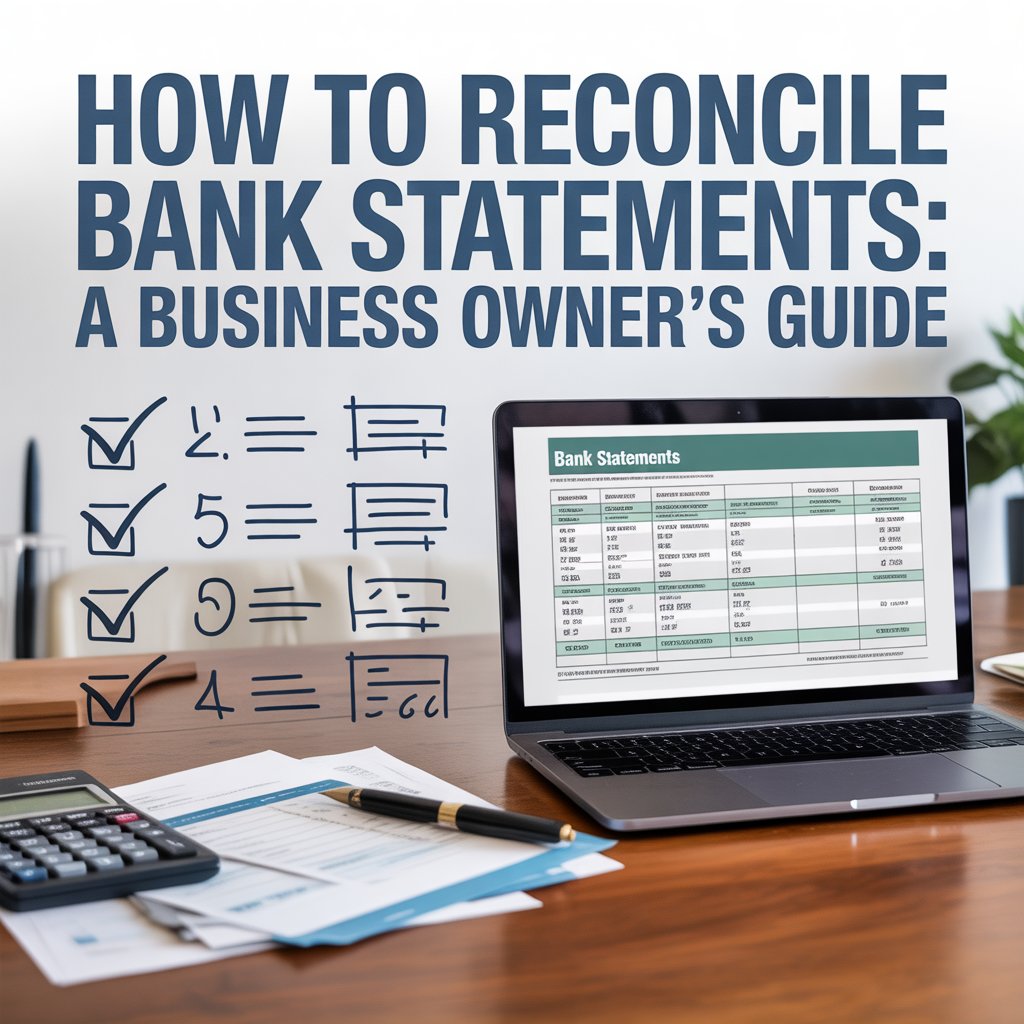
Bank reconciliation works by adjusting both your book balance and your bank balance for timing differences and errors until both sides agree on the same ending number. Here is a simplified example showing what this looks like in practice.
Key Terms Every Business Owner Should Know
Outstanding check: A check you have written and recorded in your books but the bank has not yet processed. It reduces your book balance but hasn’t cleared the bank yet.
Deposit in transit: A payment you have received and recorded but that hasn’t yet appeared on your bank statement, often because you deposited it at the end of the banking day.
Bank service charges:
Monthly fees or transaction fees charged by your bank that appear on your statement but may not yet be recorded in your books.
NSF (non-sufficient funds) checks:
Checks you deposited that bounced. The bank reverses the deposit, but your books may still show it as income until you make the correction.
Adjusted book balance:
Your ledger balance after adding any unrecorded bank deposits and subtracting any unrecorded bank charges or returned items.
How Often Should You Reconcile?
Every US business should reconcile every bank account and every credit card account once per month without exception. Monthly reconciliation means discrepancies are caught within 30 days, before they compound into larger problems. High-volume businesses — particularly cannabis retailers and e-commerce operators — may benefit from weekly reconciliation to maintain tighter control.
The SBA.gov guide to managing business finances (opens in new tab) recommends that all small business owners maintain current, reconciled financial records as a core practice for financial health and loan readiness.
What Are the Most Common Bank Reconciliation Mistakes Business Owners Make?
Even experienced business owners make reconciliation errors. Here are the most damaging ones — and how to avoid them completely.
Mistake 1: Reconciling Once a Year Instead of Monthly
Annual reconciliation means errors accumulate for 12 months before anyone notices. By that point, tracing back the source of discrepancies is time-consuming and sometimes impossible without original documentation. Monthly reconciliation is the only acceptable frequency for any active US business. Furthermore, tax professionals — including Tranzesta’s team — can only work efficiently with clients whose books are current.
Mistake 2: Leaving Outstanding Items Unresolved
It is tempting to reconcile everything that matches and ignore a few leftover discrepancies. However, unresolved items carry forward into the next month and compound into a growing mess. Every unresolved item from a reconciliation must be investigated and corrected before the session is considered complete. Most items have simple explanations — but you must find them.
Mistake 3: Using the Wrong Opening Balance
If you enter an incorrect opening balance at the start of a reconciliation, every subsequent figure will be wrong. Your opening balance for the current month must match exactly the closing balance from last month’s reconciliation. In bookkeeping software, this is usually pulled automatically — but always confirm it before beginning.
Mistake 4: Ignoring Credit Card Accounts
Many business owners reconcile their checking account but forget that business credit cards require the same process. Every credit card used for business purchases must be reconciled monthly against the official statement. Missing this step leaves a significant portion of your expense records unverified and potentially incorrect.
Mistake 5: Not Investigating Suspicious Transactions
Reconciliation is not just an accounting exercise — it is also your first line of defense against fraud. If you see a transaction on your bank statement that you cannot match to a recorded expense, investigate it immediately. Small unauthorized charges — sometimes just $9.99 or $14.99 per month — are a common form of business account fraud that goes undetected for years in unreconciled books.
How Tranzesta Handles Bank Reconciliation for Small Businesses
Tranzesta is a US-based tax consultation and bookkeeping firm that provides complete monthly bookkeeping services — including bank and credit card reconciliation — for small businesses, self-employed individuals, content creators, and cannabis operators across the United States.
Our bookkeeping team imports transactions directly from your bank feeds,
matches and categorizes every item, resolves all outstanding items, and delivers a clean reconciliation report every month. You receive accurate, current financials without spending a single hour on data entry or bank matching. Visit Tranzesta.com to learn more about our monthly bookkeeping services.
For OnlyFans creators and digital content professionals,
Tranzesta reconciles platform payouts (Stripe, PayPal, direct deposits) against subscription income, merchandise sales, and tip income to ensure every revenue stream is captured accurately. For cannabis businesses operating under IRC §280E, precise reconciliation of COGS-related accounts is a critical component of legal tax minimization.
For US expats with foreign currency income,
our team reconciles multi-currency accounts and aligns bank records with our Streamlined Filing compliance services. Learn more about our Streamlined Filing services for Americans abroad at Tranzesta.com.
Ready to stop doing reconciliation yourself?
Contact our team at hello@tranzesta.com for a free consultation. We’ll take over your monthly bookkeeping completely — reconciliation included — so your books are always clean, current, and IRS-ready.
How to Reconcile Bank Statements Business: Expert Tips for 2026
Beyond the standard process, these advanced practices help US business owners reconcile faster, more accurately, and with less manual effort. Tranzesta recommends all of these to every new bookkeeping client.
Use bank feed integration in your software.
QuickBooks Online, Xero, and FreshBooks all offer direct bank feed connections that automatically import transactions daily. This eliminates manual data entry and ensures no transaction is ever missed. Reconciliation becomes a review-and-confirm task rather than a data entry task.
Reconcile immediately after your statement closes — not weeks later.
The longer you wait, the harder it becomes to recall the context of individual transactions. Set a recurring calendar reminder for the third business day of each month, when most bank statements have closed and are available.
Never skip months during busy periods.
Many business owners skip reconciliation during busy seasons, intending to catch up later. However, two months of unreconciled transactions is not twice as hard — it is four times as hard. One month at a time is always faster and more accurate.
Maintain a log of recurring timing differences.
Some businesses have predictable outstanding items every month — for example, a payroll check that takes two days to clear. Document these so you don’t waste time investigating the same known items each month.
Flag unusual transactions immediately for your accountant.
If you see a transaction you don’t recognize during reconciliation, do not skip it or guess. Reach out to your bank immediately and notify your accountant. What looks like a small discrepancy may be the first sign of unauthorized account access.
Use the reconciliation report as part of your monthly financial review.
Your reconciliation report confirms the accuracy of your Profit & Loss statement and Balance Sheet. Review all three documents together each month to get a complete, verified picture of your business financial health in the United States.
Conclusion
Bank reconciliation is not optional for US business owners — it is the cornerstone of financial accuracy, IRS compliance, and fraud detection. First, reconcile every bank account and credit card account every single month without exception. Second, investigate and resolve every discrepancy before closing the reconciliation — never carry forward unresolved items. Third, save your reconciliation report every month and store it with your financial records for a minimum of three years.
The business owners who build a monthly reconciliation
habit almost never face the stress of inaccurate books at tax time. Everything that follows — financial reporting, estimated tax payments, year-end filing — is faster, cleaner, and more accurate when your books are reconciled and current.
Ready to get expert help? Email us at hello@tranzesta.com or visit Tranzesta.com to schedule your free bookkeeping consultation. Tranzesta’s team will handle your monthly reconciliation so your books are always clean, verified, and tax-ready in 2026 and beyond.
FAQs
Reconciling a bank statement for a business means comparing every transaction in your bookkeeping records to the corresponding entry on your official bank statement to confirm they match exactly. The goal is to ensure that your book balance and bank balance agree after accounting for timing differences such as outstanding checks and deposits in transit. Bank reconciliation is completed monthly and is required to maintain IRS-compliant financial records for every US business.
A small business in the USA should reconcile its bank accounts every month without exception. Monthly reconciliation ensures that errors, duplicate entries, unrecorded bank fees, and unauthorized transactions are caught within 30 days before they compound. High-volume businesses, such as retail stores, e-commerce operations, and cannabis dispensaries, may benefit from weekly reconciliation for tighter financial control. Annual or quarterly reconciliation is not recommended for any active business.
If you do not reconcile your bank statements regularly, errors accumulate unchecked in your bookkeeping records. The consequences include inaccurate financial statements, incorrect tax filings, missed or duplicated deductions, and undetected fraud or unauthorized transactions. If the IRS audits your business and your books do not match your bank records, disallowed deductions and penalties can result. For US businesses of all sizes, unreconciled books are one of the leading causes of bookkeeping problems at tax time.
Common discrepancies found during bank reconciliation include outstanding checks (written but not yet cleared), deposits in transit (recorded but not yet processed by the bank), bank service charges not yet entered in the books, NSF (bounced) check reversals, duplicate transaction entries, and data entry errors such as transposed numbers. Most discrepancies have simple explanations and are easy to resolve once identified. However, any discrepancy that cannot be traced to a timing difference should be investigated as a potential error or unauthorized transaction.
Yes, you can reconcile bank statements manually without accounting software, but it is significantly more time-consuming and error-prone. Manual reconciliation involves downloading your bank statement, listing all transactions in a spreadsheet, and matching them one by one to your paper records or receipts. For most US small businesses, using bookkeeping software like QuickBooks Online or Xero is strongly recommended because bank feed integration automates transaction imports, and built-in reconciliation tools generate a reconciliation report that serves as an official record for IRS purposes.
Talk to a real, signing professional
AI precision, human accountability — across the US, UK & UAE.
Book a free consultation