Running a corporation in the United States can unlock growth,
credibility, and funding. However, many business owners quickly run into one major problem: double taxation. If you’re searching for ways to avoid double taxatitax, you’re not alone.
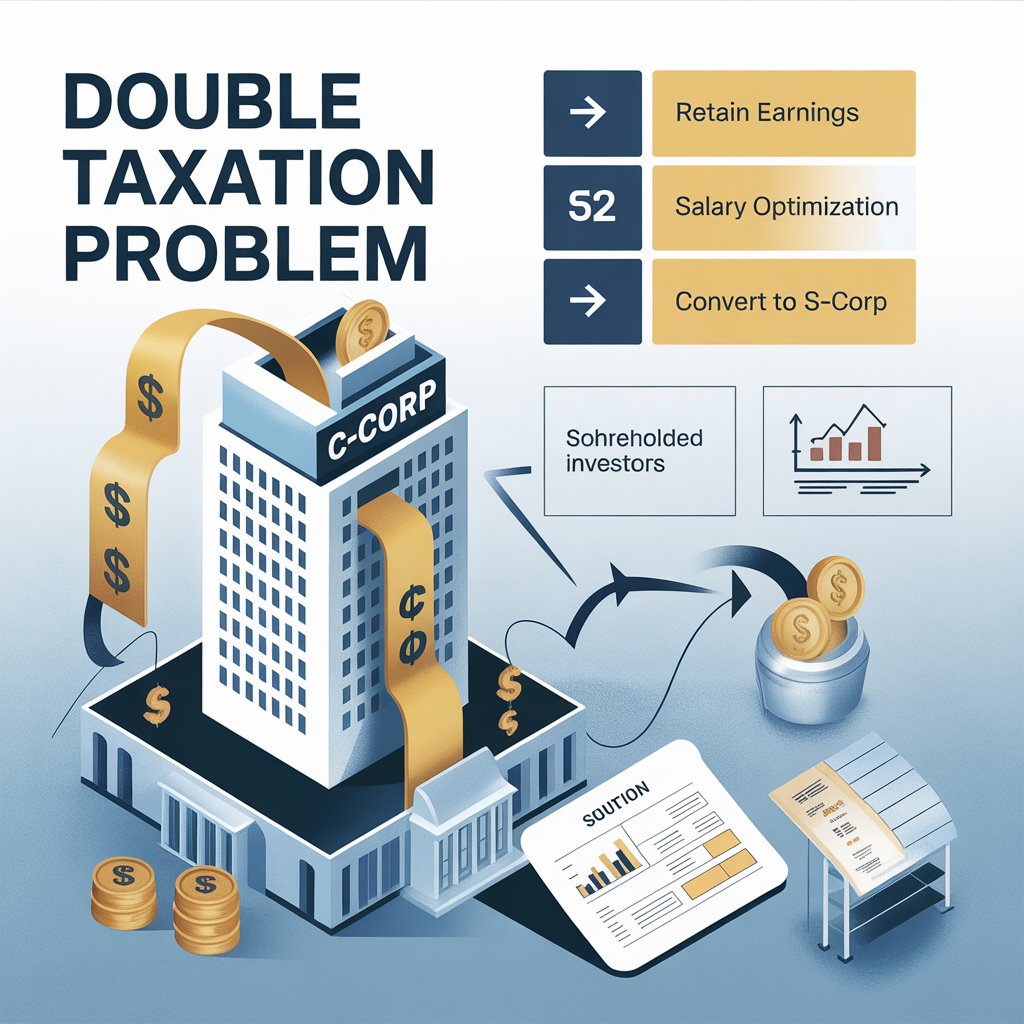
By default, a C corporation pays taxes on its profits. Then, shareholders pay taxes again on dividends. As a result, income gets taxed twice — once at the corporate level and again at the individual level.
In this guide, you’ll learn exactly how double taxation works,
why it matters for US taxpayers, and most importantly, how to legally reduce or avoid it. Whether you’re an OnlyFans creator, cannabis business owner, or self-employed entrepreneur, this guide breaks it down in plain English.
Let’s start with the basics.
What is the C-Corp double taxation avoidance?
C-corp double taxation avoidance refers to legal strategies used to reduce or eliminate the two layers of taxation applied to C corporations in the USA. In simple terms, it means structuring your business and income so you don’t get taxed twice on the same profits.
What is double taxation in a C corporation?
Double taxation occurs when corporate profits are taxed twice:
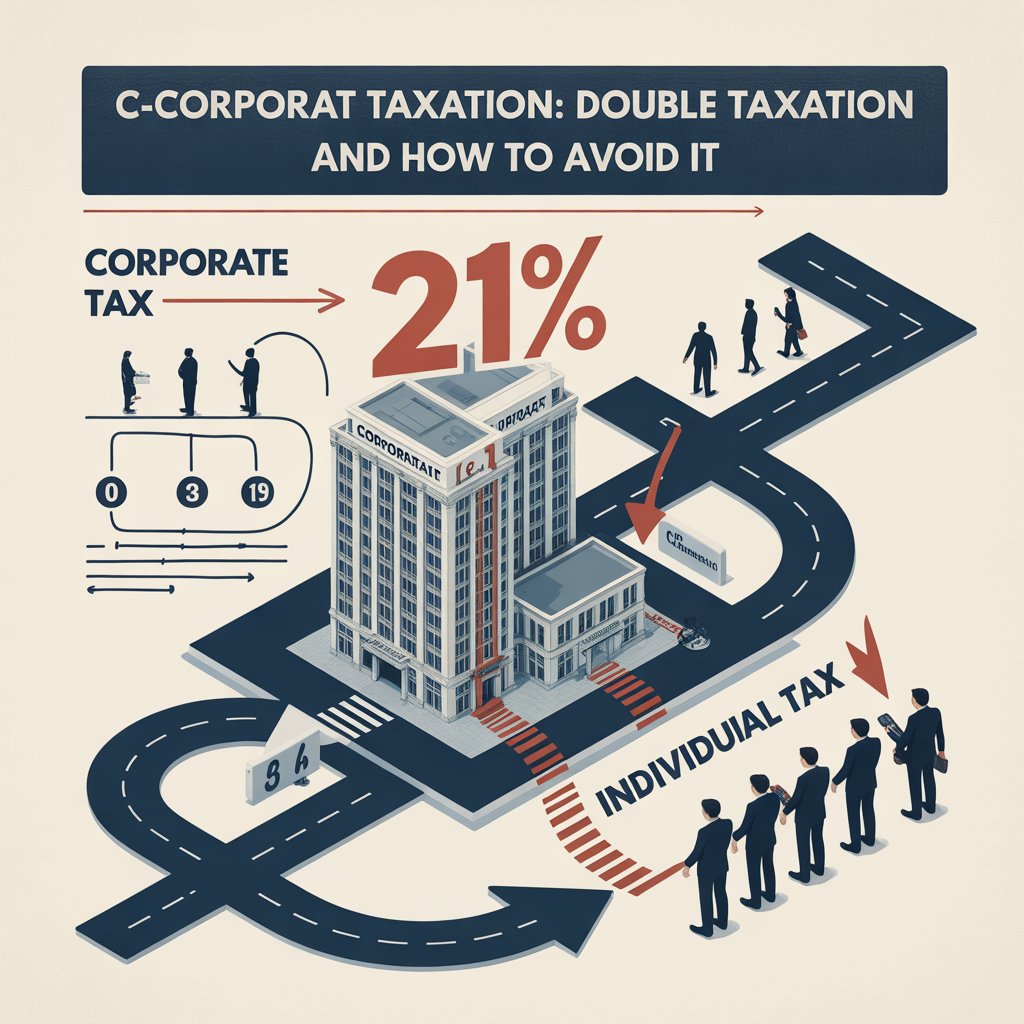
First, the corporation pays federal income tax (currently a flat 21% under IRS rules).
Then, shareholders pay personal income tax on dividends, often at 15%–20%.
This system is defined under the Internal Revenue Code and applies to all standard C corporations in the United States.
Why it matters for US business owners
Double taxation reduces your take-home profit. For example, if your company earns $100,000:
$21,000 goes to corporate tax
Then dividends get taxed again
As a result, your effective tax rate can exceed 35%–40% depending on your state and income bracket.
Therefore, understanding how to avoid C-corp double taxation is critical for:
OnlyFans creators scaling income
Cannabis businesses facing strict tax rules (like IRC §280E)
US expats managing global income
Small business owners reinvesting profits
How does C-corp taxation work in the United States?
C-corp taxation works by separating the business entity from its owners. This means the corporation is taxed independently under US law.
According to the IRS (see https://www.irs.gov/businesses/small-businesses-self-employed/c-corporations [opens in new tab]), a C corporation files Form 1120 annually and pays corporate income tax on its earnings.
Corporate-level taxation
At the corporate level:
Flat tax rate: 21% (federal)
State taxes: vary from 0% to 11% depending on location
Deductible expenses reduce taxable income
Corporations can deduct:
Salaries and wages
Rent and utilities
Business expenses
Health insurance and retirement contributions
Shareholder-level taxation
After-tax profits can be distributed as dividends. However:
Dividends are not deductible
Shareholders pay taxes again
Qualified dividends are taxed at:
0%, 15%, or 20% depending on income
Therefore, without planning, profits are taxed twice — which is why many business owners seek ways to avoid C-corp double taxation.
Common mistakes when trying to avoid double taxation
Many business owners attempt to reduce taxes but make costly mistakes. Avoiding these pitfalls can save thousands of dollars.
Misclassifying income
Some owners label everything as salary to avoid dividends. However, the IRS requires “reasonable compensation.”
If salaries are too high or too low, audits can happen.
Ignoring the retained earnings strategy
Many businesses distribute all profits as dividends. However, retaining earnings inside the company can delay taxation.
Failing to use this strategy leads to unnecessary taxes.
Not considering S-corp election
Some businesses qualify to switch to S-corp status but don’t explore it. This election can eliminate double taxation.
However, not all businesses qualify.
Poor bookkeeping
Without accurate records, you can’t optimize deductions or track retained earnings.
This is especially risky for cannabis businesses due to IRS scrutiny.
Step-by-step guide to C-corp double taxation avoidance
You can reduce or avoid double taxation legally by following structured strategies. Here’s a step-by-step approach used by tax professionals in the USA.
Step 1: Pay yourself a reasonable salary
Instead of relying on dividends, pay yourself a salary.
Salaries are tax-deductible
They reduce corporate profits
However, ensure compensation aligns with industry standards.
Step 2: Retain earnings in the corporation
Keep profits inside the business instead of distributing them.
This delays shareholder-level taxes
Helps fund growth
Note: The IRS may apply the accumulated earnings tax if abused.
Step 3: Use fringe benefits
Offer tax-deductible benefits such as:
Health insurance
Retirement plans
Education assistance
These reduce taxable income without triggering dividend taxes.
Step 4: Time dividend distributions
Carefully plan when to distribute dividends.
For example:
Delay dividends to lower-income years
Align with tax planning strategies
Step 5: Consider S-Corp election
If eligible, elect S corporation status.
Pass-through taxation eliminates double taxation
Income is taxed only once
However, S corporations have restrictions on ownership and stock classes.
Step 6: Leverage tax credits and deductions
Use federal credits such as:
R&D tax credit
Work opportunity credit
These directly reduce corporate tax liability.
Step 7: Work with a tax expert
Tax laws are complex and constantly changing.
Therefore, working with a firm like Tranzesta ensures compliance and optimization.
How Tranzesta can help with C-corp double taxation avoidance
Tranzesta specializes in helping US taxpayers legally reduce tax burdens while staying fully compliant with IRS regulations. Whether you’re a content creator, cannabis operator, or entrepreneur, their team understands your unique tax challenges.
Tranzesta offers:
Business tax strategy and planning
Bookkeeping and compliance support
Streamlined Filing for US expats
Creator tax optimization (OnlyFans, influencers)
Cannabis accounting under IRS §280E
Most importantly, Tranzesta focuses on proactive planning. Instead of reacting at tax time, they build strategies that reduce taxes year-round.
If you’re trying to avoid double taxatitax, expert guidance can make a huge difference.
Contact our team at hello@tranzesta.com for a free consultation.
Visit Tranzesta.com to learn more about our business tax and bookkeeping services in the USA.
Additionally, learn more about US expat tax compliance at Tranzesta.com.
C-Corp Double Taxation Avoidance: Expert tips for 2026
Avoiding double taxation requires more than basic strategies. Here are expert-level insights used by top tax professionals in the United States.
Use a hybrid compensation strategy
Combine salary, bonuses, and retained earnings
Monitor accumulated earnings limits
The IRS may impose a 20% penalty tax if profits are excessively retained
Evaluate entity structure annually
Business growth may justify switching from a C-corp to an S-corp
Leverage retirement planning
Contributions to plans like 401(k)s reduce taxable income
Optimize state tax exposure
Some US states have significantly lower corporate tax rates
Plan for exit strategies
Selling a business can trigger additional tax layers
Therefore, staying proactive is key. Tax planning is not a one-time event — it’s an ongoing process.
Conclusion
C-corp double taxation can significantly reduce your profits. However, with the right strategy, you can minimize or even avoid it.
The three most important takeaways are:
Double taxation happens at both the corporate and shareholder levels
Smart planning — like salaries, retained earnings, and benefits — reduces tax exposure
Expert guidance ensures compliance and maximum savings
If you want to avoid C-corp double taxation effectively, you need a customized strategy tailored to your business.
Ready to get expert help? Email us at hello@tranzesta.com or visit Tranzesta.com to schedule your free tax strategy session today.
FAQs
C corporation double taxation can be reduced by paying reasonable salaries, retaining earnings, using fringe benefits, and timing dividend distributions. These strategies lower taxable income at the corporate level and reduce shareholder tax exposure. Additionally, some businesses elect S-corp status to eliminate double taxation. However, eligibility rules apply, so professional guidance is recommended.
C corporation double taxation applies by default under US tax law. However, businesses can minimize their impact through strategic planning. While it cannot always be fully avoided, techniques such as salary structuring, tax credits, and retained earnings significantly reduce the burden. In some cases, switching to an S corporation removes double taxation altogether.
C corporation tax rate in the United States is a flat 21% at the federal level. State taxes may add 0% to 11%, depending on the location. After corporate tax is paid, dividends are taxed again at the shareholder level, typically at 15% to 20%. This combined rate is why tax planning is essential.
Switching from a C corporation to an S corporation is possible if eligibility requirements are met. S corporations are pass-through entities, meaning income is taxed only once at the shareholder level. However, restrictions include a limit of 100 shareholders and US residency requirements. Filing IRS Form 2553 is required to elect S-Corp status.
Retained earnings are profits kept within the corporation instead of being distributed as dividends. By retaining earnings, a C corporation delays shareholder-level taxation. This strategy helps reduce immediate tax liability and supports business growth. However, excessive retention may trigger the accumulated earnings tax, so careful planning is necessary.
Talk to a real, signing professional
AI precision, human accountability — across the US, UK & UAE.
Book a free consultation