Choosing a tax consultant is one of the most important
financial decisions a self-employed individual, content creator, cannabis business owner, or US expat can make. But many people hesitate because they do not know what actually happens after they say yes. Understanding the tax consultation onboarding process in the USA — and specifically how Tranzesta structures your first 30 days — eliminates that uncertainty.
Most tax firms hand you a stack of forms and leave you to figure out the rest. Tranzesta.com takes a different approach. From your very first contact through a fully active engagement, every step is mapped, communicated, and executed by a team that specializes in your exact situation — whether that is Streamlined Filing compliance, OnlyFans income reporting, cannabis industry accounting, or small business bookkeeping.
In this guide, you will learn what a structured tax consultation onboarding process looks like, why the first 30 days matter so much, and exactly how Tranzesta.com builds your financial foundation from day one. Let us start with the basics.
What Is a Tax Consultation Onboarding Process — and Why Does It Matter in the USA?
A tax consultation onboarding process is the structured sequence of steps a tax firm uses to gather client information, assess tax obligations, establish a working relationship, and begin delivering services. In the United States, where tax rules differ dramatically by income type, residency status, and business structure, a thorough onboarding process is not a luxury — it is a necessity.
For self-employed individuals, the IRS requires quarterly estimated tax payments (Form 1040-ES) and accurate tracking of deductible business expenses. For content creators on platforms like OnlyFans or Fansly, income from multiple 1099-NEC sources must be reconciled and reported correctly. For cannabis businesses, IRC Section 280E creates a uniquely restrictive tax environment. For US expats, FBAR and FATCA obligations add layers of complexity that most general accountants cannot handle.
Without a structured onboarding process, critical information gets missed — and missed information costs money. Tranzesta’s onboarding framework ensures nothing falls through the cracks.
Who Goes Through the Tranzesta Onboarding Process?
Tranzesta’s tax consultation onboarding process serves four primary client groups across the United States and internationally. These include self-employed individuals and freelancers, OnlyFans and digital content creators, cannabis dispensary and cultivation business owners, and US citizens living abroad who need Streamlined Filing or ongoing expat tax compliance.
Each group faces a distinct set of IRS obligations, filing deadlines, and planning opportunities. Therefore, Tranzesta.com tailors the onboarding workflow to your specific situation rather than applying a one-size-fits-all intake form.
Why the First 30 Days Define the Entire Engagement
The first 30 days of a tax consultation engagement set the tone for everything that follows. During this period, your tax team gathers the data they need, identifies compliance gaps, establishes your baseline tax position, and begins building a forward-looking strategy. A well-executed onboarding process means faster filings, fewer surprises, and a tax plan that actually reflects your real financial picture.
According to the IRS, penalties for late or incorrect filings can range from 5% per month of unpaid tax up to a maximum of 25% for failure-to-file penalties — costs that a structured onboarding process helps prevent from the very start. You can review IRS penalty guidelines at IRS.gov — Penalties.
What Does the Tax Consultation Onboarding Process in the USA Actually Require?
A complete tax consultation onboarding process in the United States requires several foundational elements that every new client must provide. Tranzesta structures this collection systematically to avoid delays and ensure your engagement begins on a solid footing.
Essential Documents Every New Client Provides
Regardless of your client type, certain documents are universal starting points for any US tax engagement. These include:
Prior-year federal and state tax returns (last 2–3 years where available)
Social Security Number (SSN) or Individual Taxpayer Identification Number (ITIN)
Income records: W-2s, 1099-NEC, 1099-K, or platform earnings statements
Bank and financial account statements for the relevant tax year
Business expense records, receipts, or accounting software exports
Foreign account information, if applicable (for FBAR and Form 8938 compliance)
Tranzesta provides every new client with a detailed, customized document checklist within 48 hours of engagement. This checklist is specific to your situation — a cannabis dispensary owner’s list looks very different from a US expat’s list, and both differ significantly from what an OnlyFans creator needs to provide.
The Engagement Agreement and Scope of Services
Before any tax work begins, Tranzesta formalizes the engagement through a written agreement that clearly defines the scope of services, fees, deadlines, and responsibilities of both parties. This agreement protects you legally and ensures both sides have clear expectations. Many tax disputes between clients and preparers arise from ambiguous scope — Tranzesta eliminates this risk upfront.
Jurisdiction and Entity Verification
Tranzesta.com verifies your filing jurisdiction, entity type (sole proprietor, LLC, S-Corp, C-Corp, or partnership), and residency status at the start of every engagement. These factors determine which IRS forms apply to your situation. For example, an S-Corp owner must file Form 1120-S, while a single-member LLC files on Schedule C of Form 1040. Getting the entity classification right from day one prevents costly amended filings later.
Common Mistakes People Make When Starting a Tax Consultation in the USA
Many clients come to Tranzesta after a difficult experience with a previous tax preparer — or after trying to handle their taxes independently. Here are the most common mistakes that make the onboarding process harder and more expensive than it needs to be.
Mistake 1: Waiting Until Tax Season to Start
Starting a tax consultation engagement in February or March — right before the April 15 deadline — puts your new tax team under extreme time pressure. Important planning decisions, like making a retirement account contribution or restructuring your business entity, require time. Tranzesta recommends starting your engagement at least 60 to 90 days before your filing deadline. For cannabis businesses and expats with complex situations, starting even earlier is strongly advised.
Mistake 2: Providing Incomplete Financial Records
The quality of your tax outcome depends entirely on the quality of the information your tax team receives. Incomplete bank statements, missing 1099s, or unorganized expense records force your preparer to make assumptions — and assumptions in tax filings create audit risk. Tranzesta’s onboarding checklist is designed to surface every required document before work begins, not after.
Mistake 3: Not Disclosing All Income Sources
Content creators frequently receive income from multiple platforms — OnlyFans, Fansly, Patreon, YouTube AdSense, affiliate marketing, and brand deals — and may not realize all of it is taxable. Similarly, expats may have foreign bank interest, rental income, or pension distributions they consider irrelevant to their US return. Every income source must be disclosed. The IRS receives third-party reporting from platforms and financial institutions, making unreported income easy to detect.
Mistake 4: Skipping the Initial Strategy Call
Some clients want to skip the intake call and just send documents. This shortcut costs more in the long run. The initial consultation is where your tax advisor identifies planning opportunities — deductions you may not know you qualify for, entity structure improvements, or IRS programs like the Streamlined Procedures that could save you significant money. Tranzesta builds every engagement on a thorough initial strategy session, not a form.
Your First 30 Days: The Tranzesta Tax Consultation Onboarding Process Step by Step
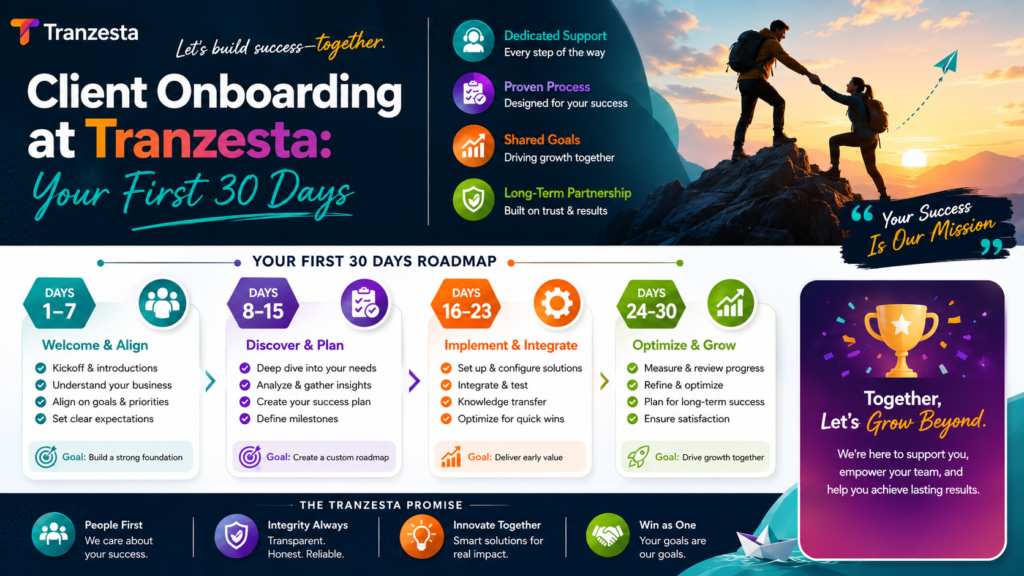
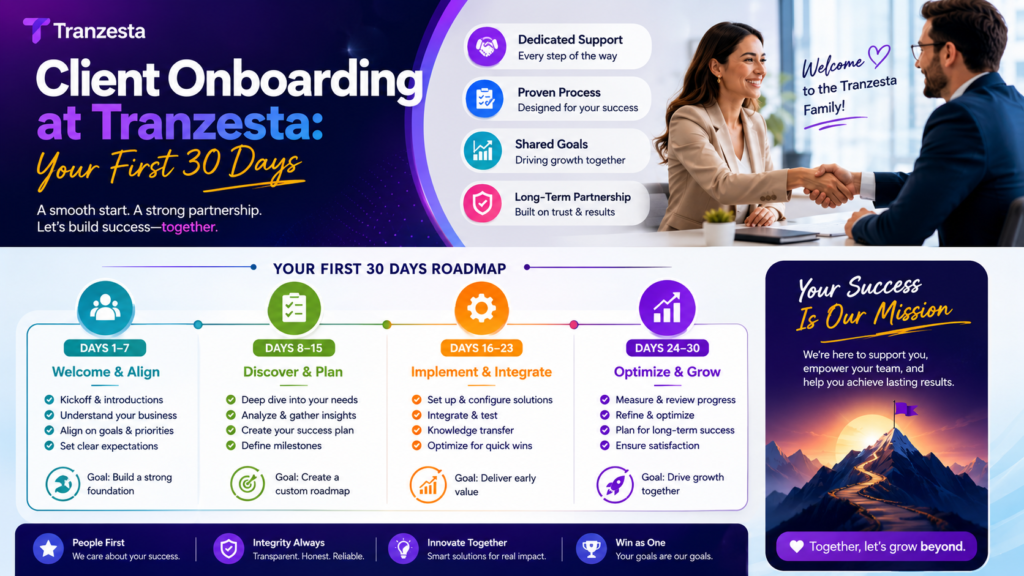
Here is exactly what the tax consultation onboarding process looks like at Tranzesta.com — broken down week by week so you know what to expect at every stage.
Step 1 (Days 1–2): Free Initial Consultation
You schedule a free consultation call with a Tranzesta tax advisor. During this call, we learn about your situation — your income sources, filing history, entity structure, residency status, and any compliance concerns. We explain which services apply to your needs and provide a clear fee structure. No obligation is required at this stage.
Step 2 (Days 3–5): Engagement Agreement and Custom Document Checklist
If you decide to move forward, we will send your engagement agreement and a fully customized document checklist within 48 hours. The checklist reflects your exact situation — not a generic template. Cannabis clients receive a COGS-focused document request. Expat clients receive an FBAR and a foreign income checklist. Creator clients receive a platform income reconciliation request.
Step 3 (Days 6–14): Document Collection and Initial Review
You upload your documents through our secure client portal. Our team reviews each document as it arrives, flagging any gaps and requesting clarification immediately rather than waiting until the end. This rolling review process keeps the engagement moving efficiently and avoids the last-minute scramble common in less organized firms.
Step 4 (Days 15–20): Tax Analysis and Compliance Gap Assessment
With your documents in hand, your Tranzesta advisor conducts a comprehensive tax analysis. We identify your current compliance status, any unfiled returns or missed FBAR obligations, available deductions and credits, and forward-looking tax planning opportunities. For cannabis clients, we run a 280E COGS analysis. For expats, we calculate FEIE and Foreign Tax Credit eligibility. For creators, we calculate self-employment tax exposure and identify all deductible business expenses.
Step 5 (Days 21–25): Strategy Session and Tax Plan Delivery
We schedule a strategy session to walk you through our findings. You receive a written summary of your tax position, a list of action items, a preliminary tax estimate for the current year, and — where applicable — a multi-year plan addressing any prior-year compliance gaps. This session is where the real value of working with Tranzesta.com becomes clear.
Step 6 (Days 26–30): Filing, Registration, or Compliance Action
Depending on your situation, your Tranzesta team begins executing the plan immediately. This may include filing your current-year return, submitting a Streamlined Filing package to the IRS, establishing your business bookkeeping system, setting up quarterly estimated tax payments, or registering for required state tax accounts. By day 30, you are no longer in limbo — you are in motion.
How Tranzesta’s Tax Consultation Onboarding Process Sets You Up for Long-Term Success
Tranzesta is a US-based tax consultation firm serving self-employed individuals, content creators, cannabis business owners, and US expats across the United States and internationally. Our onboarding process is not an administrative formality — it is the foundation of every successful client engagement we deliver.
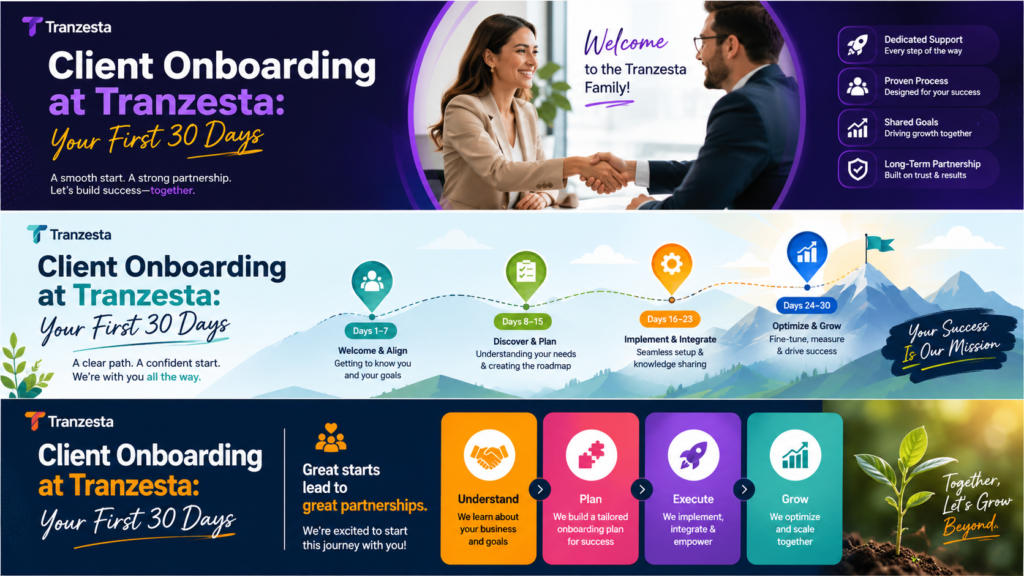
During your first 30 days, Tranzesta does the following for every new client:
Conducts a thorough eligibility and compliance review specific to your situation
Prepares a custom document checklist and manages the collection process
Performs a full tax analysis covering federal, state, and international obligations
Delivers a written strategy and action plan with clear next steps
Begins executing the plan — filings, registrations, bookkeeping setup — within the first month
Whether you need help with IRS Streamlined Filing, content creator taxes, cannabis accounting, or general business tax strategy, our team brings the specialized expertise your situation demands. Learn more about our full range of services at Tranzesta.com, or contact our team at hello@tranzesta.com to schedule your free consultation.
Tax Consultation Onboarding Process USA: Expert Tips to Get the Most From Your First 30 Days
Getting the most out of your tax consultation onboarding depends as much on your preparation as it does on your tax team’s expertise. Here is what the best-prepared clients do before and during the onboarding process.
Gather at least three years of prior tax returns before your first call: Even if returns are incomplete or you think they are wrong, prior filings give your tax advisor critical baseline information about your historical reporting positions.
Download all platform income statements in advance: Content creators should pull annual earnings summaries from every platform they used during the tax year — OnlyFans, Fansly, Fanvue, Patreon, and any others. These take time to locate and download, so starting early prevents delays.
Open a dedicated business bank account before onboarding begins: Mixing personal and business funds is the single most common bookkeeping problem Tranzesta.com encounters. A clean, separate business account makes your financial records dramatically easier to analyze and substantiate.
Be fully transparent about your situation: Your tax advisor cannot protect you from problems they do not know about. Tranzesta.com operates under strict confidentiality. Full disclosure during onboarding allows your team to build the strongest possible tax position on your behalf.
Ask about quarterly estimated taxes at your strategy session: US self-employed individuals owe estimated taxes four times per year — April 15, June 15, September 15, and January 15. Missing these payments triggers IRS underpayment penalties. Tranzesta calculates and schedules your estimated payments as part of every onboarding engagement.
For a comprehensive overview of IRS requirements for self-employed individuals in the United States, the SBA’s guide to self-employment taxes provides a useful foundation before your first Tranzesta consultation.
Conclusion: Your First 30 Days With Tranzesta Change Everything
A structured tax consultation onboarding process is the difference between reactive tax filing and proactive tax strategy. Three things to remember: first, the earlier you start your engagement, the more planning options your team has. Second, complete and organized financial records make the process faster and your tax outcome better. Third, a thorough initial strategy session — not just a form submission — is where real tax savings are identified.
Tranzesta delivers all of this within your first 30 days, for every client, across every specialty we serve. Whether you are a US expat catching up on years of unfiled returns or a cannabis dispensary owner looking for a 280E expert, your path forward starts with one conversation.
Ready to get expert help? Email us at hello@tranzesta.com or visit Tranzesta.com to schedule your free tax strategy session today.
FAQs
For your first tax consultation, you should bring your prior-year federal and state tax returns (at least two to three years), all income documents for the current year including W-2s, 1099-NECs, and platform earnings statements, bank account statements, and any records of business expenses or deductions you plan to claim. If you have foreign bank accounts, bring those statements as well.
The tax consultation onboarding process at Tranzesta typically spans 30 days from initial consultation to the delivery of your tax strategy and the beginning of active filing or compliance work. The timeline depends primarily on how quickly you provide the required documents. Complex situations — such as multiple years of unfiled returns or multi-entity cannabis businesses — may take slightly longer.
Tax software handles straightforward returns well, but it cannot provide strategy, catch compliance gaps, or advocate for you in an IRS audit. Self-employed individuals, content creators, cannabis business owners, and US expats with foreign accounts face tax situations that go far beyond what standard software is designed to handle. Missing a single FBAR filing can result in penalties of $10,000 or more per account.
Tax consultation fees vary significantly based on the complexity of your situation, the number of years requiring attention, and the specific services needed. A simple self-employed return differs considerably from a multi-year Streamlined Filing package or a cannabis business 280E analysis. Tranzesta provides a clear, written fee structure before any engagement begins — there are no surprises.
A tax preparer primarily assembles and files your tax return based on information you provide. Tranzesta operates as a full-service tax consultation firm, not a transactional tax preparation service. Every client engagement includes strategic advisory services, not just form completion and filing.
Talk to a real, signing professional
AI precision, human accountability — across the US, UK & UAE.
Book a free consultation