Selling a commercial property can trigger a massive capital
gains tax bill — sometimes 20% or more of your profit, plus state taxes and depreciation recapture. However, the 1031 exchange business real estate guide every US business owner needs to understand shows there is a fully legal way to defer that tax indefinitely. Section 1031 of the Internal Revenue Code allows you to sell one investment or business property and reinvest the proceeds into a like-kind replacement property — without paying capital gains tax at the time of sale.
In this complete 2026 guide, you will learn exactly
what a 1031 exchange is, the strict IRS rules you must follow, the most costly mistakes to avoid, a step-by-step process for completing the exchange, and how Tranzesta helps US business owners execute this strategy correctly.
Let’s start with the foundation.
What Is a 1031 Exchange for Business Real Estate?
A 1031 exchange — named after Section 1031 of the Internal Revenue Code — is a tax deferral strategy that allows US taxpayers to sell a business or investment property and reinvest the proceeds into a qualifying replacement property, deferring all federal capital gains tax on the sale. It is not a tax elimination strategy; rather, it postpones the tax until you eventually sell the replacement property without doing another exchange.
The term ‘like-kind’ is broader than most people realize.
Under IRS rules, virtually any real property held for business or investment use qualifies as like-kind to any other real property held for the same purpose. Therefore, you can exchange a retail strip center for a warehouse, a cannabis dispensary building for an apartment complex, or a single-family rental for raw land — as long as both properties meet the held-for-business-or-investment requirement.
For US business owners,
this is one of the most powerful wealth-building tools in the tax code. Instead of losing 20–30% of your equity to taxes every time you upgrade or reposition your real estate holdings, you preserve the full capital base and allow it to compound in your next property.
What Types of Property Qualify for a 1031 Exchange?
Under current IRS rules, only real property — land and buildings — qualifies for a 1031 exchange. Personal property exchanges (such as equipment, vehicles, or artwork) no longer qualify following the Tax Cuts and Jobs Act of 2017, which limited the exchange to real property only.
Qualifying real property includes commercial buildings,
office space, retail properties, warehouses, industrial facilities, cannabis dispensary locations, rental homes, multifamily apartments, vacant land, and leasehold interests with 30 or more years remaining. The property must be held for productive use in a trade or business or for investment — not as a primary residence or a property held primarily for sale (dealer property).
What Is Boot and Why Does It Matter?
Boot is any non-like-kind property received in a 1031 exchange — most commonly cash proceeds that you do not reinvest into the replacement property. Boot is taxable in the year of the exchange. For example, if you sell a property for $800,000, have $200,000 in equity, but only reinvest $750,000 into the replacement property, the $50,000 in unreinvested cash is taxable boot. Therefore, to fully defer all capital gains, you must reinvest 100% of the net sales proceeds and acquire a replacement property of equal or greater value.
Key IRS Rules and Requirements for a 1031 Exchange
A 1031 exchange is not simply a matter of selling one property and buying another. The IRS imposes strict rules that must be followed precisely — or the entire tax deferral is disqualified.
The Two Critical Deadlines
The most important IRS rules in any 1031 exchange are the two hard deadlines that govern the timeline.
45-Day Identification Deadline: From the date you close on the sale of your relinquished property, you have exactly 45 calendar days to identify in writing the potential replacement property or properties. You may identify up to three properties (the Three-Property Rule), or more properties under the 200% Rule or 95% Rule. Missing this deadline by even one day disqualifies the entire exchange.
180-Day Exchange Deadline: You must close on the purchase
of your identified replacement property within 180 calendar days of the relinquished property closing — or by the due date of your tax return for the year of the sale, whichever is earlier. Extensions are not available unless the President declares a federal disaster affecting your transaction.
The Qualified Intermediary Requirement
A Qualified Intermediary (QI) — also called an exchange accommodator — is a neutral third party that holds the sale proceeds between the relinquished property closing and the replacement property closing. You, the taxpayer, cannot receive or control the funds at any point during the exchange. If you touch the money — even for a single day — the IRS considers it a completed sale, and the full capital gains tax becomes due immediately.
Therefore, before you close on the sale of your relinquished
property, you must hire a QI and have an exchange agreement in place. This is not optional — it is legally required for a valid 1031 exchange.
Equal or Greater Value and Equity Rules
To defer 100% of capital gains taxes, the replacement property must meet two value requirements. First, the total purchase price of the replacement property must equal or exceed the total sale price of the relinquished property. Second, the equity reinvested must equal or exceed the equity from the sale (all net proceeds must be reinvested). Additionally, the replacement property must carry equal or greater debt — or you must add cash to compensate for any reduction in mortgage liability, or the difference becomes taxable mortgage boot.
What Is a Reverse 1031 Exchange?
A reverse 1031 exchange allows you to acquire the replacement property before selling the relinquished property. This is useful in competitive real estate markets where you cannot afford to lose a replacement property while waiting to sell. However, reverse exchanges are significantly more complex, more expensive, and require an Exchange Accommodation Titleholder (EAT) to hold title to one of the properties during the process. The same 45- and 180-day deadlines apply, running from the date the EAT acquires the replacement property.
Common Mistakes That Disqualify a 1031 Exchange
A 1031 exchange offers extraordinary tax benefits — but the IRS rules leave no room for error. Here are the most common mistakes US business owners make, and how to avoid them.
Mistake 1: Missing the 45-Day or 180-Day Deadlines
The deadlines in a 1031 exchange are absolute. Unlike most IRS processes, there are no extensions, grace periods, or reasonable cause exceptions. Missing the 45-day identification deadline by even one day means you owe capital gains tax on the full profit from the sale. Therefore, begin identifying replacement properties immediately after closing on the relinquished property — do not wait.
Mistake 2: Failing to Use a Qualified Intermediary
Some business owners attempt to hold their own sale proceeds while searching for a replacement property, not realizing this automatically disqualifies the exchange. Others use an attorney or CPA who is a ‘disqualified person’ under IRS rules — someone who has had a business or financial relationship with the taxpayer in the past two years. Always hire an independent, experienced QI before the relinquished property sale closes.
Mistake 3: Identifying Too Few — or the Wrong — Replacement Properties
Many first-time exchangers identify only one replacement property, leaving themselves exposed if that deal falls through. Under the Three-Property Rule, you may identify up to three properties regardless of their value. Using all three slots gives you flexibility if your first or second choice becomes unavailable. Additionally, description of the identified properties must be specific — a street address or legal description is required. Vague identifications are rejected.
Mistake 4: Receiving Boot Unintentionally
Taxable boot can arise in unexpected ways — not just from leftover cash. Receiving personal property, a reduction in mortgage liability without compensating cash, or taking possession of proceeds directly all create boot. Additionally, prepaid expenses and prorated rents paid at closing may be treated as boot if not handled correctly. Your QI and tax advisor should review the closing statement on both properties before finalizing any transaction.
Mistake 5: Using a 1031 Exchange for a Primary Residence or Dealer Property
A 1031 exchange only applies to property held for investment or productive use in a trade or business. Your primary residence does not qualify. Additionally, if the IRS determines you are a real estate dealer — someone who buys and sells property primarily for profit rather than for long-term investment — your property may be treated as inventory rather than a capital asset, disqualifying the exchange entirely. Intent and holding period are critical factors in determining dealer versus investor status.
How to Complete a 1031 Exchange: Step-by-Step Guide for Business Owners
Completing a 1031 exchange successfully requires careful preparation and strict adherence to IRS timelines. Follow these steps to protect your tax deferral.
Step 1 — Plan Before You List Your Property for Sale:
Engage a tax advisor and a Qualified Intermediary before you list your relinquished property. Confirm that your property qualifies, estimate your capital gains tax exposure, and verify your replacement property criteria. Waiting until after you sign a purchase agreement makes proper QI setup much more difficult.
Step 2 — Execute the Exchange Agreement With Your QI:
Before closing on the sale of your relinquished property, sign a formal exchange agreement with your Qualified Intermediary. This agreement assigns your rights in the sale contract to the QI, establishes the escrow account for your proceeds, and documents your intent to complete a 1031 exchange. Your closing documents will reflect the QI as the party receiving the sale proceeds.
Step 3 — Close on the Relinquished Property:
Proceed with the sale of your existing property. At closing, the net sale proceeds are wired directly to the QI’s escrow account — not to you. Your 45-day and 180-day clocks start on the date of this closing. Confirm the exact closing date with your settlement agent.
Step 4 — Identify Replacement Properties Within 45 Days:
Before the 45-day deadline expires, submit a signed written identification of your replacement properties to your QI. Include the address or legal description for each property. You may identify up to three properties under the Three-Property Rule. Alternatively, use the 200% Rule (any number of properties whose combined value does not exceed 200% of the relinquished property’s sale price) for additional flexibility.
Step 5 — Conduct Due Diligence on Replacement Properties:
While the 45-day deadline runs, perform your due diligence — inspections, title searches, environmental assessments, and financing reviews — on your identified properties. Begin negotiating purchase agreements immediately so you can close within the 180-day window. Do not wait until day 44 to start this process.
Step 6 — Close on the Replacement Property Within 180 Days:
Instruct your QI to release the exchange proceeds to the closing agent for the replacement property. Confirm that the replacement property’s purchase price equals or exceeds the relinquished property’s sale price, and that the equity reinvested equals or exceeds your net sale proceeds. Any shortfall creates taxable boot.
Step 7 — Report the Exchange on IRS Form 8824:
When you file your federal income tax return for the year of the exchange, attach Form 8824 (Like-Kind Exchanges). This form reports both the relinquished and replacement properties, calculates any recognized gain, and establishes the carryover basis in the replacement property. Your CPA or tax advisor prepares this form using the exchange documentation from your QI.
How Tranzesta Helps US Business Owners Complete a 1031 Exchange
Tranzesta is a US-based tax consultation firm with deep expertise in business real estate tax planning, including 1031 exchange strategy, depreciation planning, and capital gains minimization. Our team works with business owners, cannabis operators, self-employed professionals, and real estate investors across the United States to execute exchanges correctly from start to finish.
A 1031 exchange involves moving parts that must
align precisely — property selection, QI coordination, deadline management, boot calculation, and Form 8824 reporting. One missed step can eliminate hundreds of thousands of dollars in tax deferral. Tranzesta’s tax advisors coordinate every element of the exchange alongside your QI to ensure a smooth, fully compliant transaction.
For cannabis business owners, 1031 exchanges
are especially valuable because they operate under the burden of IRC Section 280E, which disallows most ordinary deductions. Preserving full equity through a 1031 exchange rather than losing 30–40% to capital gains and recapture taxes allows cannabis operators to reinvest in larger, better-located properties that generate more revenue.
Our 1031 exchange and real estate tax services include:
Pre-sale capital gains tax analysis and exchange planning
Qualified Intermediary referral and coordination
Boot calculation and reinvestment strategy
Replacement property tax due diligence
Form 8824 preparation and depreciation basis carryover
Integration with cost segregation on replacement properties
Contact our team at hello@tranzesta.com for a free consultation. Visit Tranzesta.com to learn more about our business tax and real estate tax planning services for US entrepreneurs.
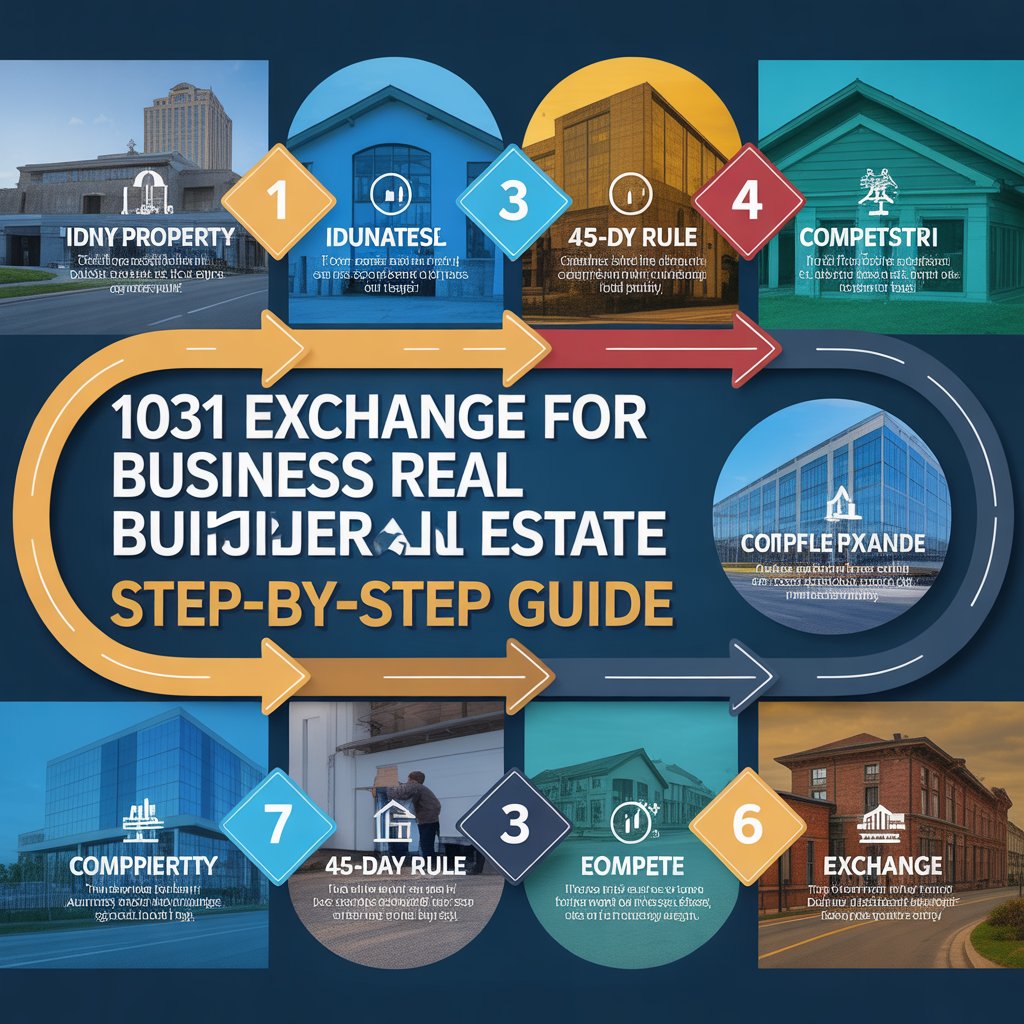
1031 Exchange Business Real Estate Guide: Expert Tips for 2026
Beyond the core rules, experienced tax strategists use advanced tactics to maximize the benefits of a 1031 exchange. Here are Tranzesta’s top insider tips for 2026.
Combine With Cost Segregation on the Replacement Property:
After completing your exchange, commission a cost segregation study on the replacement property. This resets your depreciation schedule and generates accelerated deductions in the early years of ownership, compounding the tax savings from the exchange itself. The 40% bonus depreciation rate in 2026 makes this combination especially powerful.
Consider a Delaware Statutory Trust (DST) for Replacement Property:
If you struggle to identify suitable replacement properties within 45 days, a Delaware Statutory Trust — a fractional ownership vehicle that qualifies as like-kind real estate under IRS Revenue Ruling 2004-86 — can serve as a replacement property. DSTs provide access to institutional-quality real estate without management responsibilities.
Use the Entire 180 Days Strategically:
Do not rush the replacement property purchase. The 180-day window is there for a reason. Rushing into a bad replacement property to meet the deadline creates far more long-term financial harm than paying the capital gains tax on a disciplined exit. However, also do not wait — begin due diligence immediately after the 45-day identification.
Plan the Exchange Around Your Tax Year-End:
If you close on your relinquished property in the last few months of the year, the 180-day deadline may fall before your tax return due date for that year. File for an automatic extension to preserve the full 180 days in those cases. Your tax advisor should model the timing before you close.
Track Carryover Basis for Recapture Planning:
When you complete a 1031 exchange, your tax basis in the replacement property is reduced by the deferred gain. This increases the depreciation recapture tax when you eventually sell without doing another exchange. Tranzesta recommends maintaining a detailed basis schedule across all exchanged properties so you always know your true tax exposure.
Conclusion
The 1031 exchange business real estate guide for 2026 comes down to three critical points. First, a properly executed exchange defers 100% of federal capital gains tax — but only if you follow every IRS rule precisely, especially the 45-day and 180-day deadlines. Second, a Qualified Intermediary is legally required and must be engaged before the relinquished property sale closes. Third, combining a 1031 exchange with a cost segregation study on the replacement property multiplies your tax savings and rebuilds your depreciation deductions from day one.
For US business owners, real estate investors, and cannabis operators, this strategy is one of the most powerful tools available to preserve and grow wealth across property transactions. However, execution without expert guidance is high-risk.
Ready to get expert help? Email us at hello@tranzesta.com or visit Tranzesta.com to schedule your free tax strategy session today.
FAQs
A 1031 exchange is a tax deferral strategy under Section 1031 of the Internal Revenue Code that allows US business owners and investors to sell a business or investment property and reinvest the proceeds into a qualifying like-kind replacement property without paying capital gains tax at the time of sale. To qualify, you must use a Qualified Intermediary, identify replacement property within 45 days, and close within 180 days of the original sale.
vacant land, and leasehold interests with at least 30 years remaining. or a retail property for an apartment complex, as long as both are held for business or investment use. Primary residences and property held primarily for sale (dealer property) do not qualify.
First, you must identify your replacement property in writing within 45 calendar days of closing on the sale of your relinquished property. Second, you must close on the purchase of the replacement property within 180 calendar days of the relinquished property closing — or by the due date of your tax return for that year, whichever comes first. Missing either deadline by even one day disqualifies the exchange and makes the full capital gains tax immediately due.
Yes. Property held for productive use in a trade or business qualifies for a 1031 exchange in the United States. This includes commercial buildings your business owns and occupies, as well as investment properties. Cannabis dispensary buildings, office spaces, warehouses, and other business-use properties commonly qualify, provided the exchange is structured correctly with a Qualified Intermediary and proper documentation.
If you do not reinvest all of your sale proceeds into the replacement property, the unreinvested amount is called boot and is taxable as capital gain in the year of the exchange. For example, if you receive $500,000 from a sale but only reinvest $450,000 into the replacement property, the $50,000 difference is taxable boot. To defer all taxes, you must reinvest 100% of net proceeds and acquire a replacement property of equal or greater value and equity.
Talk to a real, signing professional
AI precision, human accountability — across the US, UK & UAE.
Book a free consultation