Understanding partnership and S corporation taxes
in the United States can feel overwhelming. Many US taxpayers receive a Schedule K-1 without fully knowing what it means or how it affects their return. This guide on schedule explains partners ‘ and shareholders’ breaks it down in plain English.
Schedule K-1 plays a critical role in pass-through taxation,
where profits and losses flow directly to owners instead of being taxed at the business level. Therefore, getting it wrong can lead to IRS notices, penalties, or overpaying taxes.
In this guide, you’ll learn what Schedule K-1 is,
how it works, common mistakes, and how to handle it correctly—especially if you’re a content creator, cannabis business owner, or self-employed professional in the USA.
What Is Schedule K-1 Explained for Partners and Shareholders.
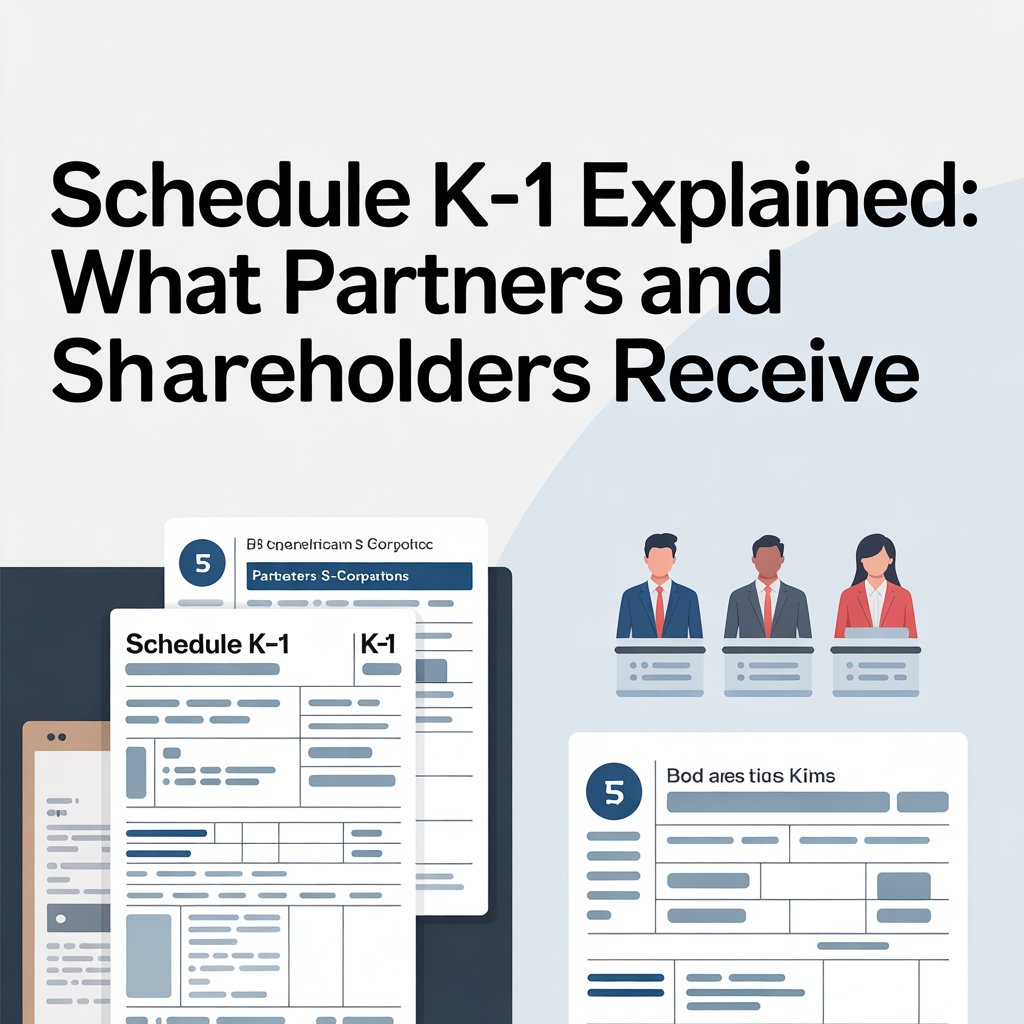
Schedule K-1 is a tax form used in the United States to report each owner’s share of income, deductions, and credits from a pass-through entity. These entities include partnerships, S corporations, and certain trusts.
In simple terms, Schedule K-1 explained partners shareholders means understanding how business profits are allocated to individual shareholders for tax reporting.
What Is a Pass-Through Entity?
A pass-through entity does not pay federal income tax at the business level. Instead, profits “pass through” to owners, who report them on personal returns.
Examples include:
Partnerships (Form 1065)
S Corporations (Form 1120S)
According to the IRS, over 95% of US businesses are structured as pass-through entities.
Why Schedule K-1 Matters
Schedule K-1 determines how much income you must report on your personal tax return. Even if you didn’t receive cash, you may still owe taxes.
This is especially important for:
OnlyFans creators operating in partnerships
Cannabis businesses subject to IRS Section 280E
US expats with foreign partnerships
How Does Schedule K-1 Work for Partners and Shareholders?
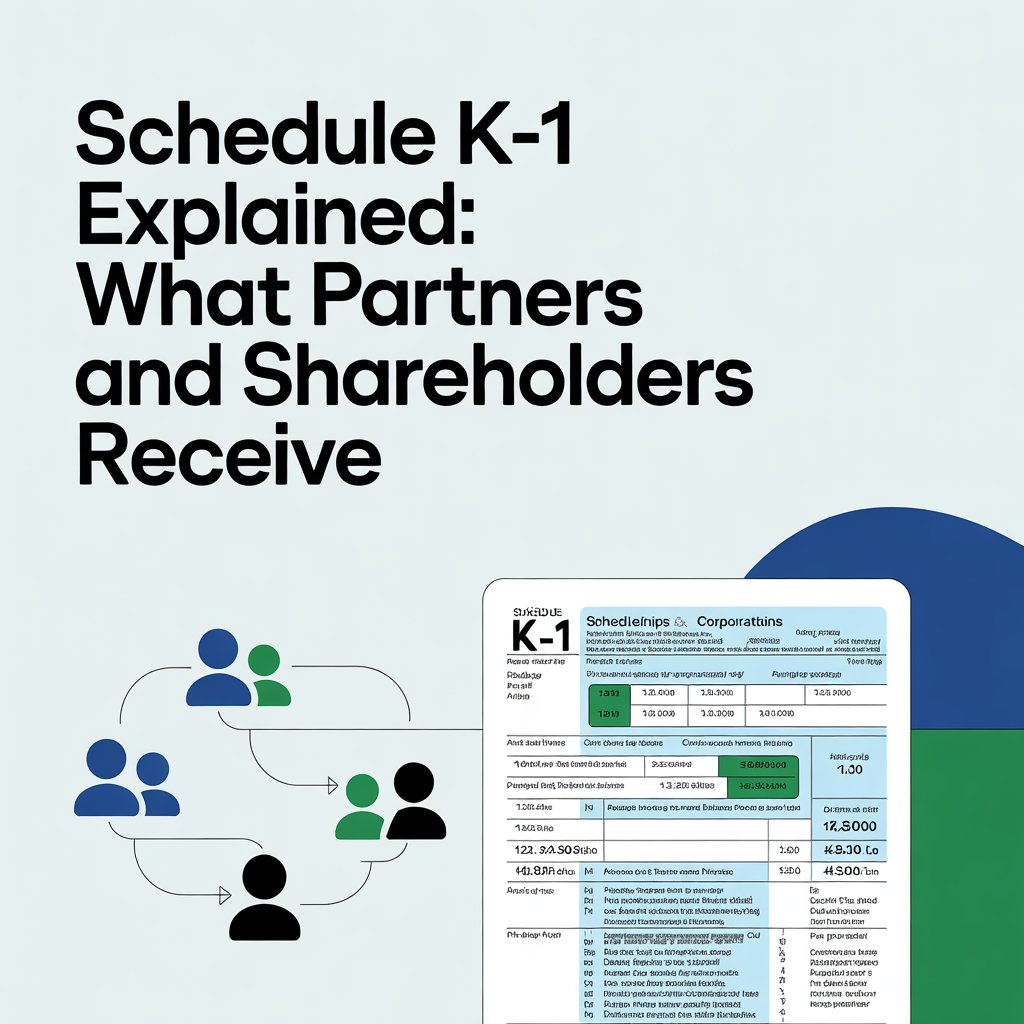
Schedule K-1 works by allocating income based on ownership percentage or agreement terms. Each owner receives a K-1 annually.
The IRS requires partnerships to file Form 1065 and S corporations to file Form 1120S. Each owner then gets their individual K-1.
What Information Is Included?
A Schedule K-1 includes:
Ordinary business income
Rental income or losses
Capital gains and dividends
Credits and deductions
Self-employment earnings
For example, if your partnership earns $100,000 and you own 50%, your K-1 shows $50,000 income.
When Do You Receive It?
Businesses must issue K-1s by:
March 15 for partnerships and S corps
However, extensions are common, which can delay personal tax filing.
For official IRS guidance, visit: https://www.irs.gov/forms-pubs/about-schedule-k-1 (opens in new tab)
Common Mistakes With Schedule K-1 Explained Partners Shareholders
Many US taxpayers misunderstand how Schedule K-1 works. As a result, errors are common and costly.
Ignoring Income Not Received
Even if you didn’t receive cash distributions, you must still report K-1 income. This is called “phantom income.”
Filing Before Receiving K-1
Filing early without your K-1 can lead to amended returns. Therefore, always wait for complete documentation.
Misreporting Passive vs Active Income
The IRS treats passive and active income differently. Misclassification can affect deductions and tax liability.
Overlooking State Taxes
Many states require separate filings based on K-1 income. This is especially relevant for multi-state businesses.
Not Tracking Basis
Basis refers to your investment in the business. Without tracking it, you risk overpaying taxes or triggering penalties.
Step-by-Step Guide: How to Handle Schedule K-1
Handling Schedule K-1 correctly requires a structured approach. Follow these steps to avoid errors.
Step 1: Review Your K-1 Carefully
Check all sections for accuracy, including income, deductions, and ownership percentage.
Step 2: Match With Business Records
Compare your K-1 with financial statements or bookkeeping reports.
Step 3: Identify Income Types
Determine whether income is:
Ordinary income
Capital gains
Passive income
Each type is taxed differently.
Step 4: Enter Data Into Your Tax Return
Use Schedule E (Form 1040) to report K-1 income. This is required for most US taxpayers.
Step 5: Track Your Basis
Update your basis annually. This affects future gains and losses.
Step 6: Consider Estimated Taxes
If your K-1 income is significant, you may need quarterly estimated payments.
Step 7: Consult a Tax Professional
Complex K-1 situations often require expert guidance, especially for cannabis businesses or creators.
How Tranzesta Can Help With Schedule K-1 Explained Partners Shareholders
Tranzesta specializes in helping US taxpayers navigate complex tax forms like Schedule K-1. Whether you’re a creator, cannabis operator, or business owner, expert guidance makes a difference.
Tranzesta provides:
Accurate K-1 reporting and review
Tax planning for pass-through entities
Bookkeeping tailored for partnerships and S corps
Compliance support for IRS regulations
Additionally, Tranzesta understands niche industries like OnlyFans and cannabis accounting, where standard advice often falls short.
Contact our team at hello@tranzesta.com for a free consultation.
Visit Tranzesta.com to learn more about our business tax and bookkeeping services.
Learn more about partnership tax filing at Tranzesta.com.
Schedule K-1 Explained Partners Shareholders: Expert Tips for 2026
Mastering Schedule K-1 can save you thousands in taxes. Here are expert tips from Tranzesta.
Always plan for taxes on income, even without distributions
Use accounting software to track basis in real time
File extensions if your K-1 is delayed
Work with professionals familiar with IRS Section 280E if in the cannabis industry
Separate personal and business finances
Most importantly, proactive tax planning reduces surprises during filing season.
According to IRS data, taxpayers who use professional tax services reduce audit risk significantly.
Conclusion
Schedule K-1 is a critical document for partners and shareholders in the United States. It determines how business income flows to your personal tax return.
The three key takeaways are:
You must report K-1 income even if unpaid
Accuracy and timing are essential to avoid penalties
Professional guidance can significantly reduce tax risk
Ready to get expert help? Email us at hello@tranzesta.com or visit Tranzesta.com to schedule your free tax strategy session today.
FAQs
Schedule K-1 is used to report a partner’s or shareholder’s share of income, deductions, and credits from a pass-through entity in the United States. Schedule K-1 ensures that income is taxed at the individual level rather than the business level. It is essential for accurate personal tax reporting and compliance with IRS regulations.
Schedule K-1 income is taxable even if no cash distribution was received. This is known as phantom income. US taxpayers must report and pay taxes on allocated income regardless of actual payments, which often surprises new partners and shareholders.
Schedule K-1 is typically issued by March 15 for partnerships and S corporations. However, extensions can delay this timeline. Taxpayers should wait for their K-1 before filing to avoid errors or amended returns.
Schedule K-1 income is reported on Schedule E of Form 1040 for most US taxpayers. The exact reporting depends on the type of income, such as rental, business, or capital gains.
Schedule K-1 itself does not trigger an audit, but inconsistencies or errors can increase audit risk. Accurate reporting and matching IRS records are essential to avoid issues.
Lorem ipsum dolor sit amet, consectetur adipiscing elit. Ut elit tellus, luctus nec ullamcorper mattis, pulvinar dapibus leo.
Talk to a real, signing professional
AI precision, human accountability — across the US, UK & UAE.
Book a free consultation